June 5, 2026
As of June 2026, with the Strait of Hormuz now closed for twelve weeks, the question of how long major economies can sustain themselves on stored oil has moved from theoretical to urgent. The answer varies significantly depending on where you live.
How Long Would Reserves Last?
China is currently the best-positioned major economy to weather a prolonged supply cutoff. With approximately 1.4 billion barrels stockpiled — a mix of government and commercial reserves built up over years of strategic buying — China has an estimated six to seven months of buffer against lost Middle East imports. A significant portion of those reserves were accumulated through purchases of discounted Russian and Iranian oil in the years before the crisis, giving China a cushion its neighbors simply do not have.
Japan’s situation is more precarious. The country imports nearly 90% of its energy and has almost no domestic production to fall back on. What protects Japan is its law requiring mandatory stockpiling at both the government and private industry levels. Government reserves cover roughly 90 days of consumption; private industry is required to hold an additional 70 days. Combined, Japan has approximately 160 days — just over five months — of lifeline supply. It is enough to weather the current crisis, but the margin is narrowing.
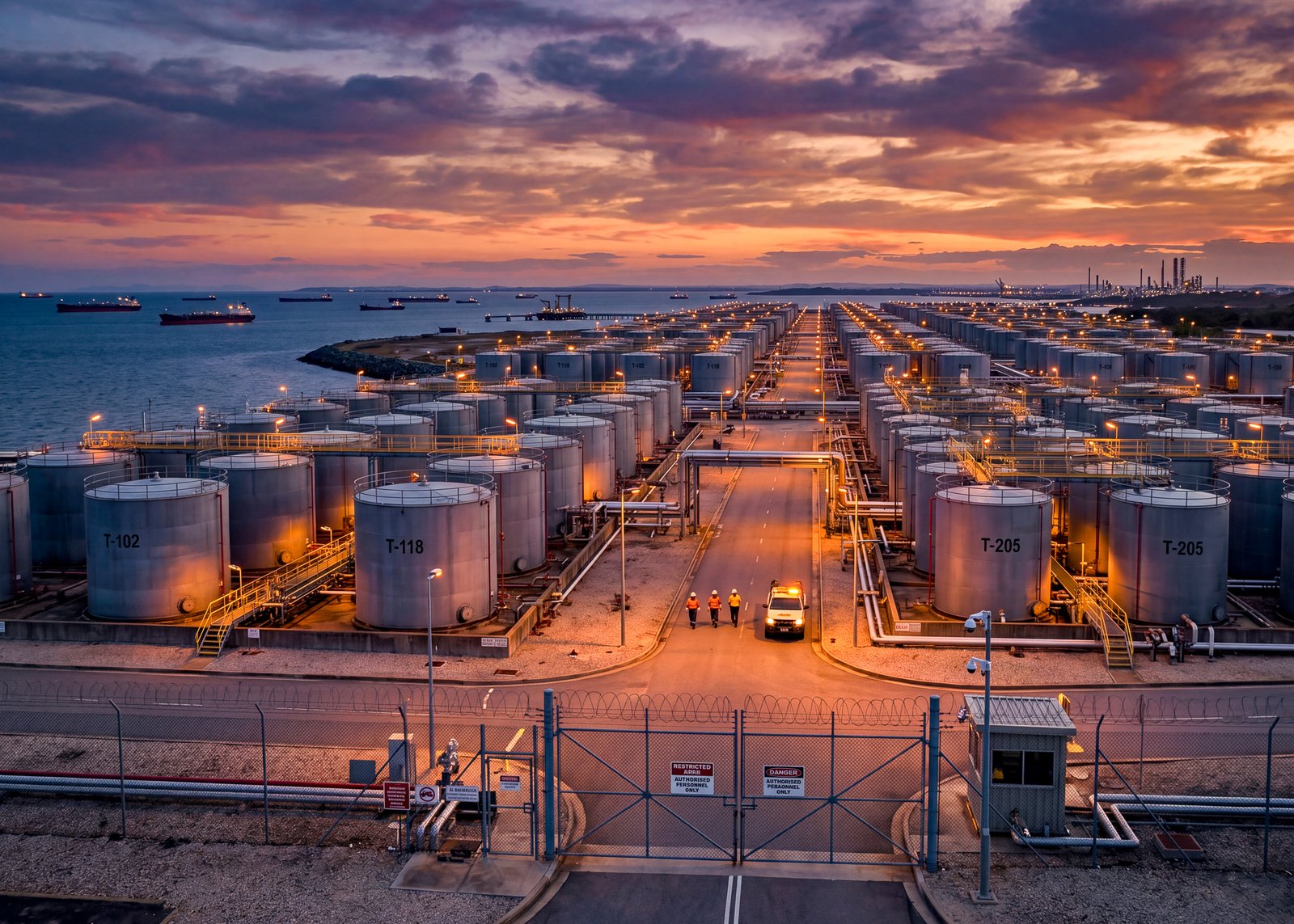
The United States occupies a different category entirely. The U.S. Strategic Petroleum Reserve held approximately 415 million barrels — roughly 58% of its authorized 714 million barrel capacity — going into the crisis. On paper, at 20 million barrels of daily consumption, that would last about 20 days if the entire country ran solely on the SPR. In reality, the U.S. produces approximately 13 million barrels per day from its own shale fields. The SPR is designed to plug the gap from lost imports, not to replace domestic production. That distinction makes the U.S. far more resilient than the raw numbers suggest.
How Depleted Are the Reserves?
The picture varies by country and by what type of reserve you are measuring.
For the global market overall, the International Energy Agency has warned that supply chain reserves — the working stocks that keep refineries and distribution systems running day to day — are severely strained after nearly three months of blocked exports from the Persian Gulf.
For the U.S. SPR specifically, the government has been drawing it down aggressively to cushion prices. In March 2026, as part of a coordinated response involving 32 IEA member nations, the U.S. authorized the release of 172 million barrels from the SPR — the American contribution to a globally coordinated 400 million barrel release intended to stabilize energy markets. That drawdown, combined with previous releases, has left the SPR well below its historical highs, though it remains operational.
China’s government reserves, by contrast, remain relatively robust. The combination of pre-crisis stockpiling and reduced import dependency on Middle East routes has kept China from facing the same pressure.
How Does Refilling Work — And Why It Takes Years
Refilling strategic reserves is considerably harder than emptying them, both financially and physically.
On the financial side, governments operate by a simple rule: buy low. Reserves are typically refilled when oil trades below $70 per barrel, protecting taxpayer money. With crude currently trading above $90 per barrel — and analysts projecting it could reach $110 to $130 or higher if the closure extends — no government is in a position to buy oil for storage. They are only drawing down.
On the physical side, you cannot simply pump oil back into a salt cavern. The process requires carefully extracting brine from the bottom of the cavern while injecting oil at the top — a slow, controlled operation designed to avoid dangerous pressure spikes and protect the integrity of the salt walls.
The deeper problem is supply. Refilling requires surplus oil in the global market — oil beyond what the world is already consuming. With the Strait of Hormuz blocking approximately 20% of global supply, there is no surplus to buy. Once the Strait reopens, the oil market will need to stabilize, production will need to ramp back up, prices will need to fall, and only then can the slow process of refilling begin. Energy analysts project it will take years to restore reserves to pre-crisis levels.
Which brings us to the central question: what does reopening actually look like — and what should consumers realistically expect at the gas pump when it happens?