July 21, 2026
On Tuesday, Patty and I went to Ward Bayou again, with her chair on the back. When you first enter Ward Bayou, you’re headed due east, and on a bright morning you can’t see a thing. It’s tough driving to the end of the road because Patty hears birds and wants to stop; but I thought we were driving to the end! That went on the whole way down the road — an ongoing process. Along the way we saw some white birds, Great Egrets and ibises, and stopped for those; we also saw some turkeys, a joy for Patty, who doesn’t normally get to see them. That was cool.
Click any image to view full size and browse the gallery.
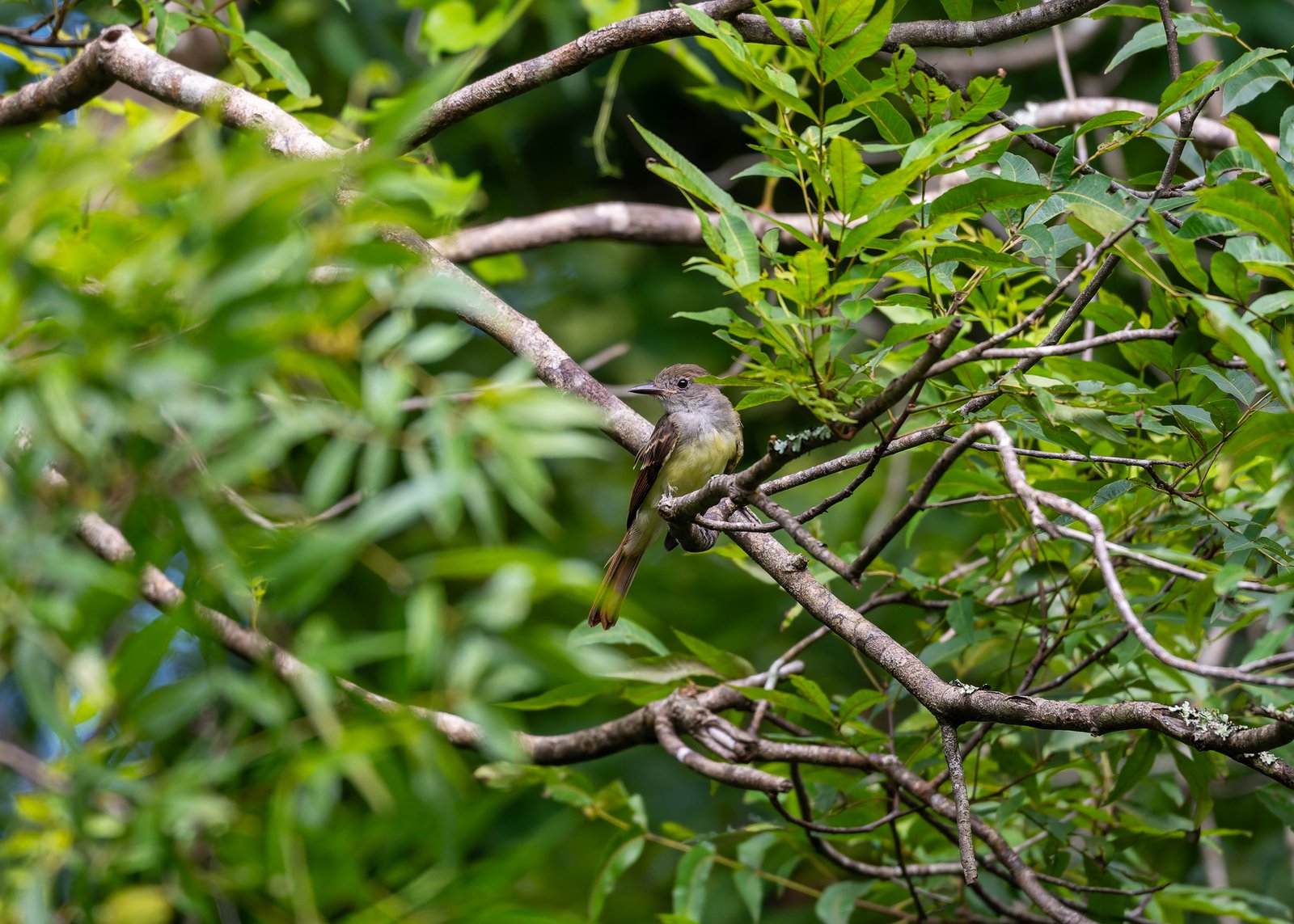
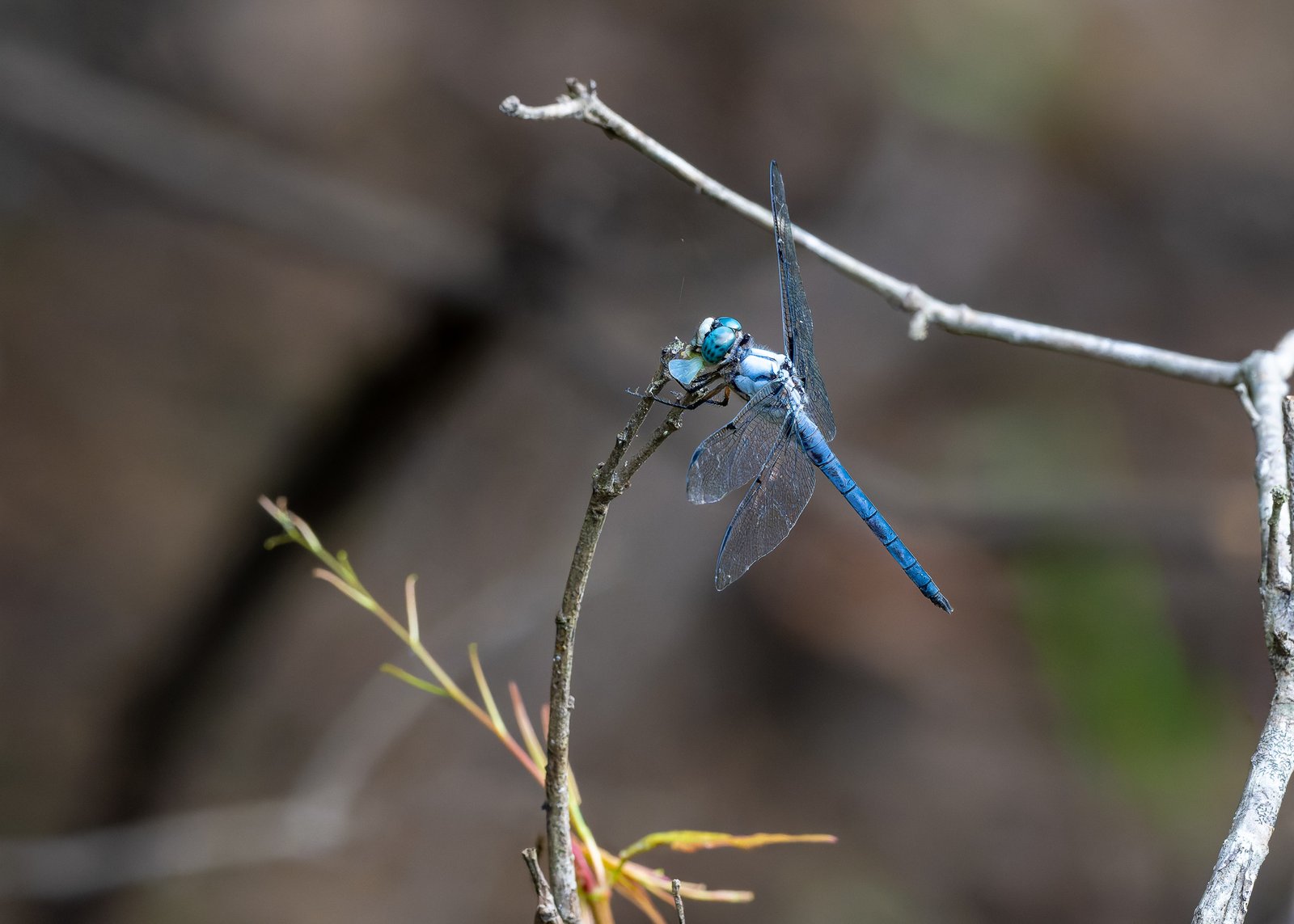
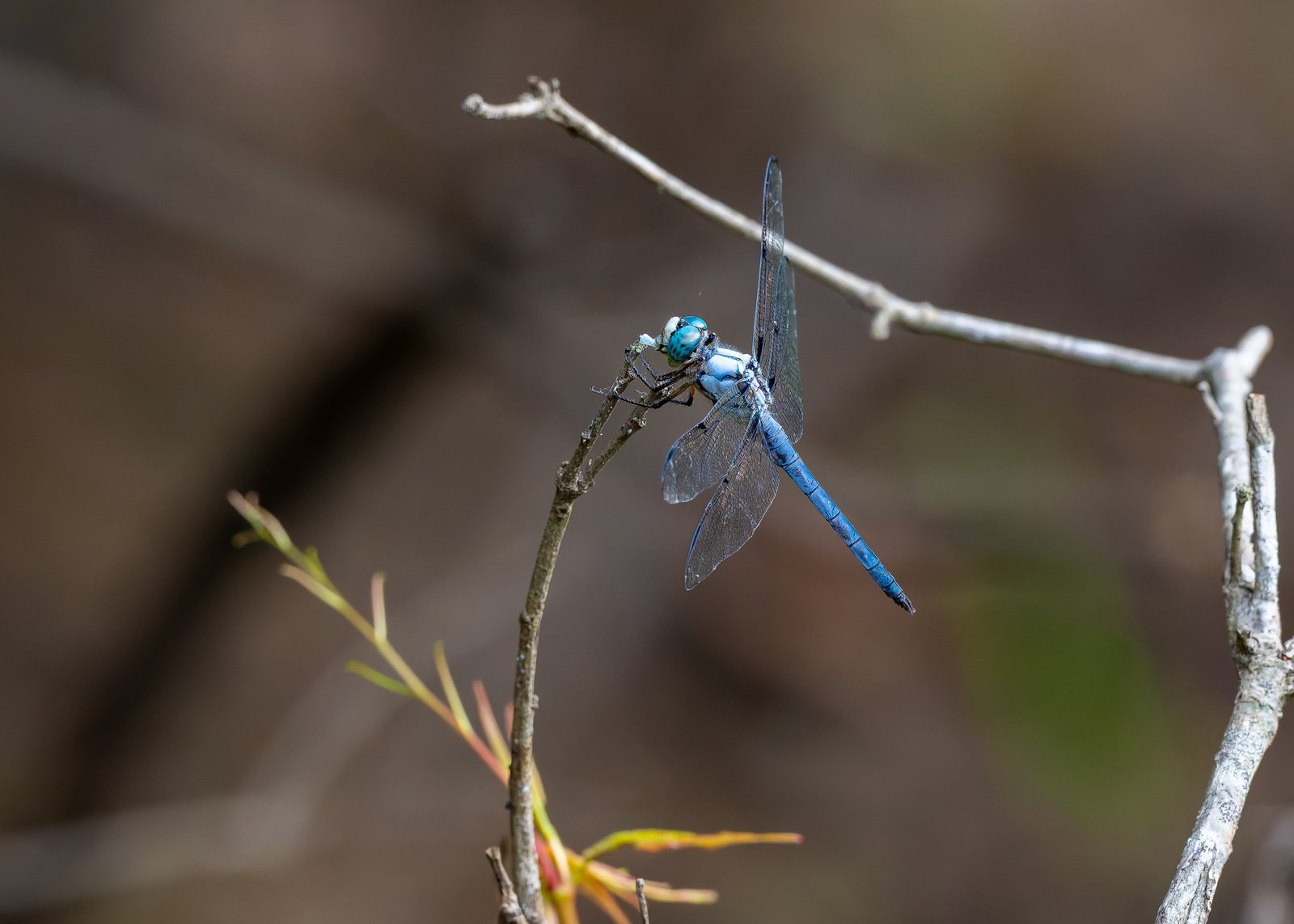
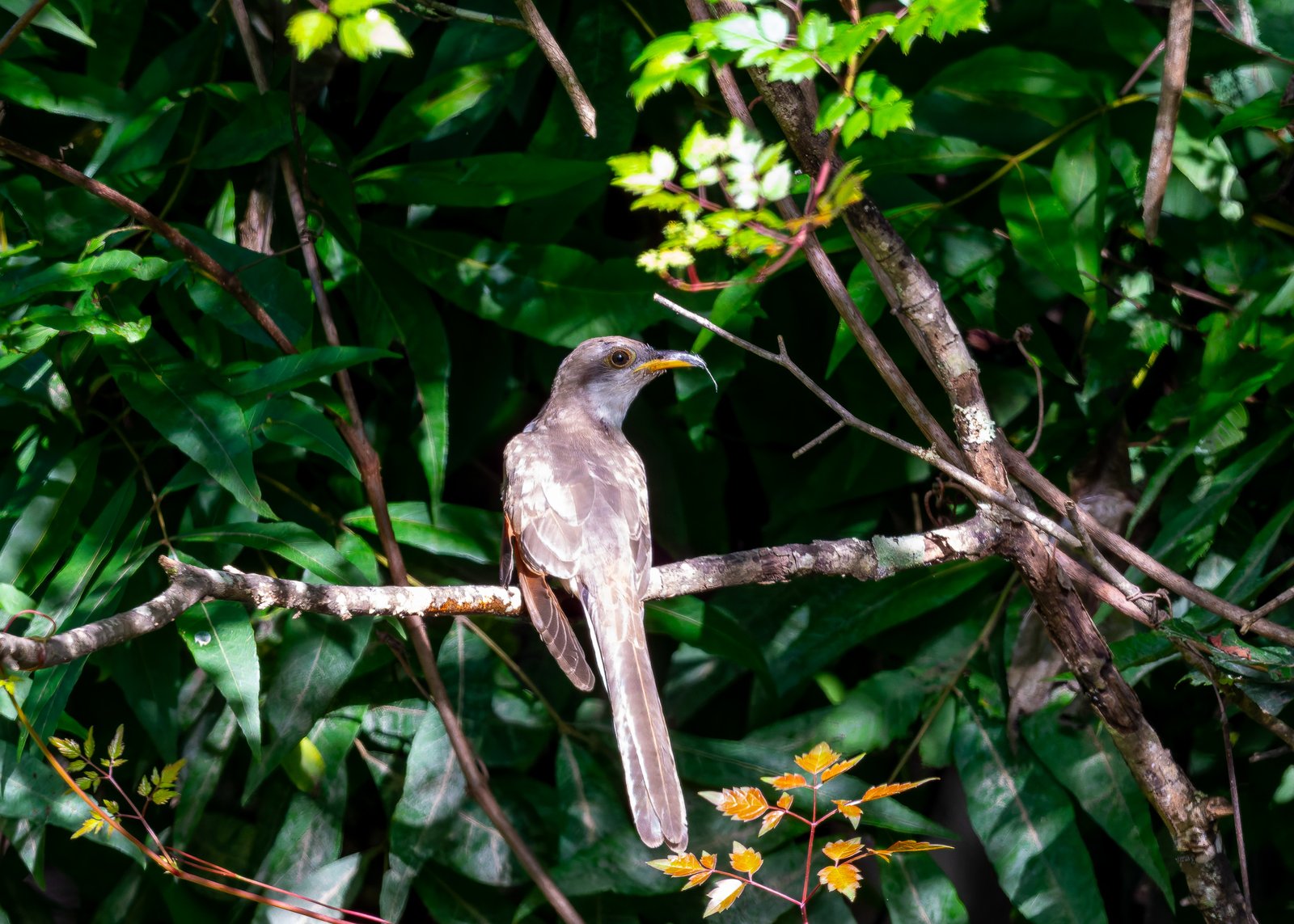
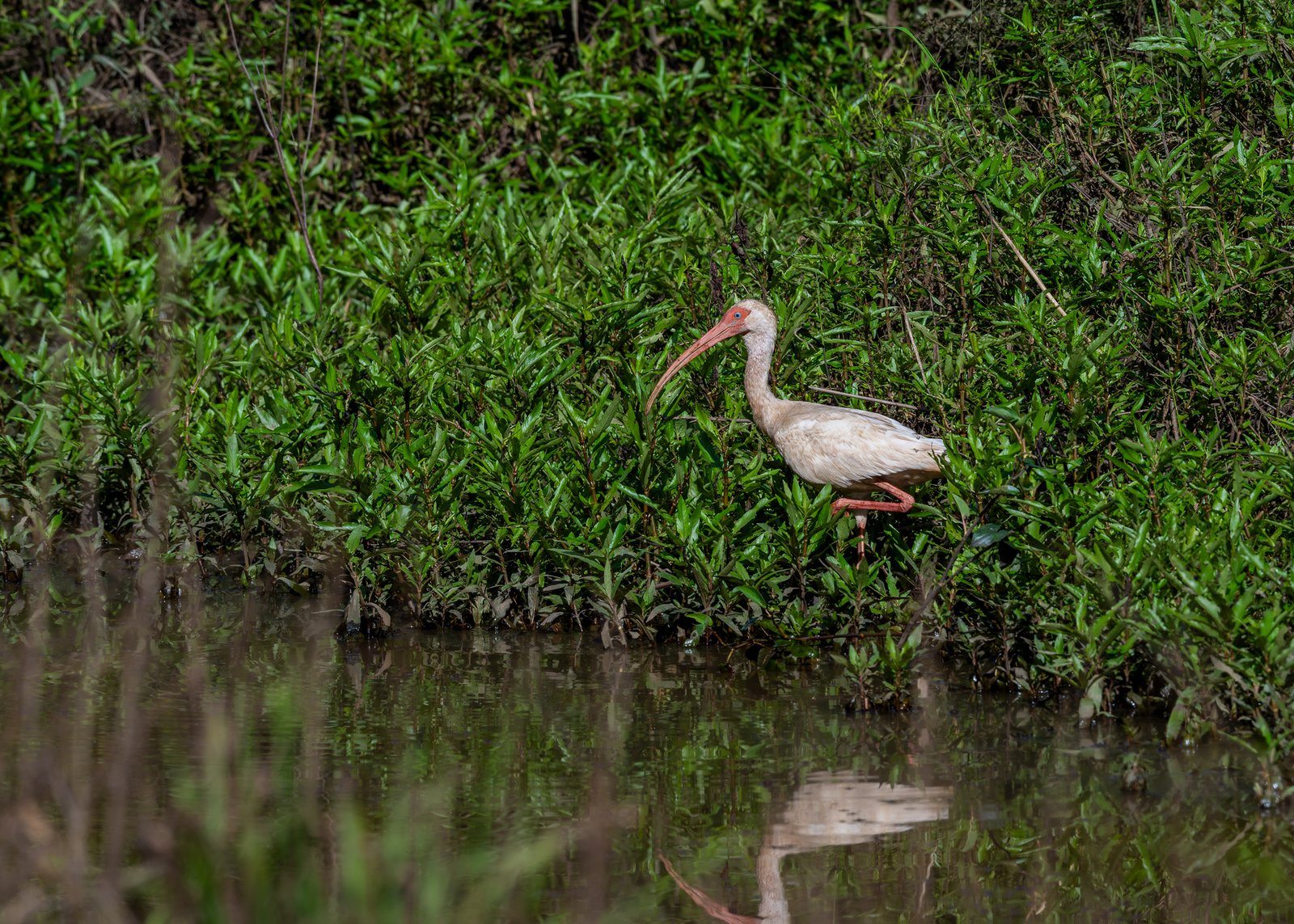
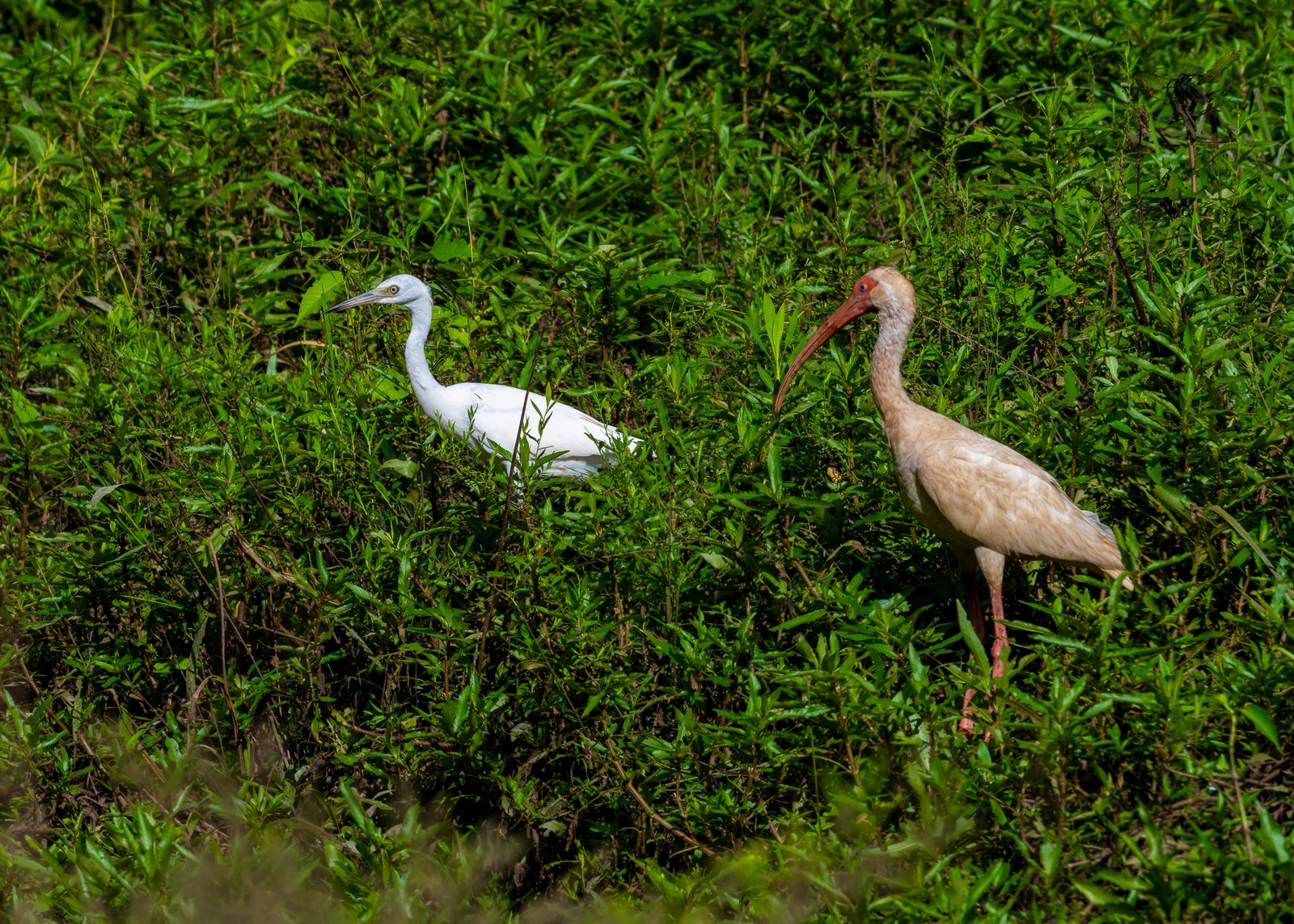
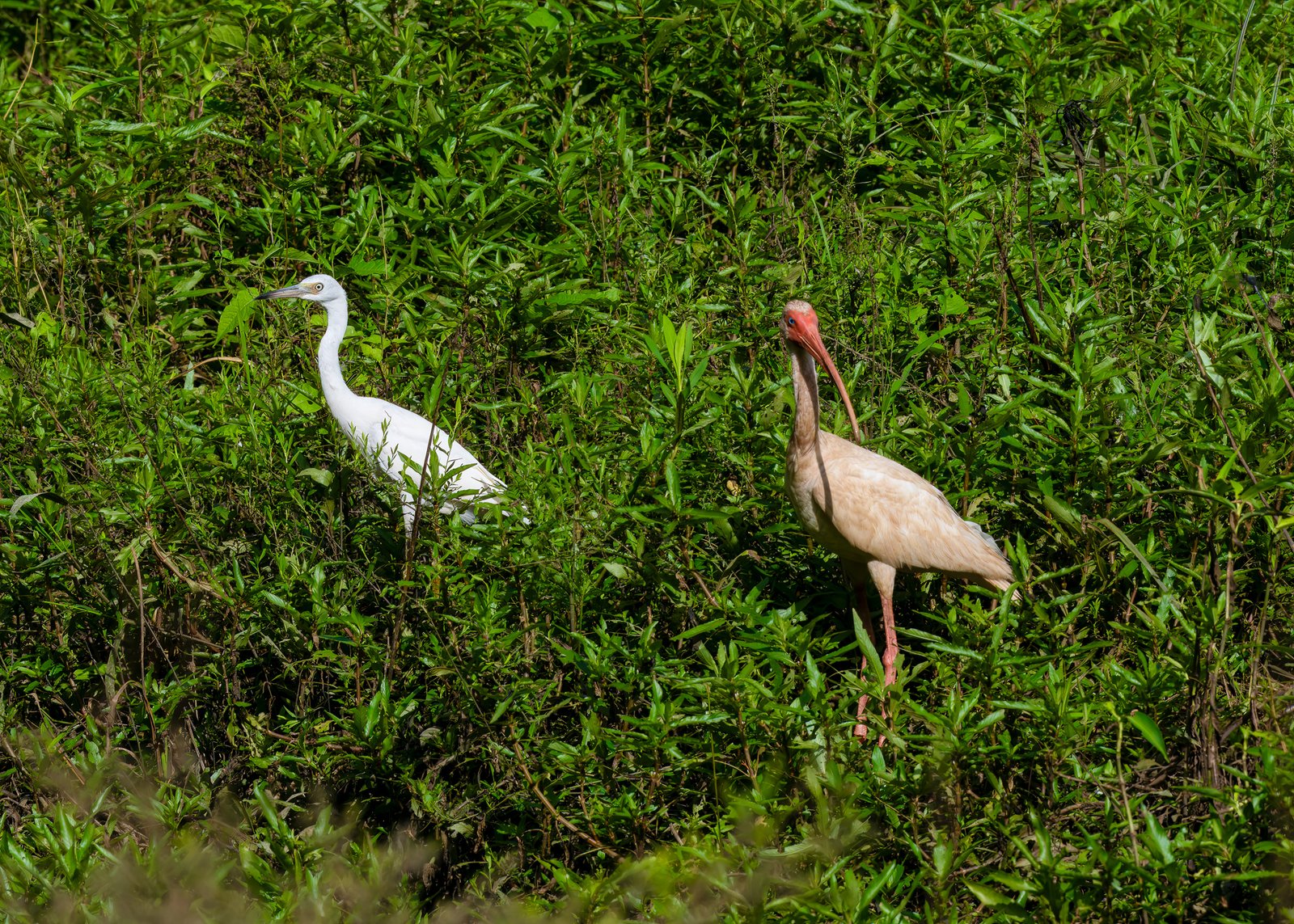
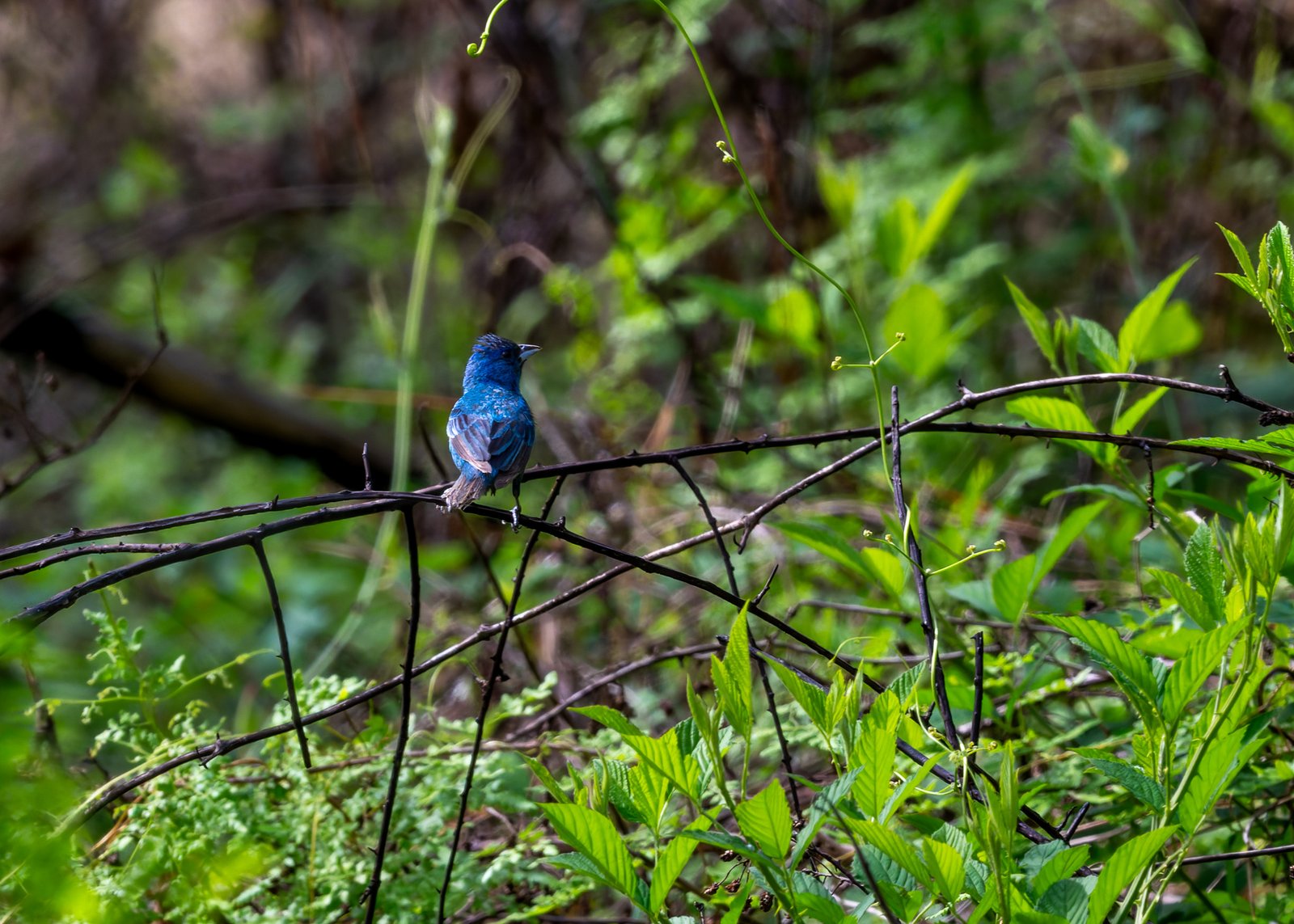
When we reached the far end — the end of the drivable road — we parked at the concrete bridge, where vehicles are forbidden; from there you can walk all the way to the Pascagoula River. We’ve never walked all the way to the river, but we hear it’s quite good. Patty walked across the bridge, which is normally a good birding spot, and called back to tell me, “There are warblers here.”
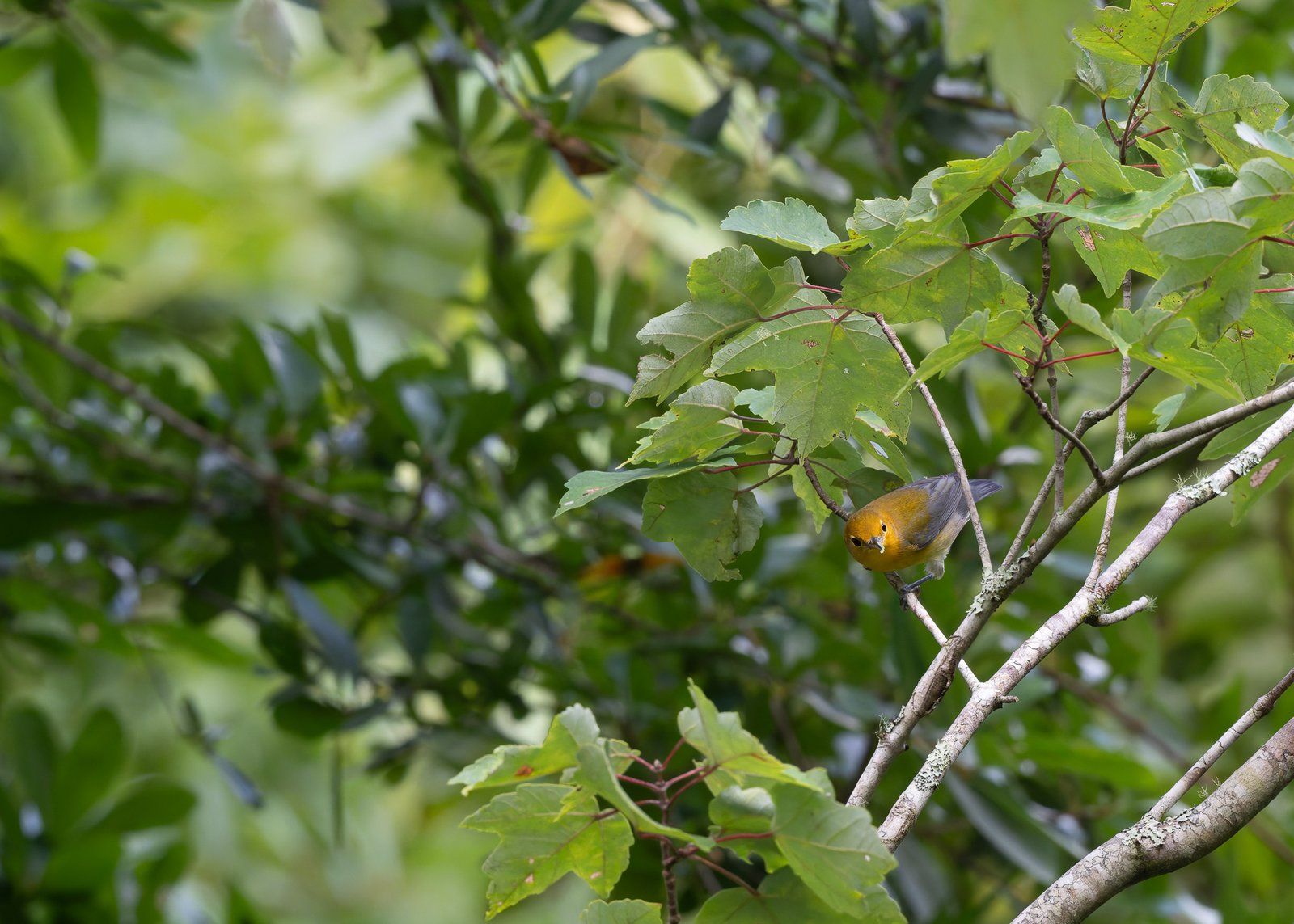
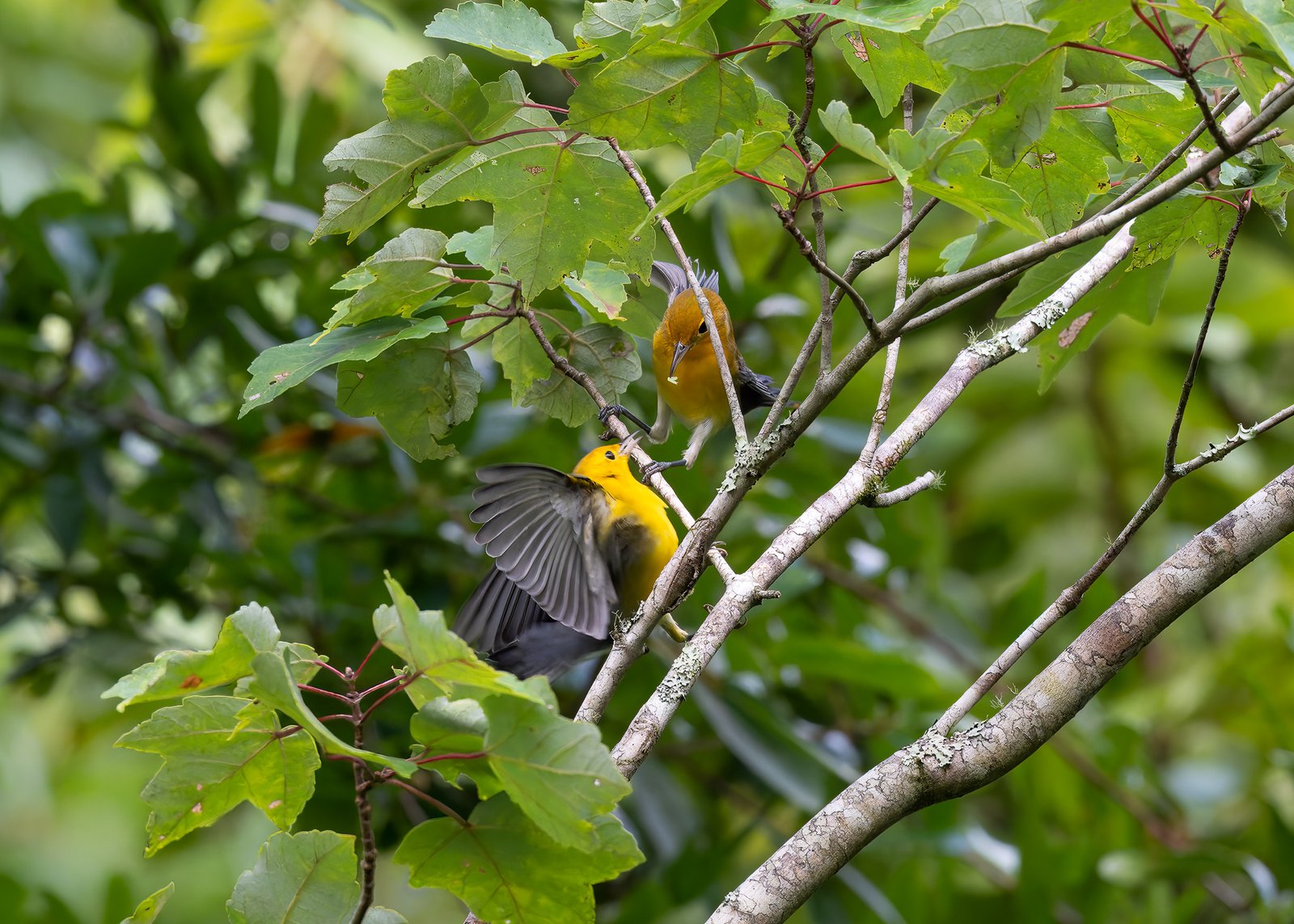
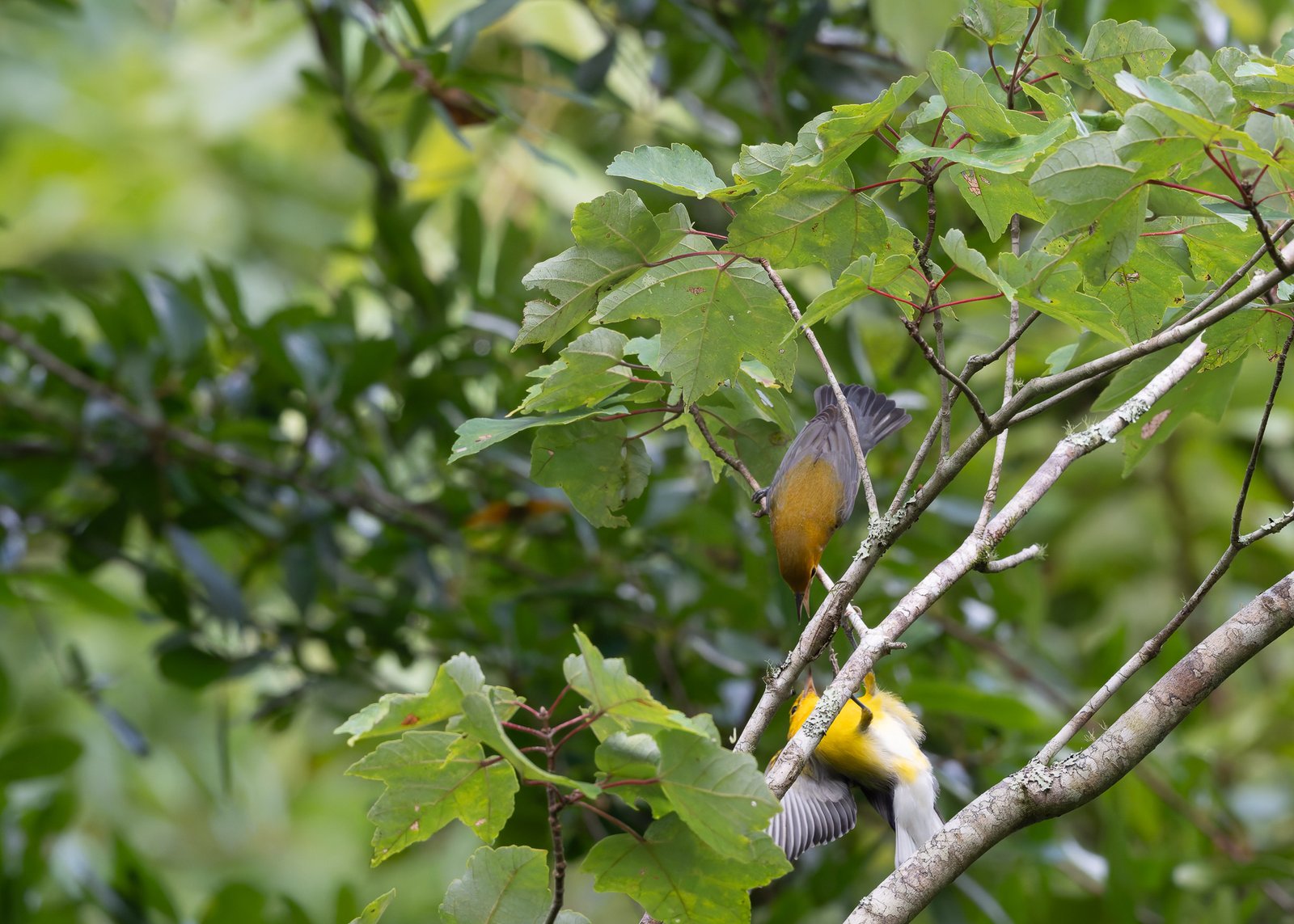
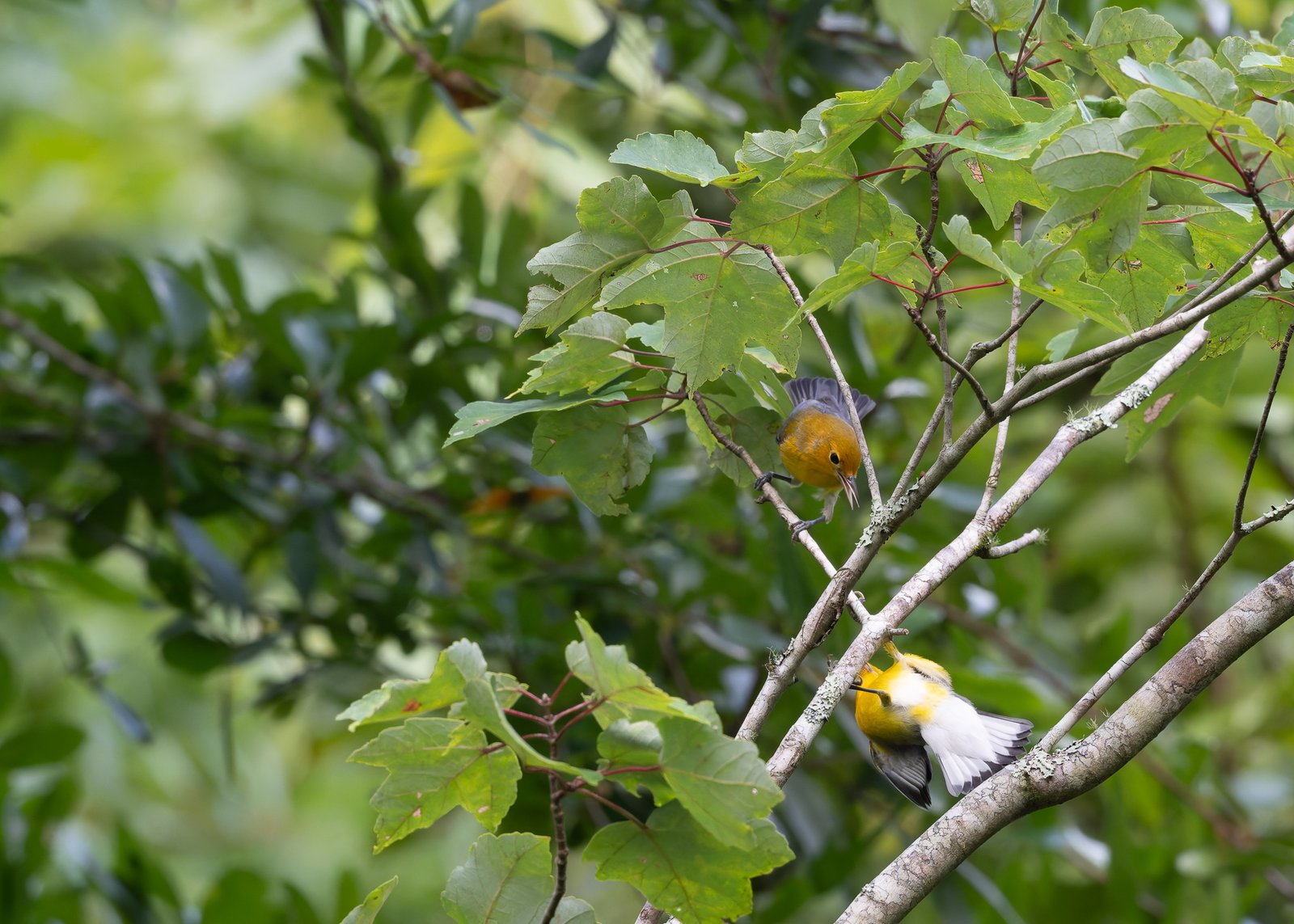
I grabbed my camera and walked over. Sure enough, there was a family of Prothonotary Warblers. At this stage it’s hard to tell the parents from the young birds, because they aren’t chicks anymore — they’re almost full-grown warblers with a full-grown appetite and a feed-me attitude. The way you can tell who is who is that one is catching insects while the other is begging. It’s a funny routine, and you can see it clearly in these images: the parent finds a tiny caterpillar, feeds it to the young bird, and then spends five minutes lecturing it about learning to hunt and take care of itself instead of depending on the parents.
I thought it would be fun to portray that dynamic in these pictures. Enjoy!
Click any image to view full size and browse the gallery.
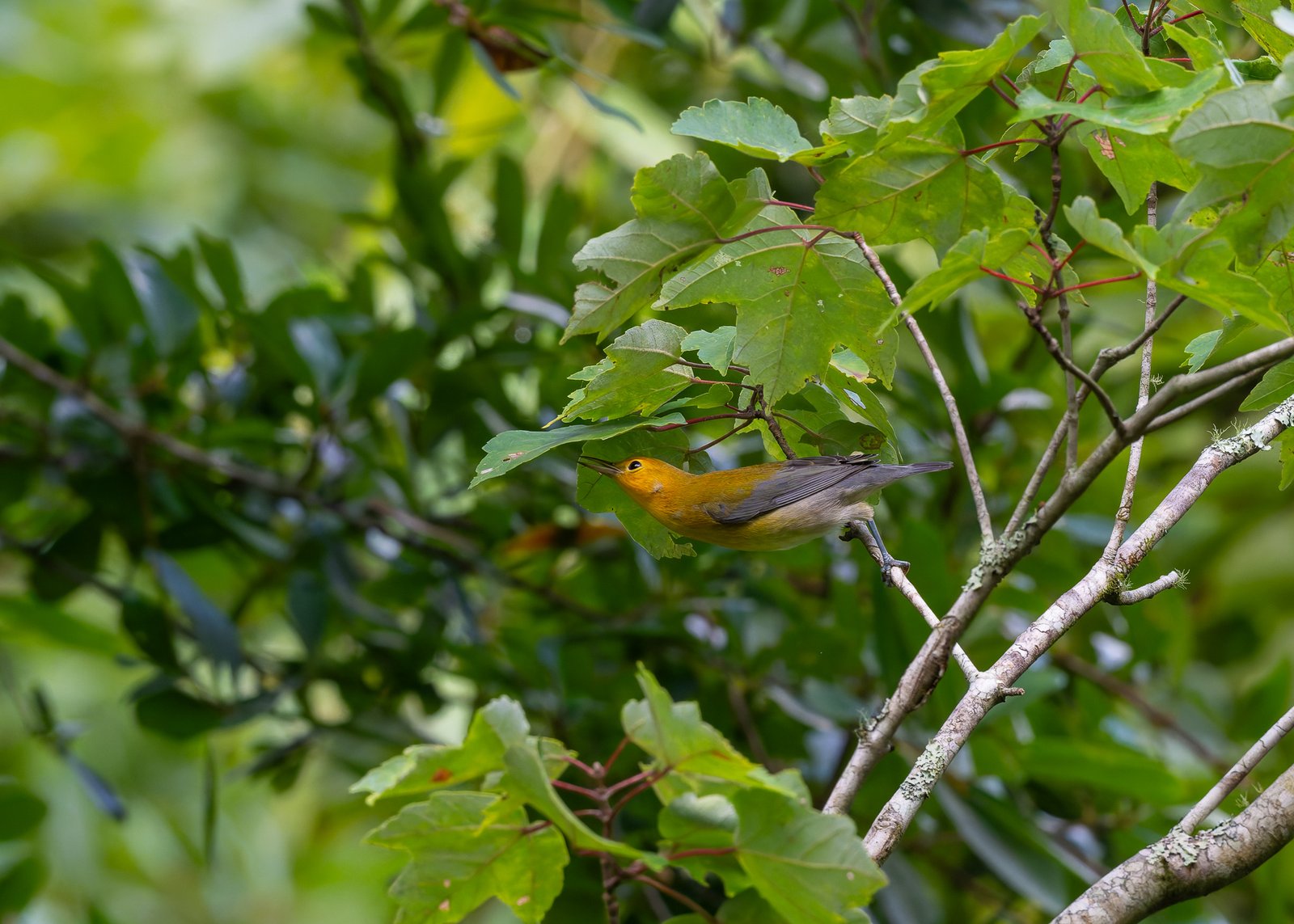
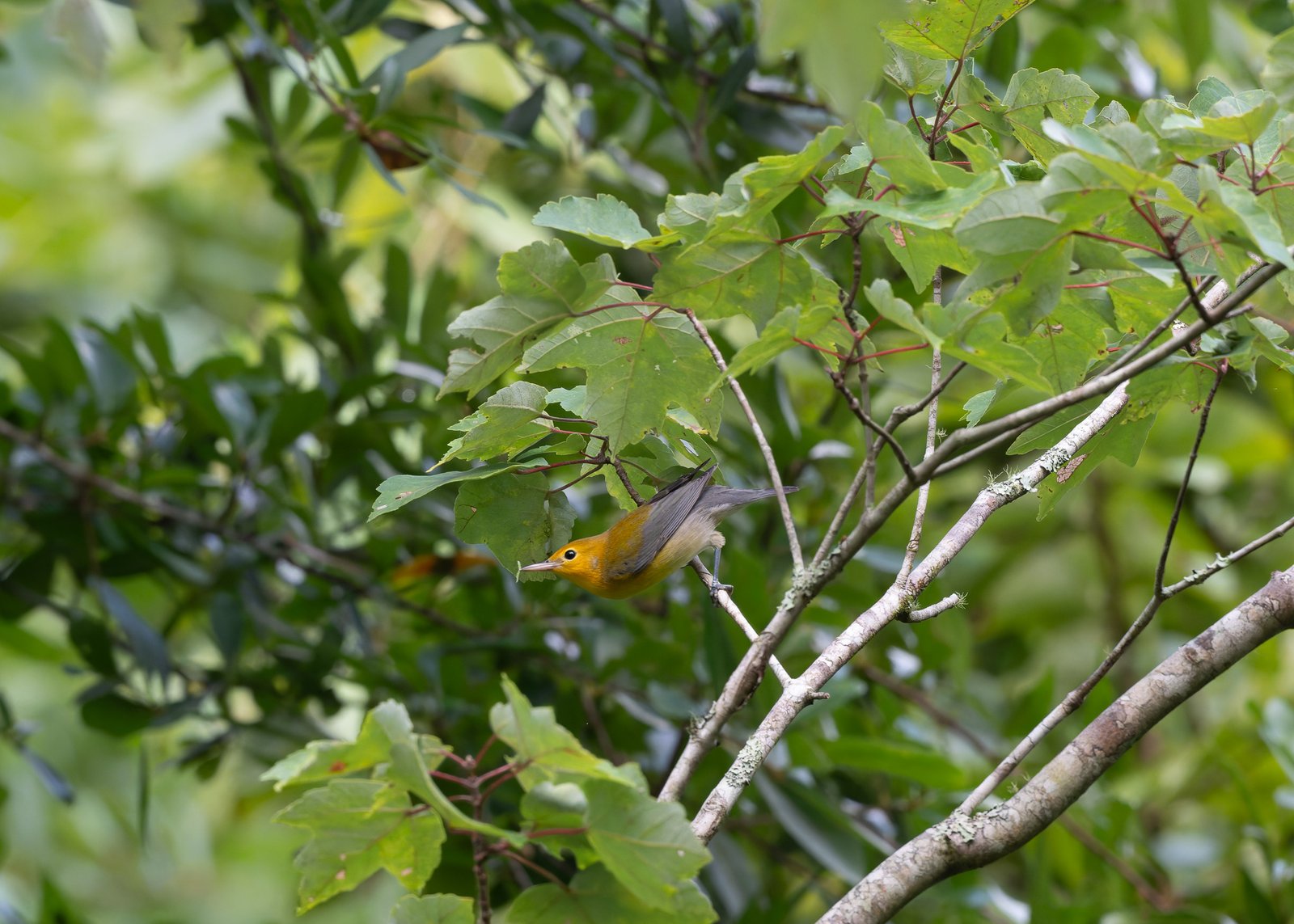
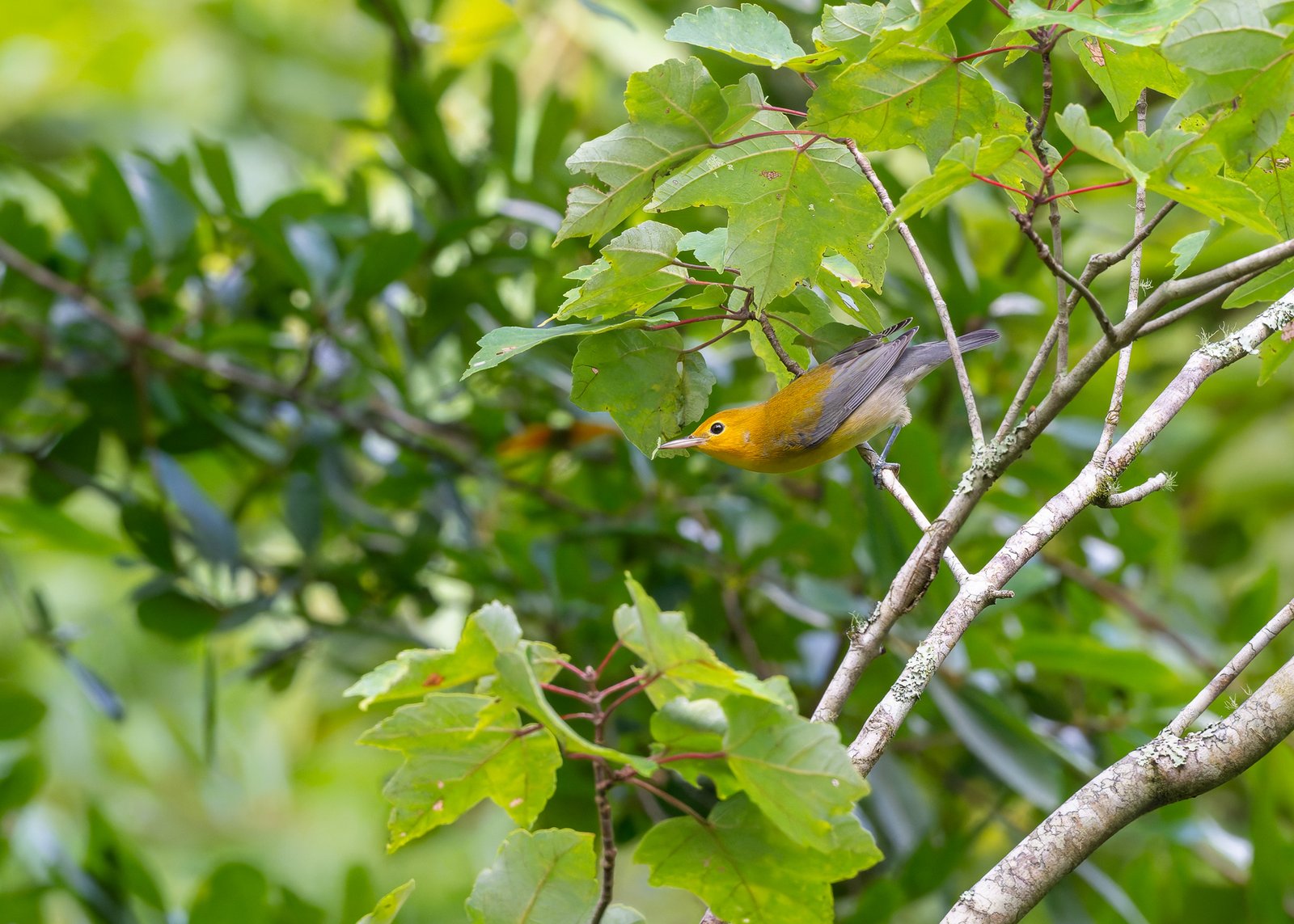
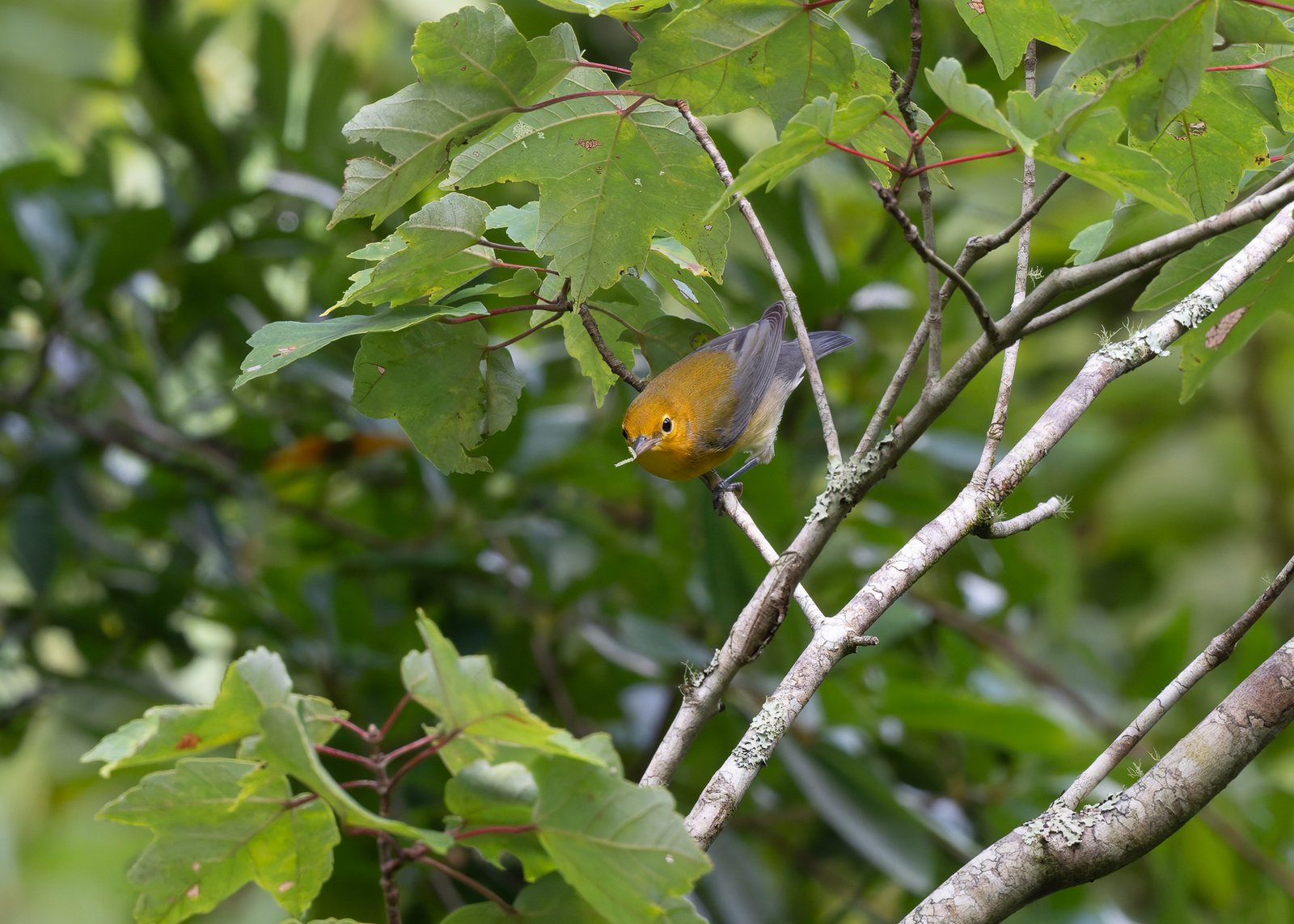
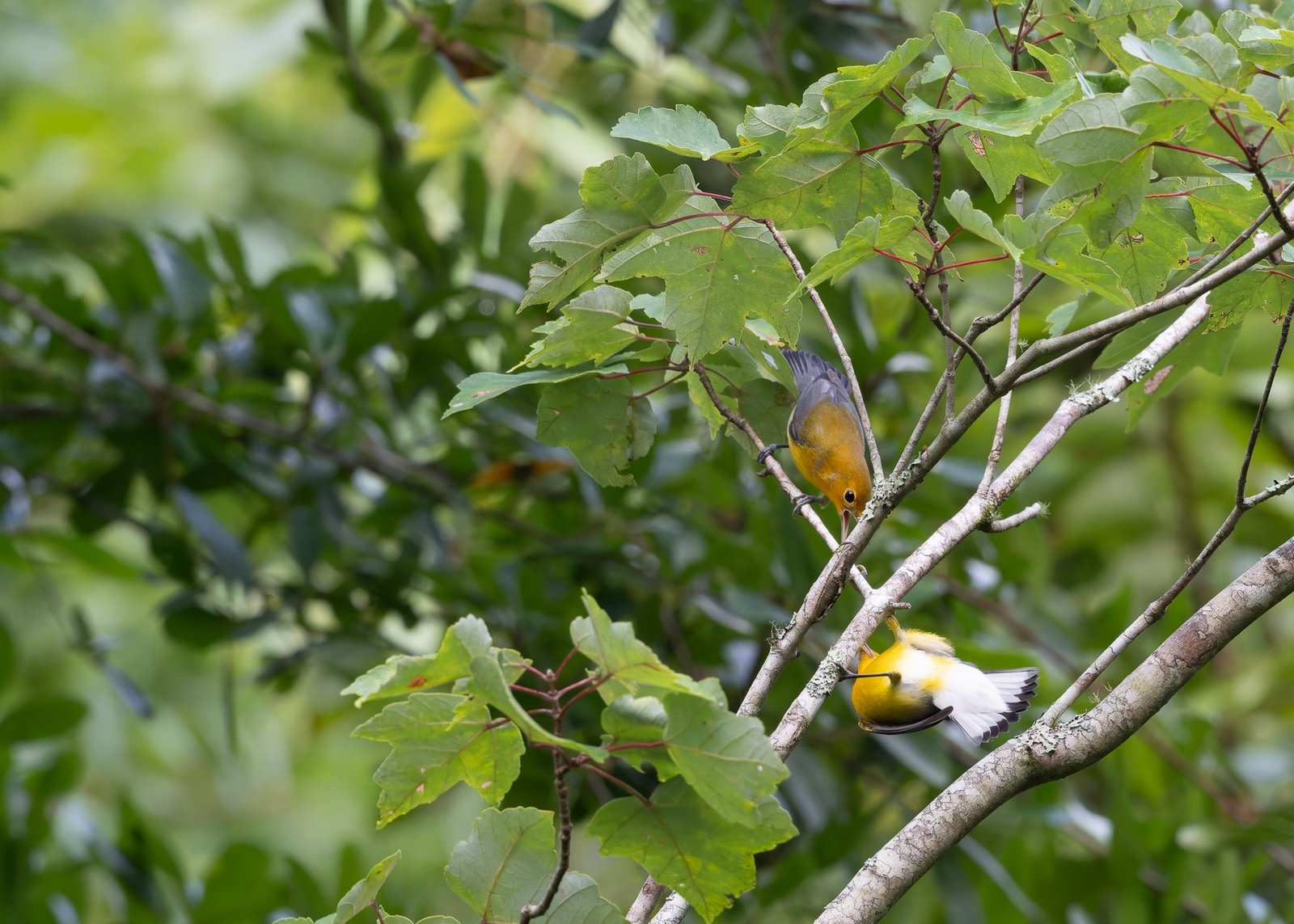
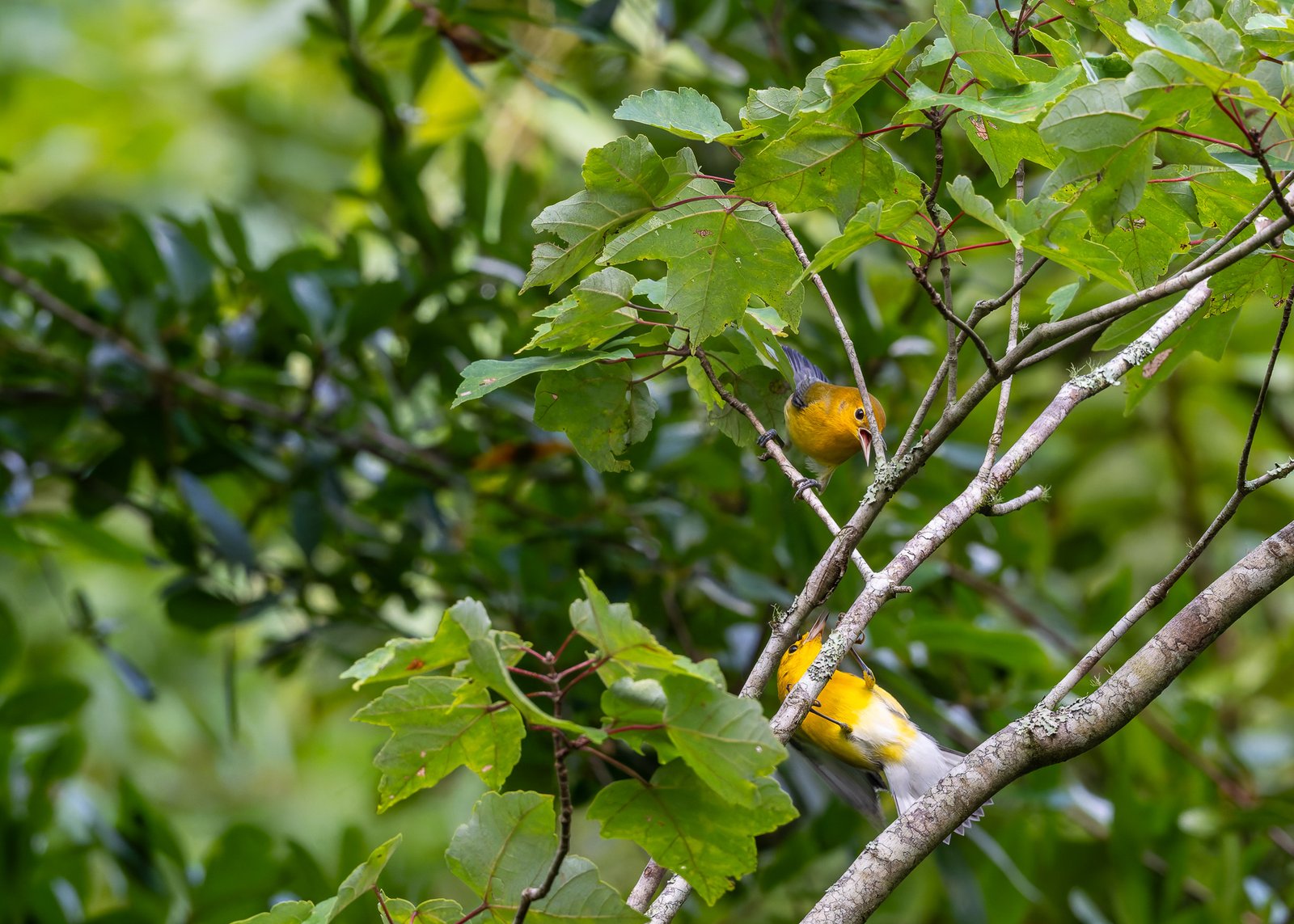
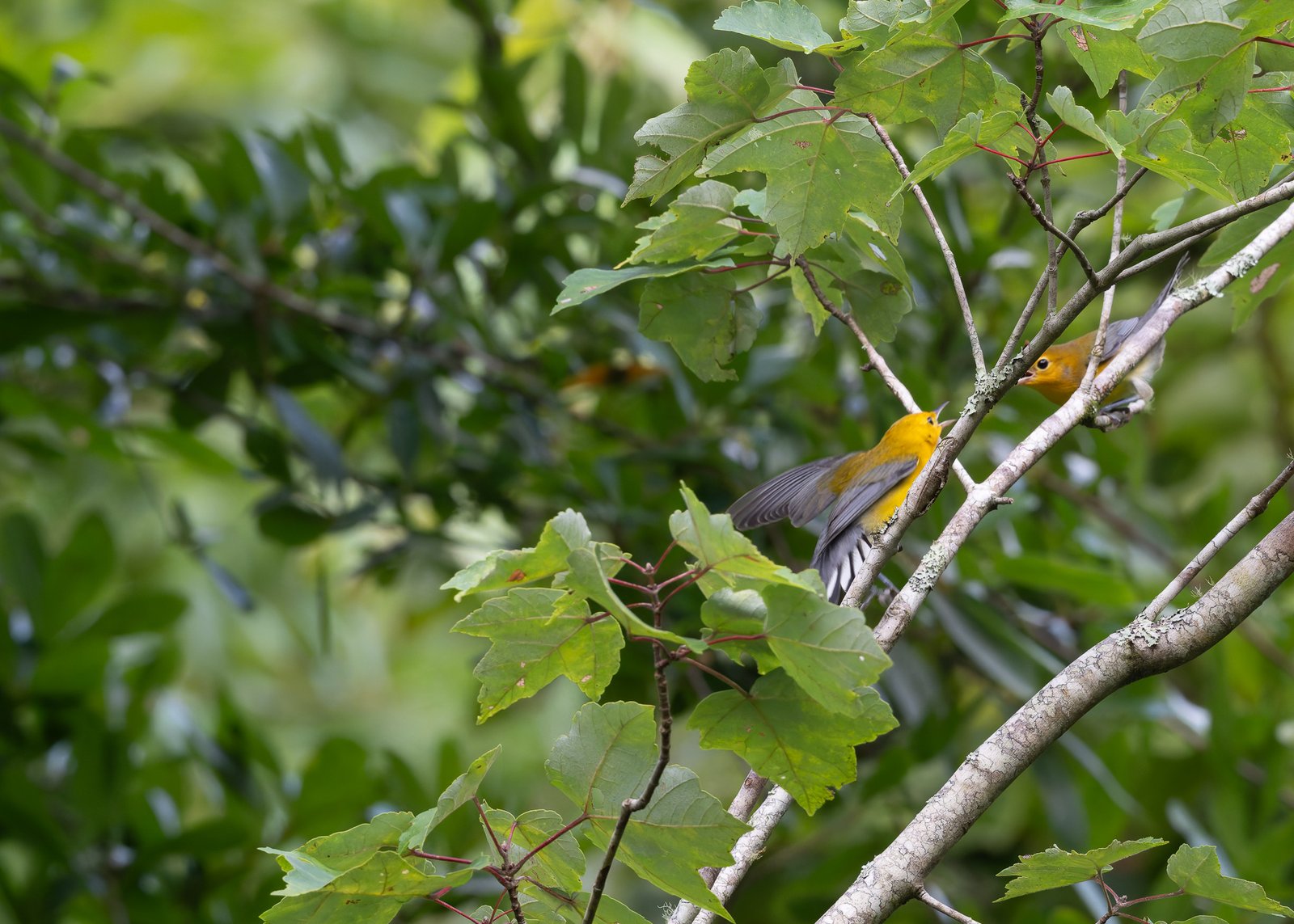
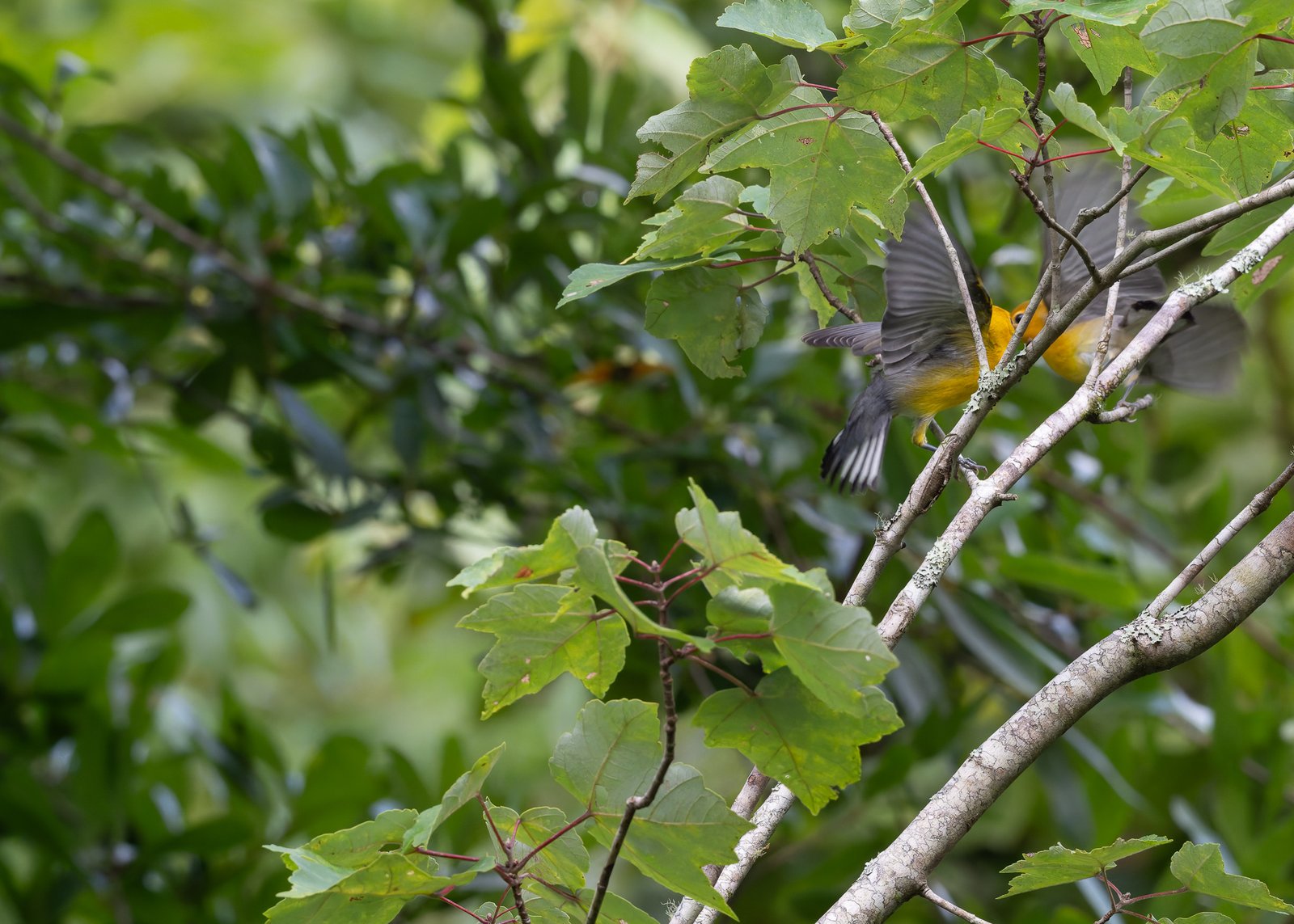
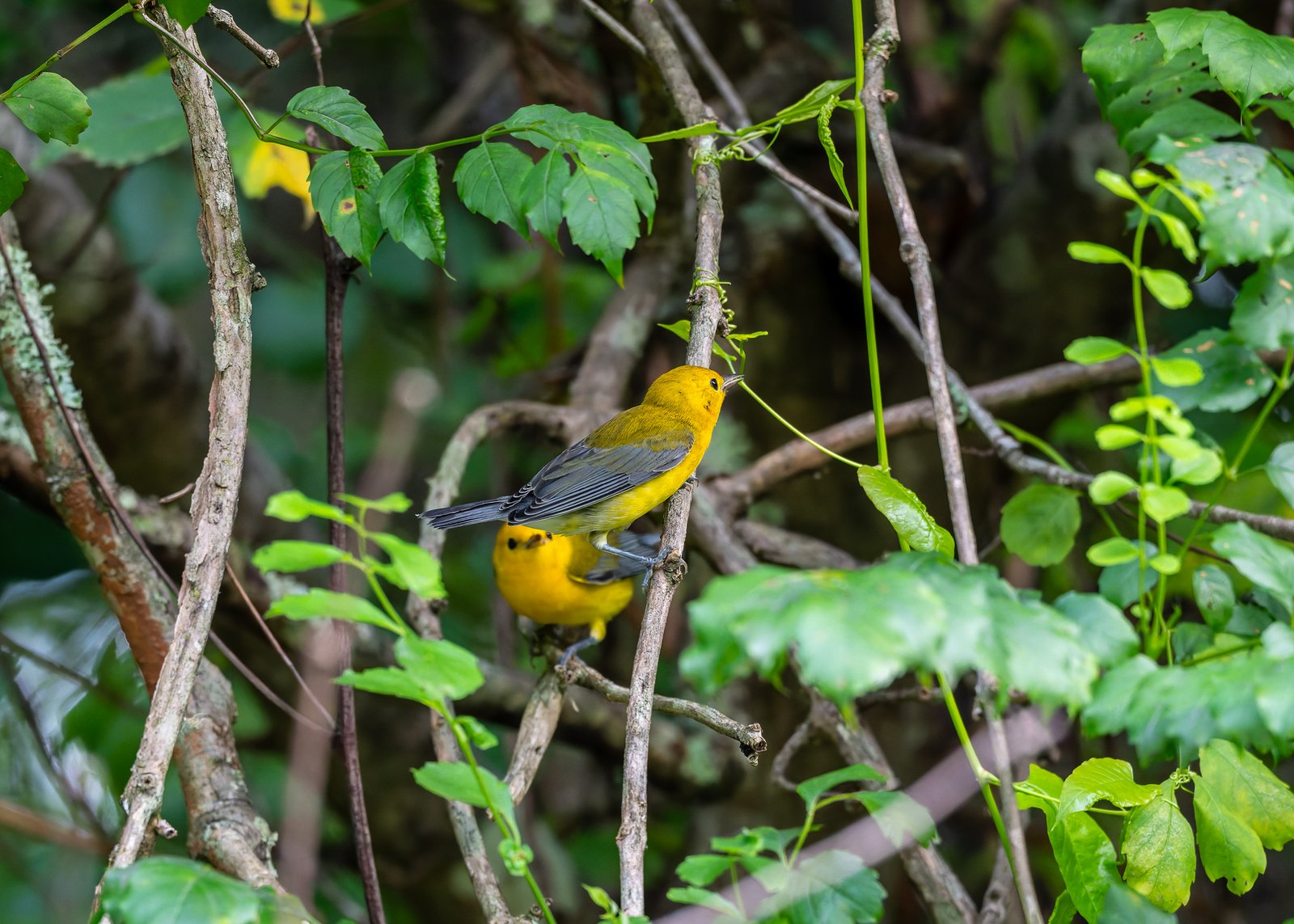
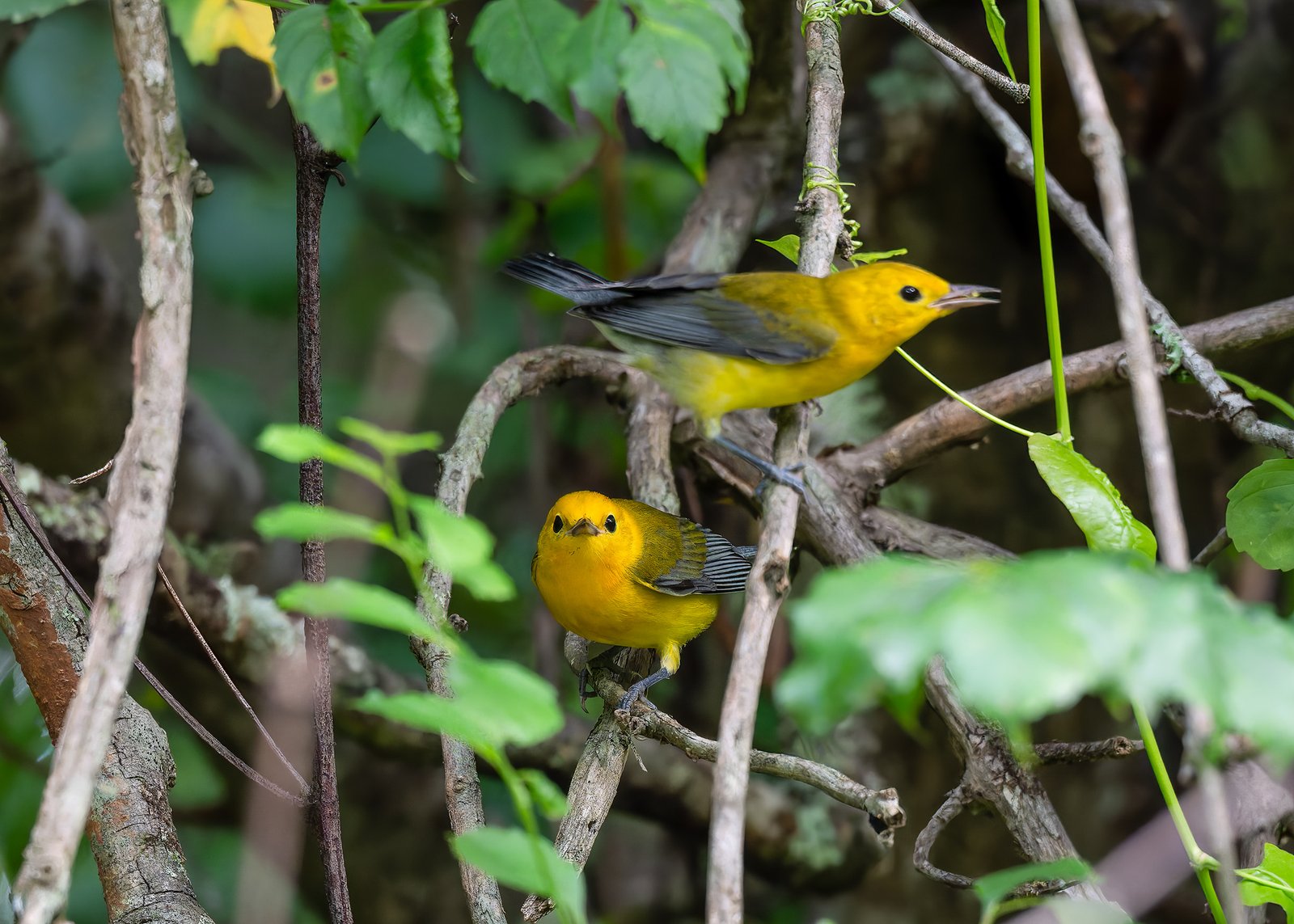
Animals do not overthink the rules of raising young; they simply model survival and love through everyday actions
More about Prothonotary Warbler
The Real Reason for the Lecture
That feed-me attitude didn’t come out of nowhere, and neither did the lecture. Every Prothonotary Warbler in these photos just finished one of the toughest commutes in the bird world: they winter in Colombia, Costa Rica, or Panama, then fly nonstop across the entire Gulf of Mexico to reach a nesting spot like Ward Bayou. They’re usually among the very first songbirds to make it back to our coast each spring, arriving mid-to-late March into April, worn out and ready to get straight to business.
That business is raising a family fast, because the whole breeding season only runs April through July. The parents spend nearly all of it exactly the way you see in these pictures — working leaf by leaf through the underbrush, hunting caterpillars, spider egg sacs, and any aquatic insect larvae they can find, feeding almost constantly.
The young ones leave the nest shockingly early, at just 10 or 11 days old; they aren’t nearly ready to survive on their own. So for another two or three weeks, they do exactly what you caught on camera: trail the parents everywhere, flapping and hollering for another free meal. And the parents, who are often already thinking about a second brood before the season runs out, eventually run out of patience; they start withholding food, buzzing at the kids, even snapping their beaks — anything to get the message across. Go hunt. You’re ready.
Which is exactly the lecture that parent was giving in these photos. It just took the warblers a few million years of evolution to get the timing right.