June 16, 2026
The most common challenge raised against electric vehicles cuts straight to the point: if the electricity charging those batteries comes from burning coal and natural gas, are we simply moving the pollution from the tailpipe to the smokestack?
It is a fair question, and it deserves a straight answer.
What Powers the Grid Today
Electricity grids vary enormously by country and region. In the United States — one of the world’s largest EV markets by total volume — the current power mix breaks down roughly like this: fossil fuels, primarily natural gas with coal declining, account for approximately 60 percent of electricity generation; nuclear power provides around 18 percent; and wind, solar, and hydropower together contribute roughly 22 percent, a share that has grown significantly over the past decade and continues to expand.
The picture looks different elsewhere. France generates roughly 70 percent of its electricity from nuclear power. Norway runs almost entirely on hydroelectric — and leads the world in EV adoption, with more than 80 percent of new car sales now electric. China, the world’s largest EV market by volume, is simultaneously the world’s largest producer of solar panels and wind turbines. Parts of the Middle East and Southeast Asia remain heavily dependent on oil and gas for power generation. The honest answer to where the electricity comes from is: it depends on where you live.
Is an EV Still Cleaner on a Dirty Grid?
In the vast majority of cases, yes — and the reason comes down to basic physics.
Large power plants, particularly modern natural gas facilities, convert fuel into electricity at efficiencies approaching 60 percent. A conventional gasoline engine, by contrast, wastes roughly 65 to 75 percent of its fuel as heat — only a fraction of what goes into the tank actually moves the car. When you account for that efficiency gap across the full lifecycle of both vehicles, research from organizations like the Union of Concerned Scientists consistently shows that EVs produce significantly fewer greenhouse gas emissions than gasoline-powered cars, even when charged on grids with substantial fossil fuel generation.
The one genuine exception involves regions where coal so heavily dominates electricity generation that the math tips the other direction. Those regions are narrowing as coal plants close globally, but they are worth acknowledging honestly.
Building a Grid That Can Handle the Load
Even granting that EVs are cleaner today, scaling to hundreds of millions of them worldwide requires a grid capable of handling the additional demand — without crashing, and without simply burning more fossil fuels to meet it.
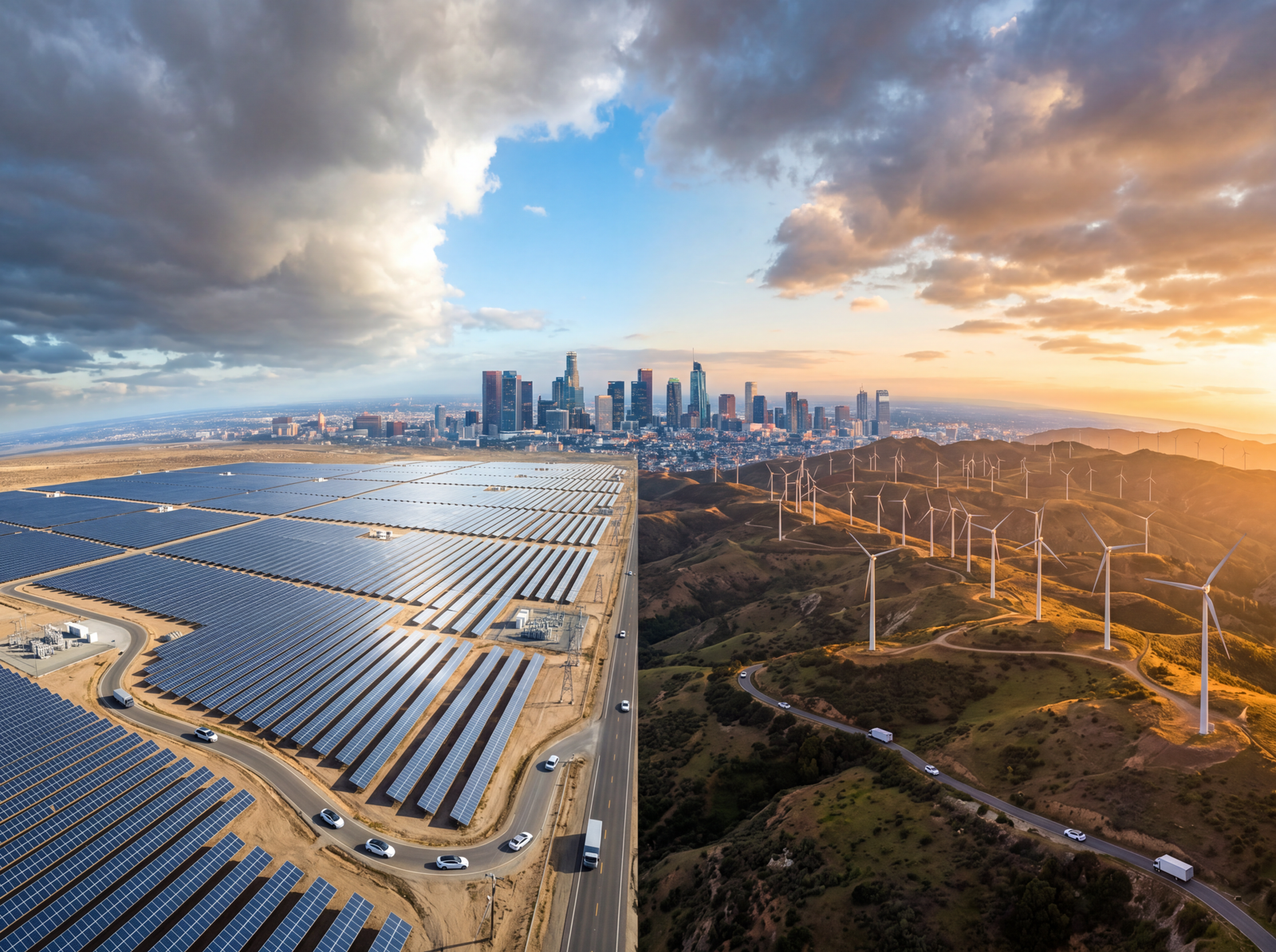
Three developments are driving that transformation. The first is the rapid expansion of solar and wind generation. The cost of both has dropped so dramatically over the past fifteen years that they are now the cheapest source of new electricity in most of the world, and deployment is accelerating.
The second is grid-scale battery storage — large installations that store surplus solar energy during daylight hours and discharge it when demand peaks in the evening, when millions of drivers plug in after work. This smooths out the intermittency problem that has always been renewable energy’s primary limitation.
The third is smart charging. Utilities increasingly use time-of-use pricing — making electricity substantially cheaper during off-peak hours like the middle of the night — to encourage EV owners to charge slowly when the grid has spare capacity. The result is that a large share of EV charging happens during hours when electricity is both cleanest and most abundant, without the driver doing anything beyond setting a timer.
None of this changes the fact that mining the minerals required for those batteries carries its own environmental and humanitarian costs — costs that are less visible than a smokestack but no less real. That is the subject of the next essay.
Thought provoking topic! Complex issue to solve but definitely worth solving.