June 19, 2026
The transition to electric vehicles does not eliminate environmental damage—it relocates and transforms it. Trading a fossil-fuel problem for a mineral-extraction problem is a meaningful improvement in many respects, but the full picture demands honesty about what that extraction actually costs.
Three minerals sit at the heart of the modern lithium-ion battery: lithium, cobalt, and nickel. Each comes with its own set of environmental and human consequences.
Lithium: A Water Problem in Some of the Driest Places on Earth
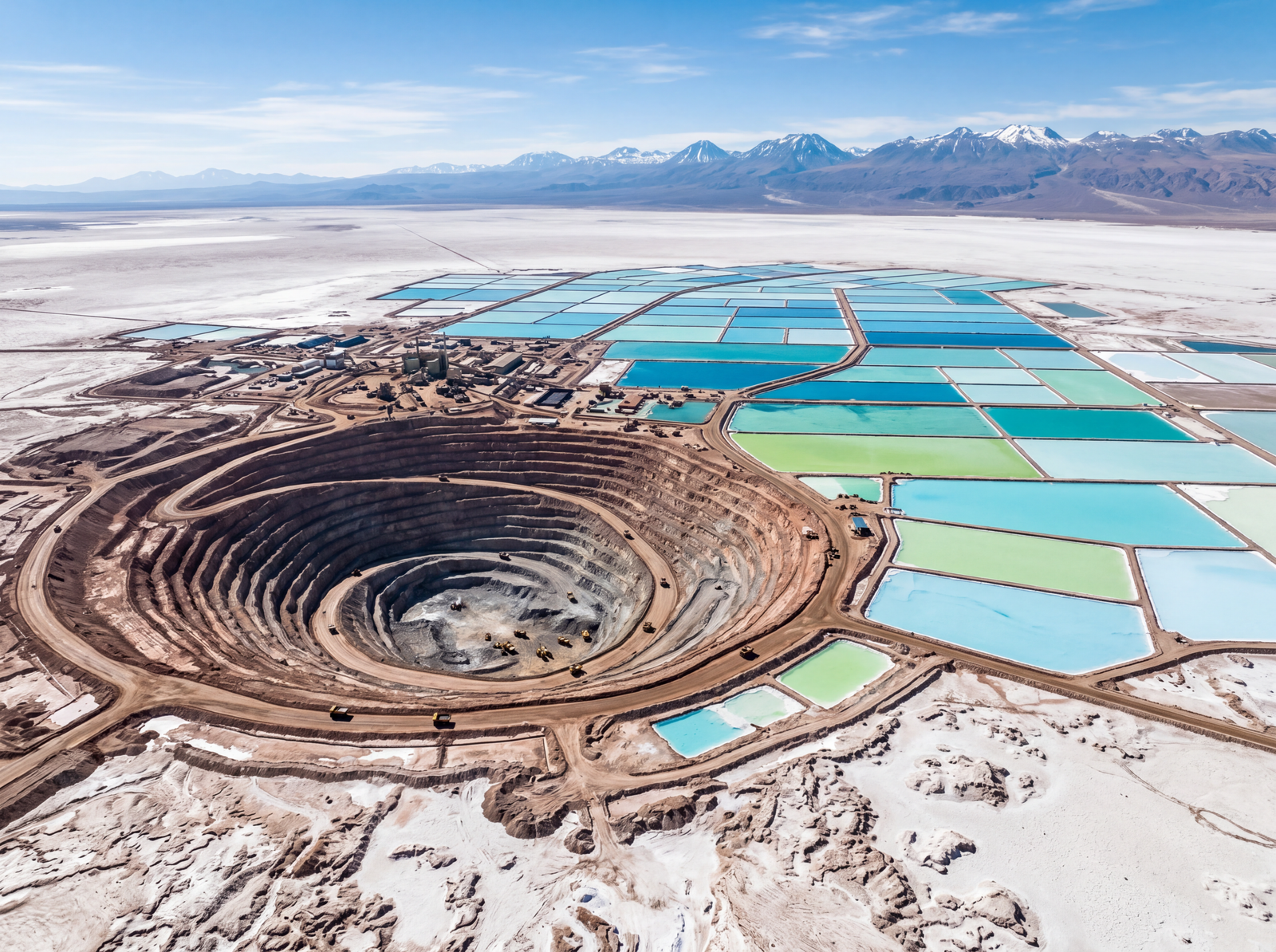
Lithium is the core component of all modern EV batteries. The large majority of the world’s supply comes from two main sources: Australia, which mines it from hard rock using conventional open-pit methods, and the “Lithium Triangle” of South America—Chile, Argentina, and Bolivia—where it is extracted from underground brine pools beneath vast salt flats. China has also emerged as a significant producer, accounting for roughly 14 percent of global output.
The South American extraction method is where the environmental cost is most acute. Miners pump lithium-rich brine to the surface into massive evaporation ponds spread across the desert floor. The process is effective but water-intensive—industry and environmental research data place consumption in the range of 500,000 gallons of water per ton of lithium extracted. In regions like Chile’s Atacama Desert, already one of the driest places on Earth, that draw depletes local water tables, dries up wetlands, and threatens the water supply of indigenous farming communities that have lived in those valleys for centuries.
Hard-rock mining, used in Australia and at proposed sites in Nevada and elsewhere, avoids the water problem but introduces others. Open-pit operations require clearing large tracts of land and using toxic chemicals, including sulfuric acid to process the ore, creating risks of soil and groundwater contamination at and around the mine site.
Cobalt: The Human Cost
Cobalt stabilizes battery chemistry and prevents lithium-ion cells from overheating and catching fire. More than 70 percent of the world’s cobalt comes from a single country: the Democratic Republic of Congo.
Large corporations operate industrialized mines in the DRC under varying levels of regulatory oversight. But alongside them, a significant share of cobalt—estimates from human rights organizations including Amnesty International range from 15 to 30 percent of DRC output—comes from what the industry calls artisanal mining: independent workers, including an estimated 40,000 children, digging deep tunnels by hand with no safety equipment, no structural supports, and no respiratory protection against the toxic cobalt dust they breathe continuously. Cave-ins are common. Chronic lung disease is widespread.
The environmental damage compounds the human toll. Runoff from unmanaged artisanal mines carries heavy metals into local rivers and agricultural land, contributing to documented increases in birth defects and health crises in surrounding communities.
Nickel: Rainforest and Ocean
Nickel increases the energy density of batteries, allowing EVs to travel further on a single charge. Indonesia is now the world’s dominant producer, followed by Russia and Canada.
Indonesia’s nickel deposits lie beneath some of the most biodiverse tropical rainforests remaining on Earth. Extracting them requires clearing that forest at scale. Converting the low-grade ore into battery-quality nickel then requires an industrial process called high-pressure acid leaching, which generates millions of tons of highly acidic toxic slurry as a byproduct.
Disposing of that waste is its own crisis. Some operations use deep sea tailings placement—pumping treated waste directly into the ocean—with effects on coral reefs and marine ecosystems that researchers are still measuring. Traditional nickel smelting releases sulfur dioxide into the atmosphere, producing acid rain severe enough to be measurable across surrounding regions.
What the Industry Is Doing About It
Because these trade-offs directly undermine the environmental credibility of the EV transition, automakers and materials scientists are working on three approaches to reduce the damage.
The fastest-moving shift is away from cobalt and nickel entirely. Lithium Iron Phosphate batteries, already in mass production, eliminate both minerals and have become the dominant chemistry for affordable, shorter-range vehicles. Sodium-ion batteries, covered in the next essay, go further—removing lithium from the equation as well.
Direct lithium extraction offers a cleaner method for the South American brine fields. Rather than flooding evaporation ponds and waiting for the sun to do the work, filter-based technologies draw lithium directly from the brine and reinject the water back underground, reducing consumption by an estimated 90 percent. Several pilot projects are underway; full commercial scale remains years away.
Closed-loop battery recycling may ultimately be the most consequential development of all. Companies including Redwood Materials and Li-Cycle have demonstrated recovery rates above 95 percent for lithium, cobalt, and nickel from spent EV batteries. If that recycling infrastructure scales alongside EV adoption, demand for newly mined material could eventually plateau and decline—making the extraction crisis a transitional problem rather than a permanent one.
Key sources: U.S. Geological Survey, International Energy Agency, Amnesty International, industry data from Redwood Materials, and Li-Cycle.
The damage from today’s battery minerals points directly to the next question: are there battery technologies on the horizon that eliminate these toxic and geopolitically concentrated minerals entirely? That is where this series concludes..