A Personal Update from Richard
As many of you know, I have been “watching and waiting” with a localized prostate cancer for nearly 15 years. It’s been a manageable part of my life, but recent data—specifically a jump in my PSA levels and new genetic mapping—showed that the cancer is becoming more active.
Because of this, my medical team and I have decided it is time to move from monitoring to a definitive treatment plan. Here is the roadmap of where we are and what lies ahead.
Where We Started
- The Transition: After years of stability, my PSA tripled in 18 months, reaching 17.88.
- The Genetic Score: A Prolaris genetic test moved my risk level to “Intermediate,” which means the cancer is now a candidate for active treatment rather than just observation.
What is Happening Now
- Hormone Therapy: I am currently taking Orgovyx, a daily pill that acts as a “fuel cutoff switch” for the cancer. It starves the cells of testosterone, making them much more vulnerable to radiation. I’ve had a few side effects like facial flushing and some tiredness, but overall, it’s going well.
- Internal Protection: I recently completed a minor procedure to place a SpaceOAR Vue gel. This creates a physical safety buffer between the prostate and surrounding tissue, ensuring the treatment is as precise and safe as possible.
The Next Phase: Simulation & Treatment
- The “Simulation” (April 28th): This is a critical dress rehearsal. The team at Singing River will create a custom body mold to ensure I am in the exact same position for every session. They will map my anatomy with incredible detail to guide the radiation beams.
- The Main Event: Starting May 11, I will begin 39 sessions of IMRT (Intensity-Modulated Radiation Therapy). It’s a 5-day-a-week commitment for about eight weeks.
- Why 39? We are taking a “slow and steady” approach. By using 39 smaller doses instead of a few large blasts, we protect my long-term health and ensure I can keep up my photography and fitness throughout.
What to Expect Moving Forward
I plan to stay active and will likely be seen out with my camera in the morning light between appointments. I may experience some increased fatigue as we get deeper into the 39 days, but my goal is to have this wrapped by mid-summer.
Technical Breakdown for Your Friends (Optional Detail)
If anyone asks about the specifics of the machine or the sessions, you can share these points:
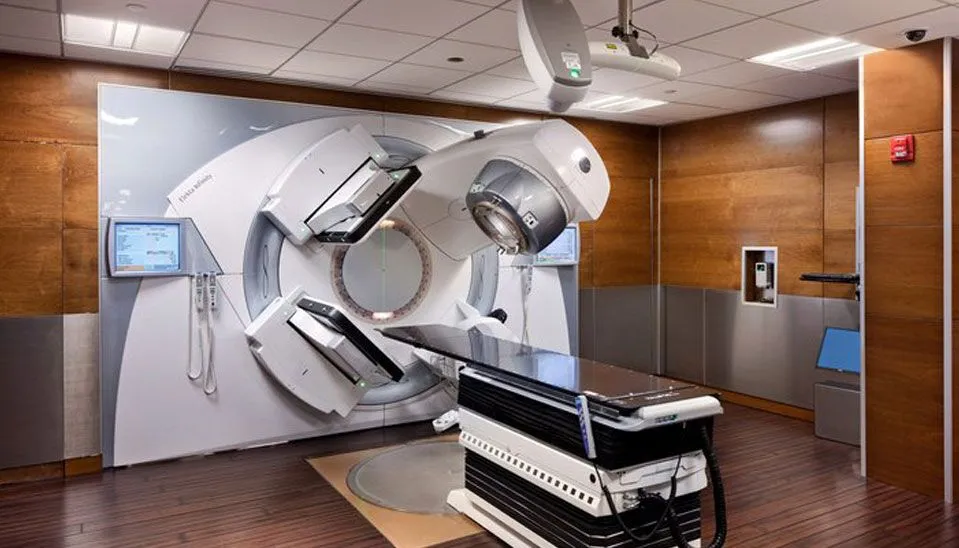
- The Equipment: Dr. Greenfield uses a Linear Accelerator (Trilogy) that rotates around the body, using dozens of tiny moving “leaves” to shape the radiation beam to the exact irregular shape of the tumor.
- The Mapping: Because of the SpaceOAR Vue, the doctors have a clear digital map that allows them to target the cancer within a millimeter of accuracy.
- The Outcome: This combination of hormone therapy and targeted radiation has a very high long-term success rate, and I’m following a path very similar to the one my brother successfully navigated over 20 years ago.
Dr. Greenfield at Singing River uses a Linear Accelerator (Linac)—specifically the Varian Trilogy system. While it looks like a large, imposing piece of equipment, it is designed for incredible precision and patient comfort.
The Anatomy of the Trilogy Machine
- The Gantry: This is the large, circular part of the machine that will rotate around you 360 degrees. It never touches you; it simply moves to different angles so the radiation beams can intersect precisely at the prostate while minimizing the dose to your skin and surrounding tissue.
- The Treatment Couch: This is the carbon-fiber table you will lie on. Today, during your simulation, they will create your custom “Vac-Lok” mold on this couch to ensure your position is identical for every treatment.
- The Multileaf Collimator (MLC): This is the “brain” inside the head of the machine. It contains dozens of tiny tungsten “leaves” that shift constantly to shape the beam to the exact irregular outline of your prostate, protecting your bladder and rectum.
What I will See Today
During the simulation, you might not see the beam itself (it’s invisible X-rays), but you will see:
- Laser Alignment Lights: Red or green laser lines that cross on your body to help the therapists align you to the “GPS” coordinates they set today.
- The On-Board Imager (OBI): Small arms that extend from the machine to take a “mini-scan” (IGRT) right before treatment to verify that the SpaceOAR Vue is exactly where it needs to be.
Thanks Rich for such a comprehensive explanation of the whole procedure. It sounds very promising with it’s precision! I can relate a bit with what you’re going through in that I was Dx’d with prostate cancer in 2005. The equipment you have available for you wasn’t on the table here at that time so radiation didn’t sound exactly all that safe in terms of how it might effect surrounding tissue…so I opted for surgery. Turned out well and there have been no problems since so I’m very grateful.
Thank you again for sharing your journey with your friends and I’m so glad you’re weaving the tx in with continued photography! Perhaps we can chat soon. Love you brother, Joel
I received a letter from Cigna HealthSpring, my insurance notifying me that the radiation treatment has been denied, and if I have any questions to contact my Doctor. You can imagine my initial response. I spoke to the Singing River Cancer Center and they said they had already filed an appeal, that this was not too unusual, and are confident they will work through it. Now there is nothing to do but wait for Cigna’s response. There is a lot I could say but I will bite my tongue for now.