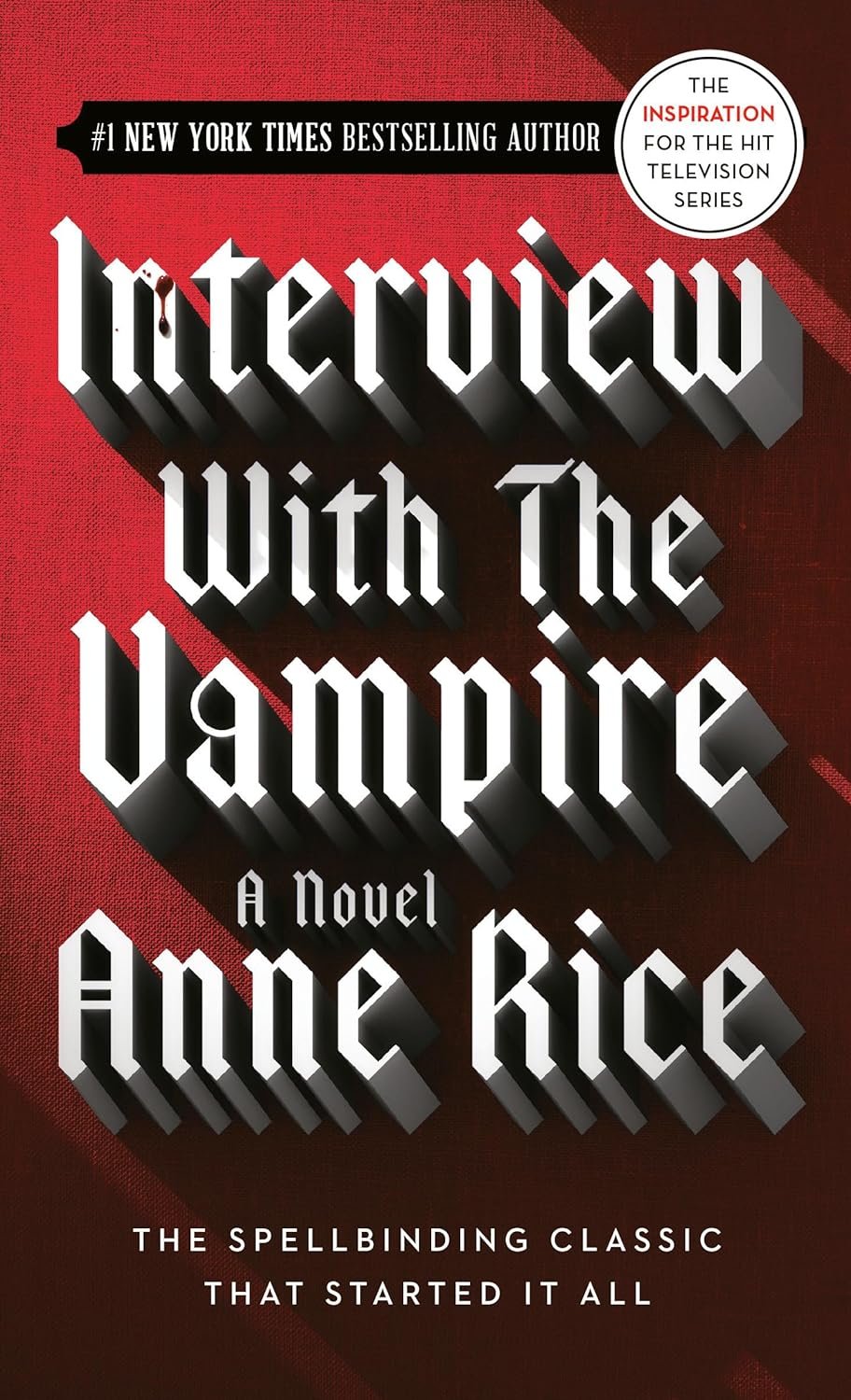
I have just finished, Interview With the Vampire, By Anne Rice. Like the last two books I read, I walked away, then returned; this has become a norm for me. I had book discussions with a couple of my AI consultants and came up with the following book recommendation, Review, and study of Anne Rice, the author.
Anne Rice’s entry into fiction was born from profound personal grief, which explains why Interview with the Vampire feels less like a traditional horror story and more like a raw, psychological confession.
Book Recommendation & Review
Featured Recommendation: Interview with the Vampire
By Anne Rice
Genre: Gothic Fiction / Philosophical Fiction
Audio Length: 14 hours, 28 minutes
Narrated by: Simon Vance
📖 No-Spoiler Synopsis
In a dark room in modern San Francisco, a man named Louis tells a young reporter the technical truth of his 200-year existence. Born into the wealth of 18th-century New Orleans, Louis was granted immortality by the charismatic, predatory vampire Lestat.
But immortality came at a price: a permanent hunger for human life. While Lestat revels in the kill, Louis retains his human conscience. The novel tracks his centuries-long journey through New Orleans and Europe as he seeks to understand the origin of his kind and whether it is possible to be a monster and still do the “RIGHT thing.”
🌟 Why to Read: The “Observer’s” Highlights
- The Moral Dissident: Louis is a fascinating case study in resistance. He is physically trapped by his need for blood, yet mentally he refuses to align with Lestat’s cruel philosophy. His internal struggle is an articulate look at a man trying to maintain a moral compass in a broken world.
- Atmospheric High-Definition: Rice’s prose operates like a high-contrast lens. The descriptions of 18th-century New Orleans—the humidity, the scent of jasmine, the decay of the French Quarter, and the play of shadow and candlelight—are stunningly precise.
- The Eternal Child: The introduction of Claudia, a child made immortal, shifts the book into a deeply tragic exploration of confinement. She is a mature, sharp intellect trapped forever in the physical frame of a five-year-old.
🎙️ Audio Technical Note
Simon Vance delivers a flawless performance. His voice has a rhythmic, elegant cadence that perfectly matches the “velvet and lace” atmosphere of Rice’s prose. He captures Louis’s weary, centuries-old melancholy without letting it devolve into a caricature. It is a measured, steady narration that anchors the book’s high emotional pitch.
🤝 My View
After walking away from the raw, historical violence of Blood Meridian and the rigid logic of Mere Christianity, this book served as an unexpected bridge. It is dark, yes, but it is an articulate, interior darkness.
Louis’s constant mourning can occasionally border on an existential “pity party,” but his struggle is genuine. If you can look past the supernatural veneer, you will find a deeply human story about the burden of observation and the cost of keeping your conscience intact.
The Anatomy of Anne Rice: Why She Wrote Interview
To understand what Anne Rice is saying, you have to look at the “raw data” of her life at the time of writing. In 1972, her five-year-old daughter, Michele, died of leukemia. Desolate and turning to alcohol, Rice sat down and expanded a short story she had written years earlier into this novel.
1. The Vampire as a Metaphor for Grief and Addiction
Rice didn’t write about monsters; she wrote about her own survival.
- The Blood as Life/Death: Her daughter died of a blood disease. In the book, blood is both the source of eternal life and the curse of death.
- The “Confinement” of Immortality: Louis’s grief, his constant mourning, and his helplessness to change his nature mirror the inescapable weight of losing a child. His “pity party” was quite literally Rice processing her own mid-30s despair.
2. The Struggle with the “Right Thing” (The Lost Faith)
Rice grew up a devout Irish Catholic in New Orleans but walked away from the Church in her youth. The entire book is a technical interrogation of a universe where God is silent.
- Louis is trapped in a moral vacuum very similar to the one you observed in Blood Meridian, but unlike McCarthy’s characters who accept the violence, Louis suffers because he still wants a moral compass. He goes to churches and priests looking for answers, only to find empty rituals.
3. What is She Saying?
Rice is arguing that the true horror of existence isn’t death—it is the loss of capacity to feel.
Lestat represents total capitulation to the predatory nature of the world (much like Judge Holden). Louis represents the agonizing, yet beautiful, refusal to let go of humanity, even when keeping your conscience causes you endless pain.