September 10, 2026
From Our Back Porch
The hummingbirds are migrating back south, stopping over here on the Mississippi Gulf Coast to fuel up before crossing the Gulf of Mexico — and we have hummers galore. I think this is the most we’ve had in the three-plus years we’ve lived here.
We have seven feeders out and we’re making a couple of quarts of food every few days. Step outside and it sounds like a tiny bunch of buzz saws. It’s still hot here, but it’s worth sitting on the back porch with the fan going just to watch them.
They are remarkably aggressive and territorial about their feeders. One little fellow has claimed the two feeders out by Margot — he sits on a limb in the lemon tree planter and chases off any hummingbird that dares approach. Same story at the feeder right outside the back door; he parks himself on the clothesline and won’t let anyone near that one either. Same thing out front.
How many do we have? Hard to say — they move so fast and zip back and forth constantly. My best estimate is somewhere between twenty and thirty at any given moment.
Click the image to view full size and browse the gallery.
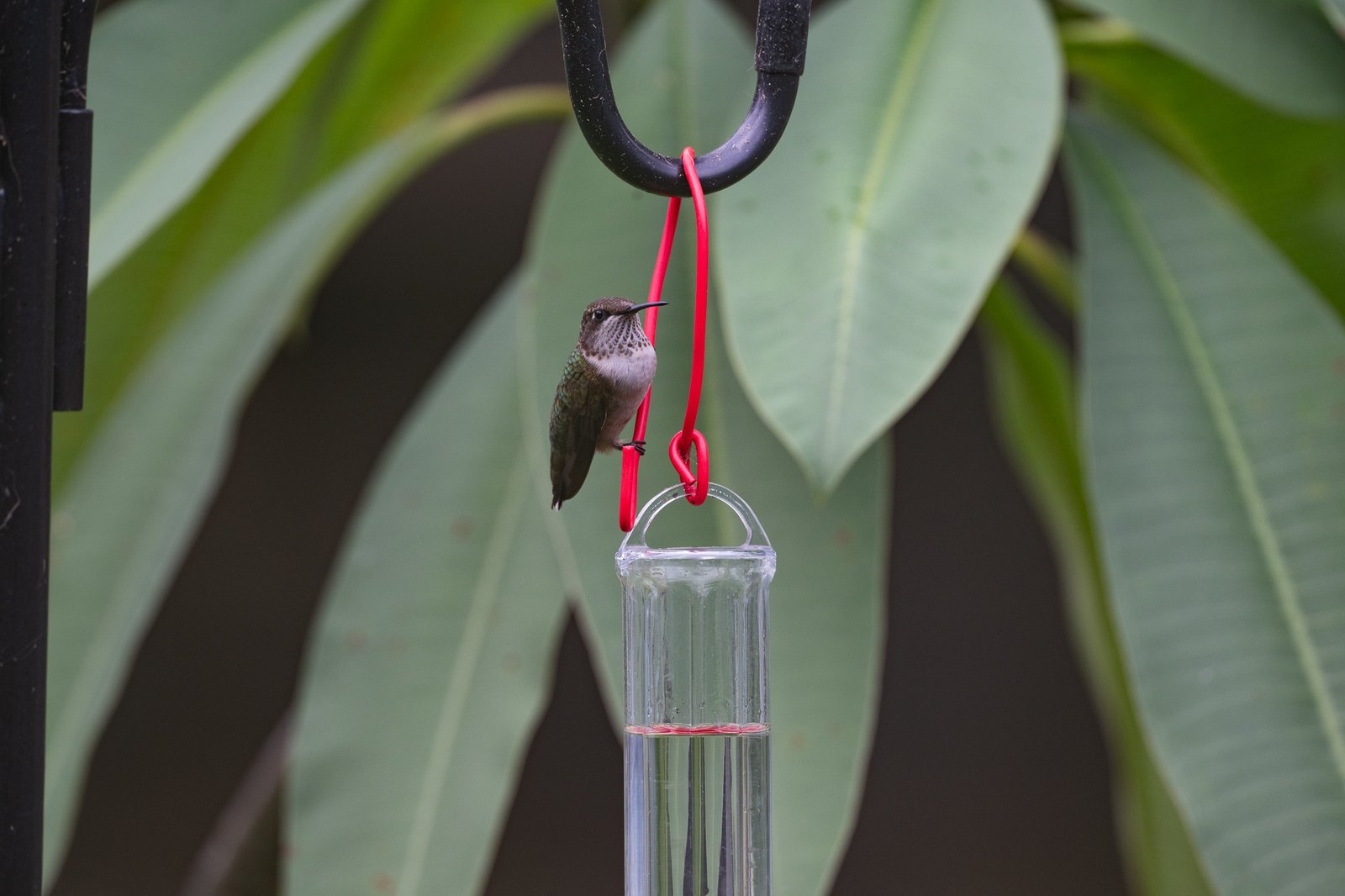
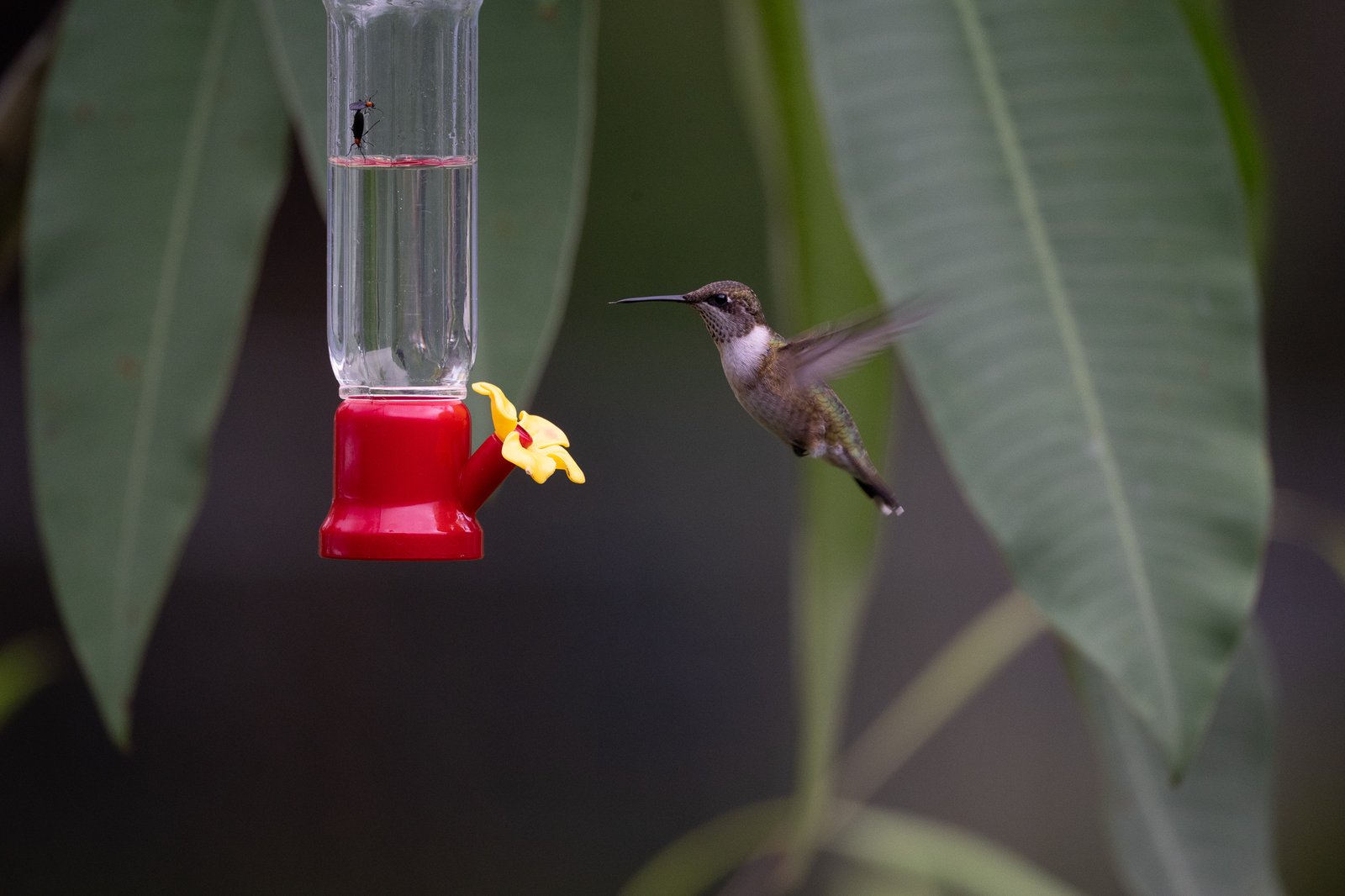
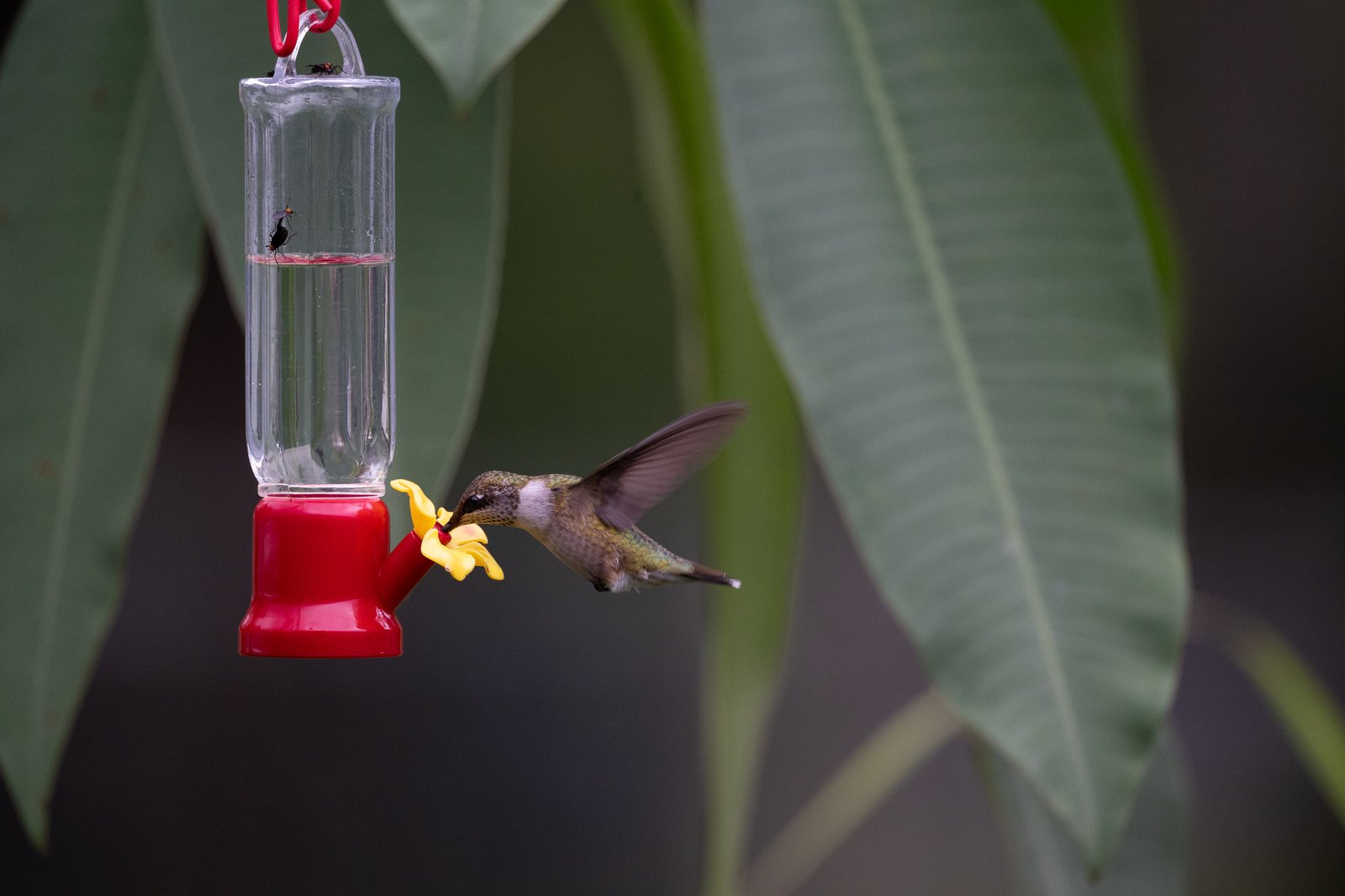
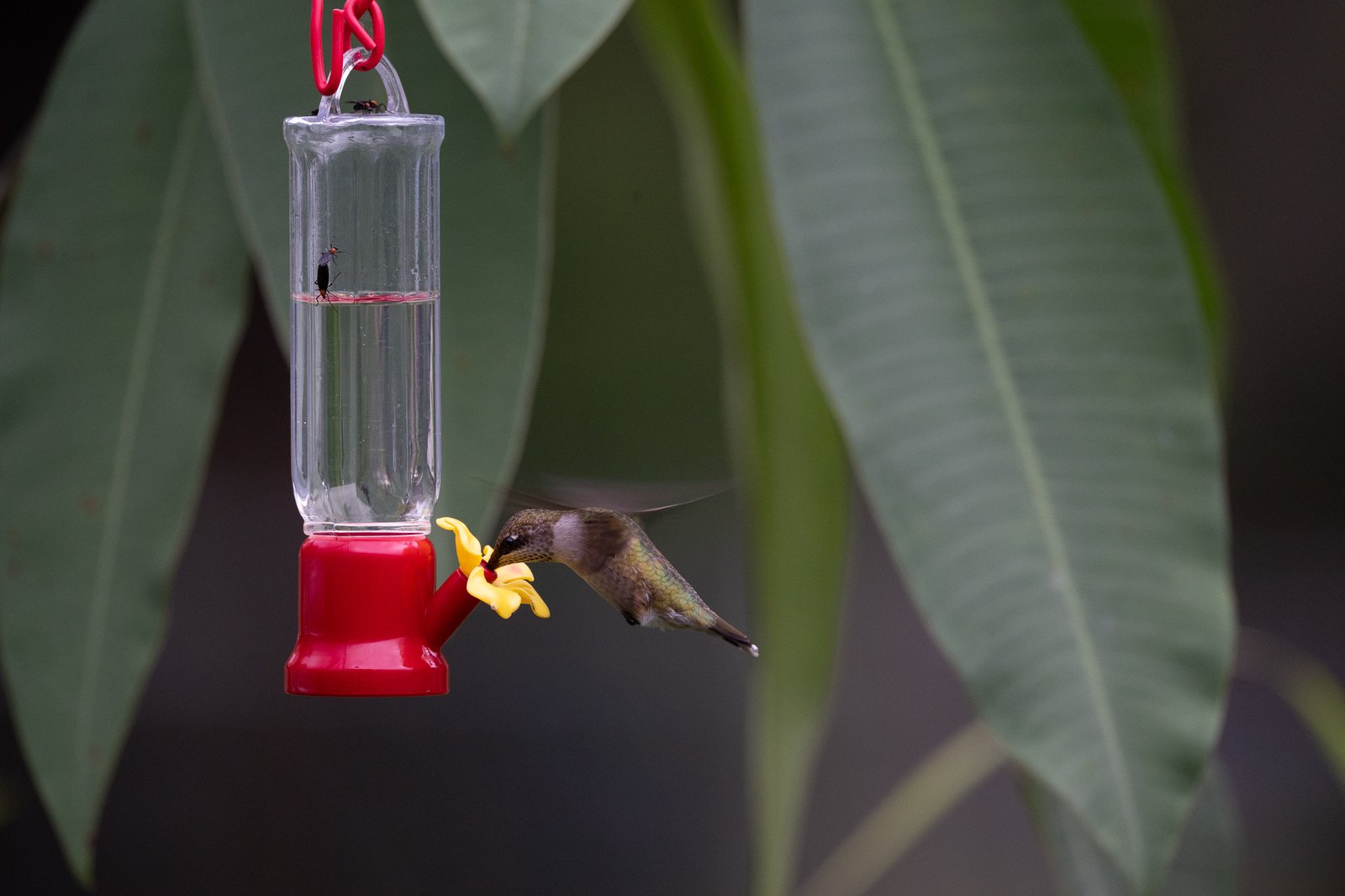
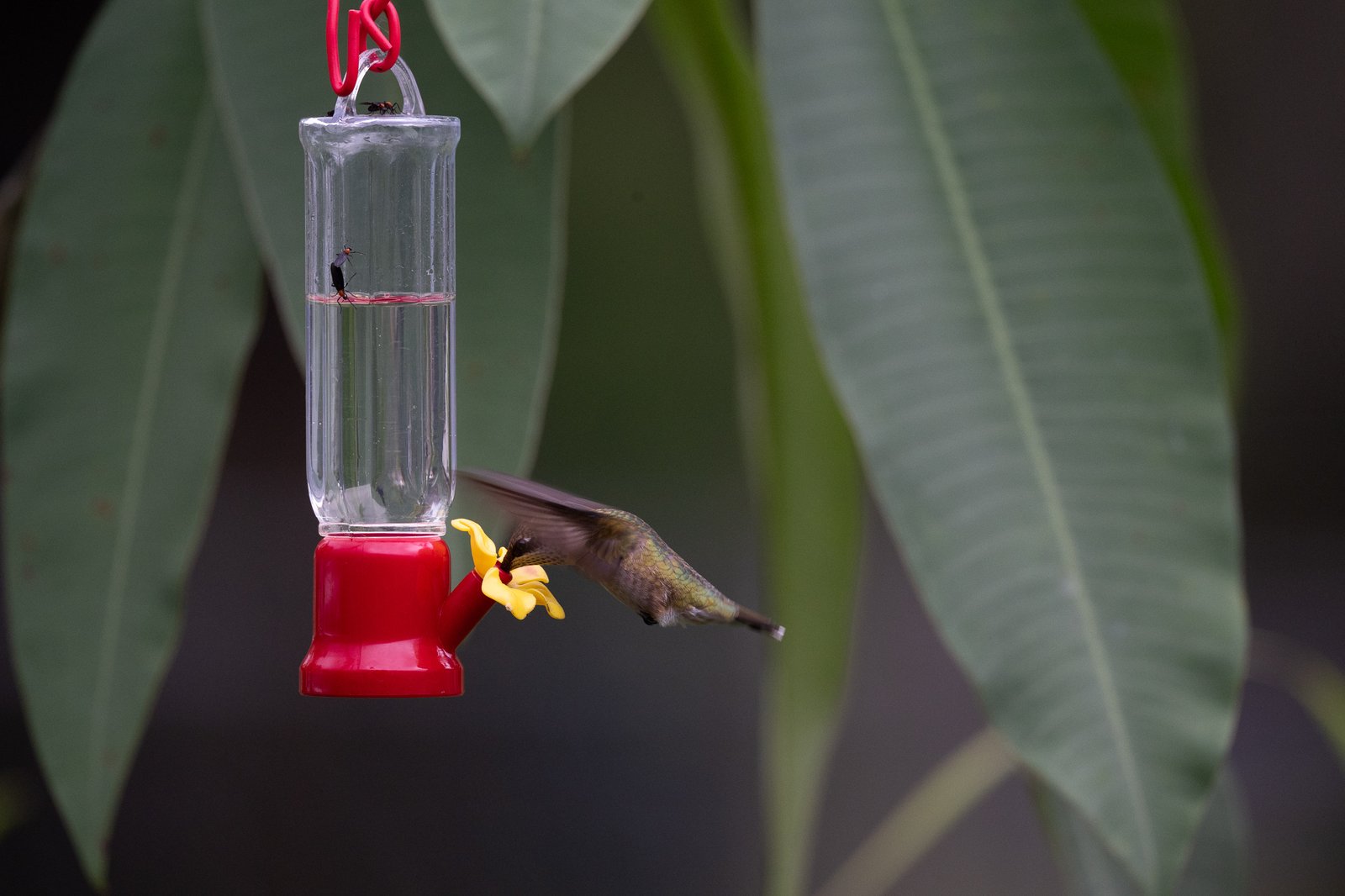
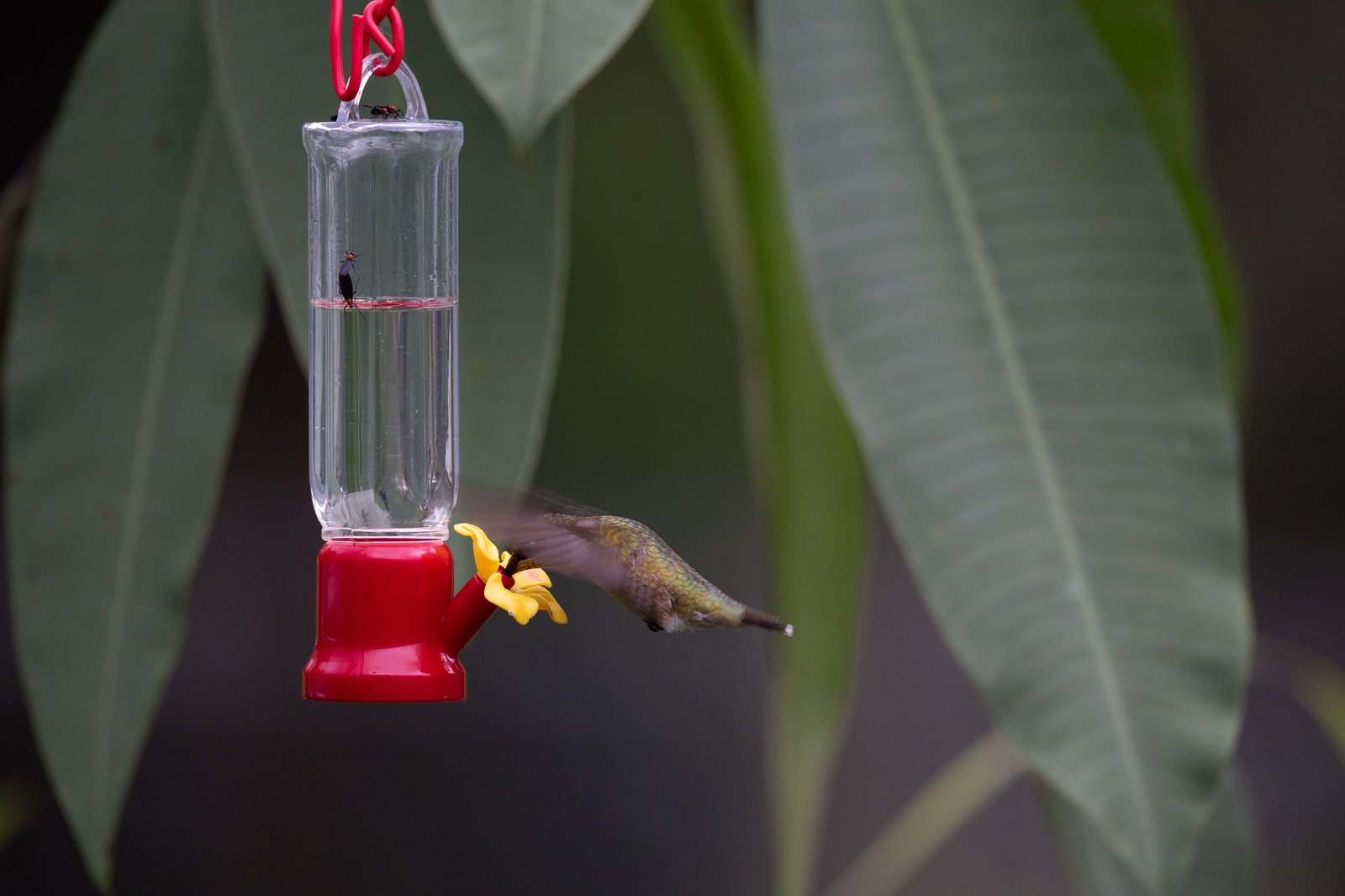
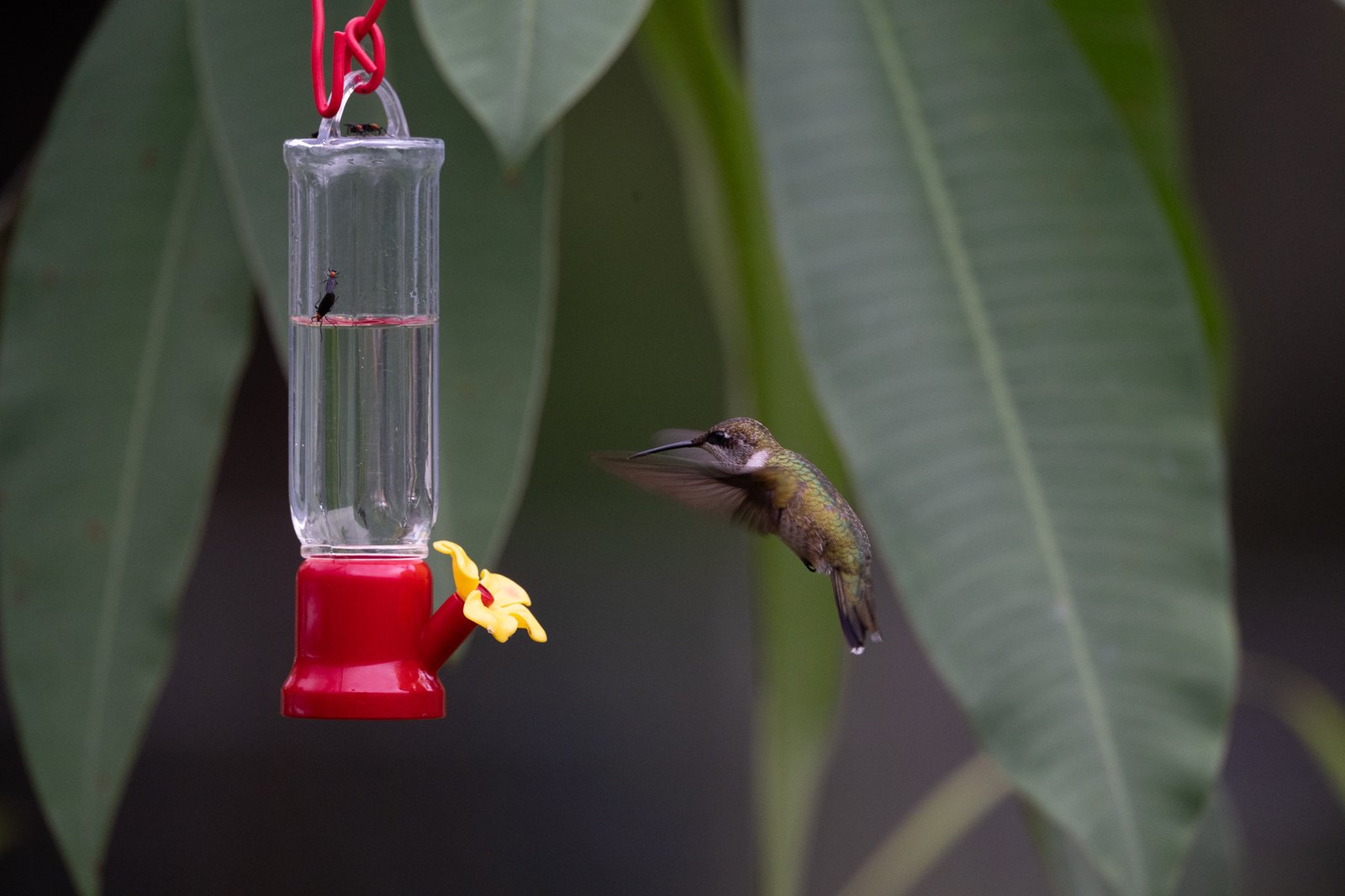
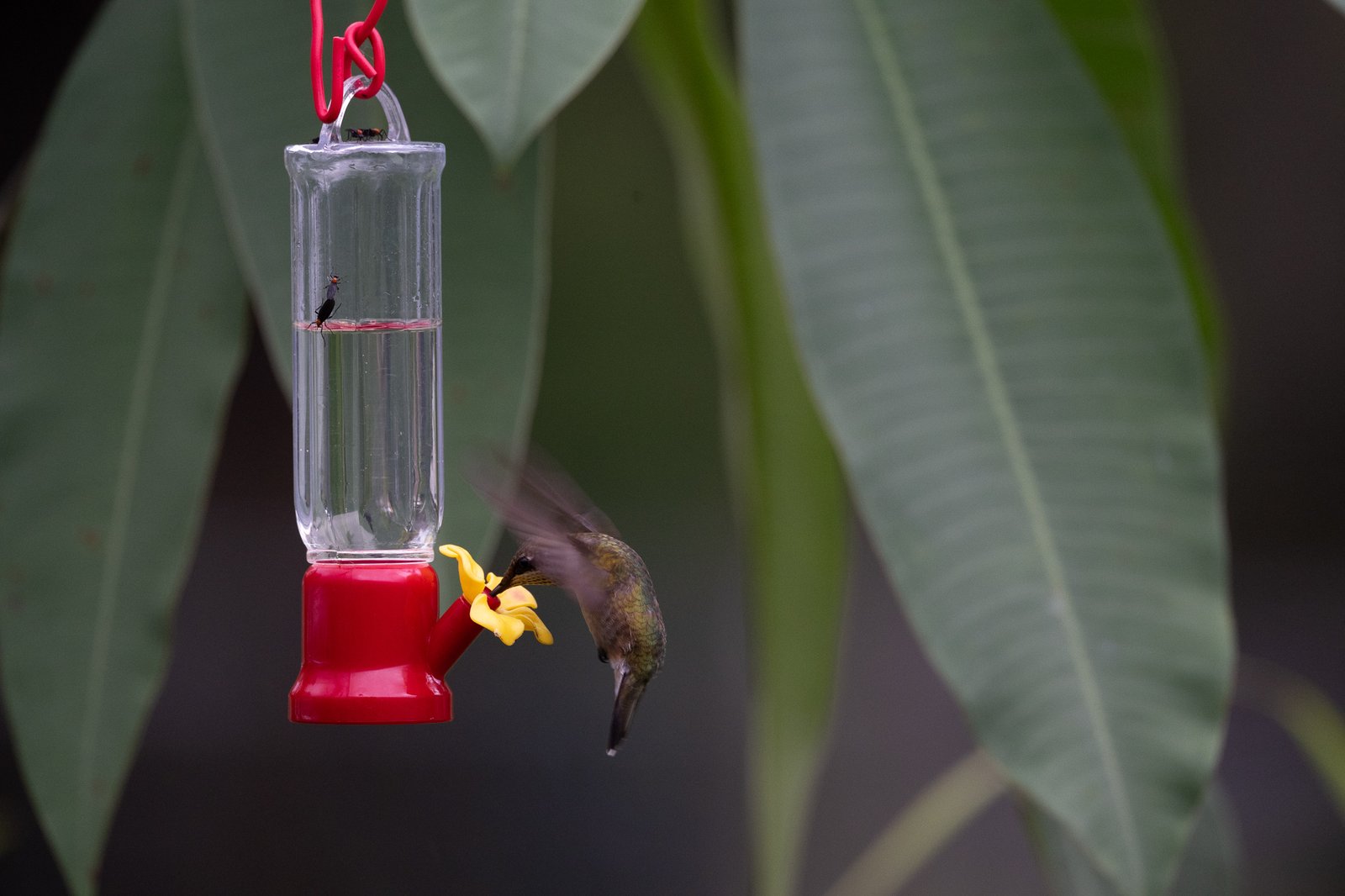
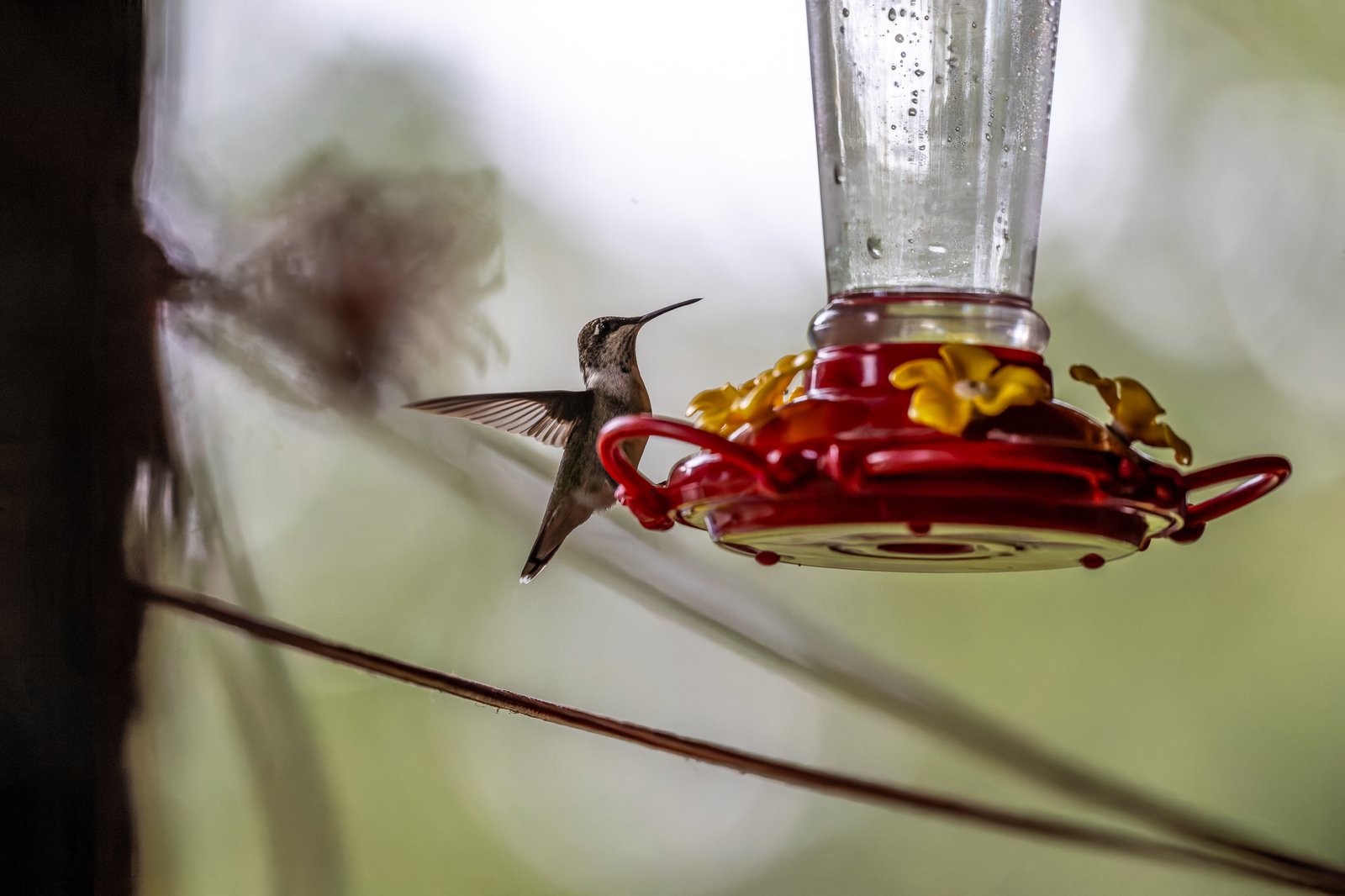
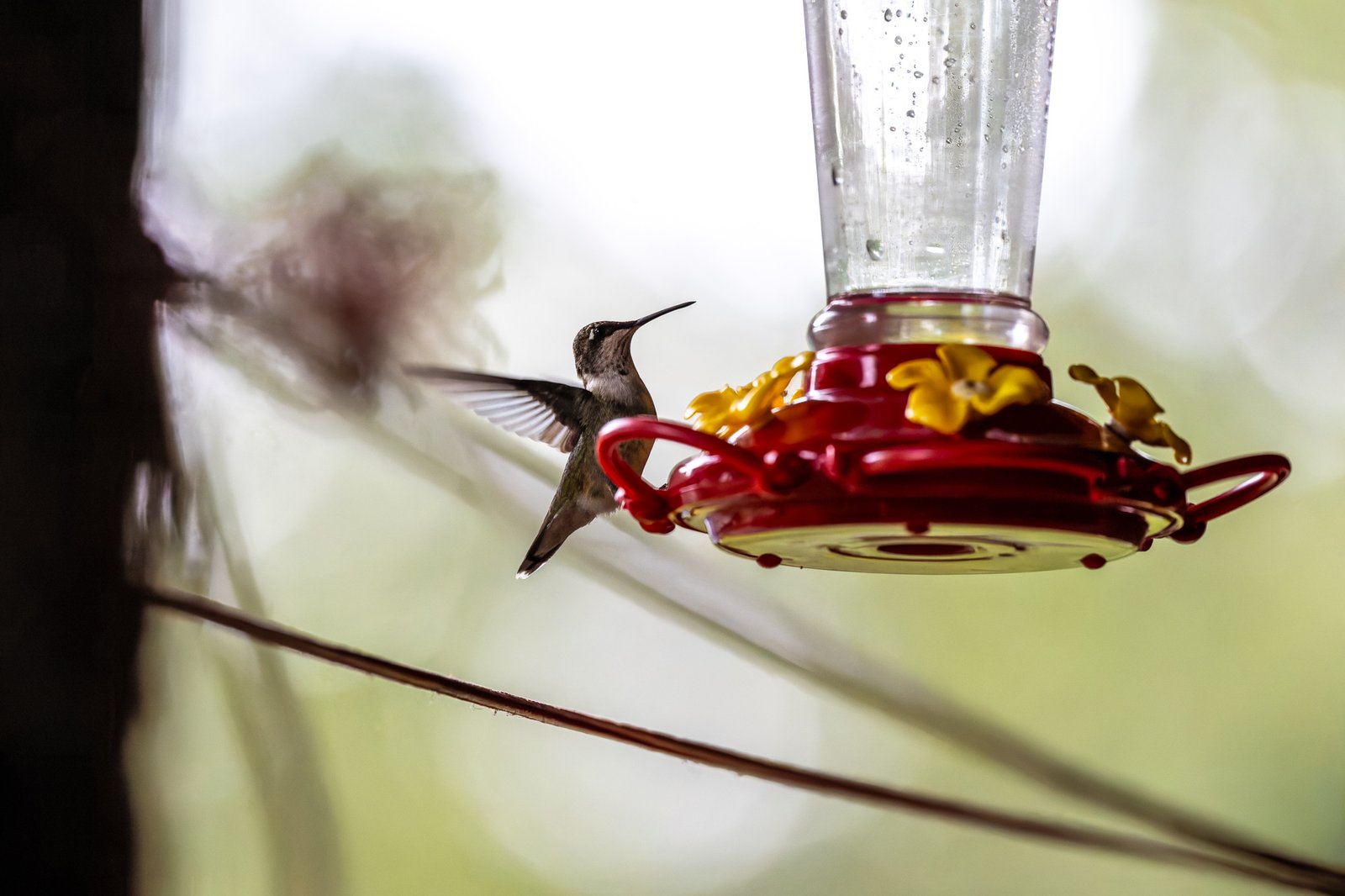
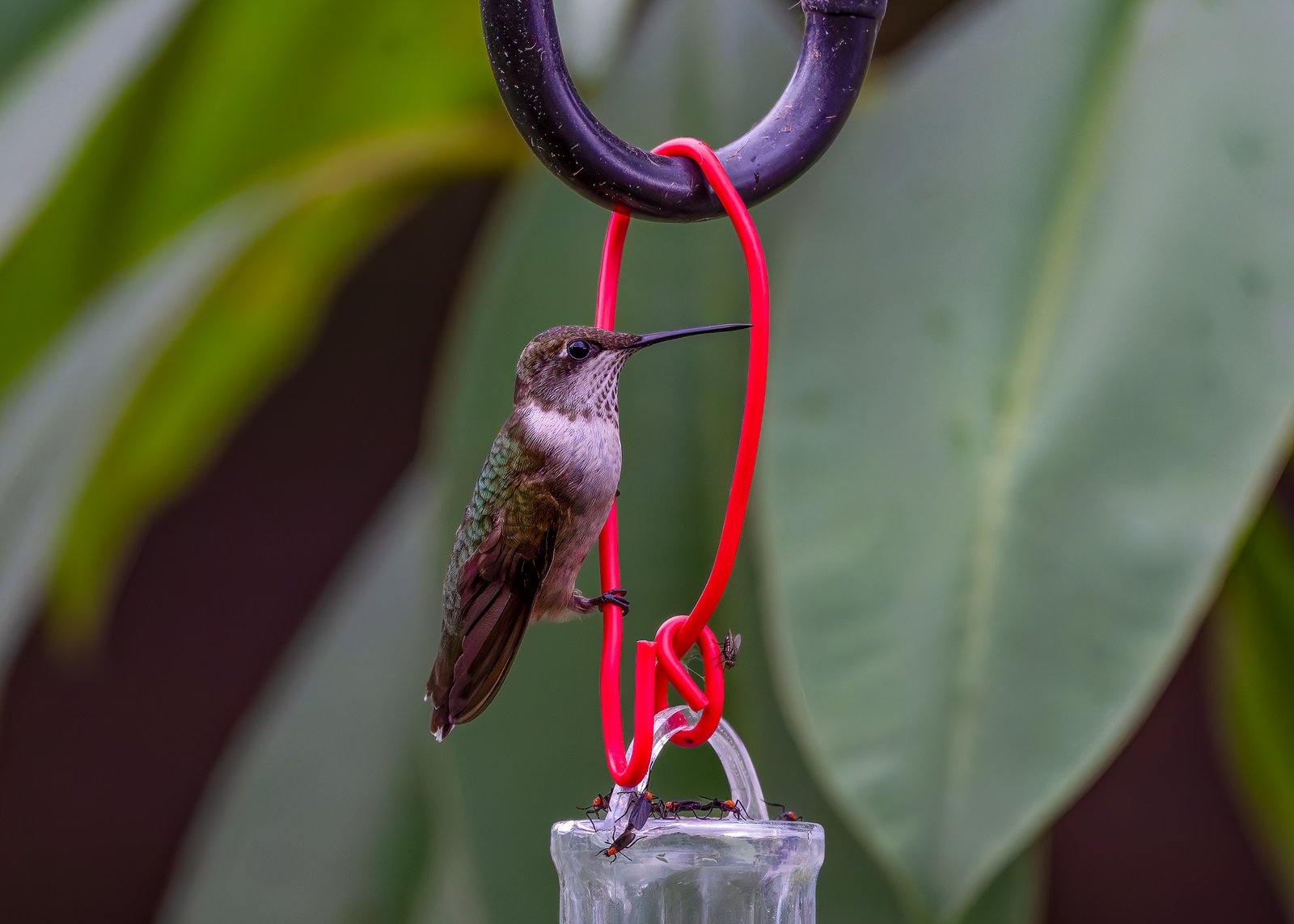
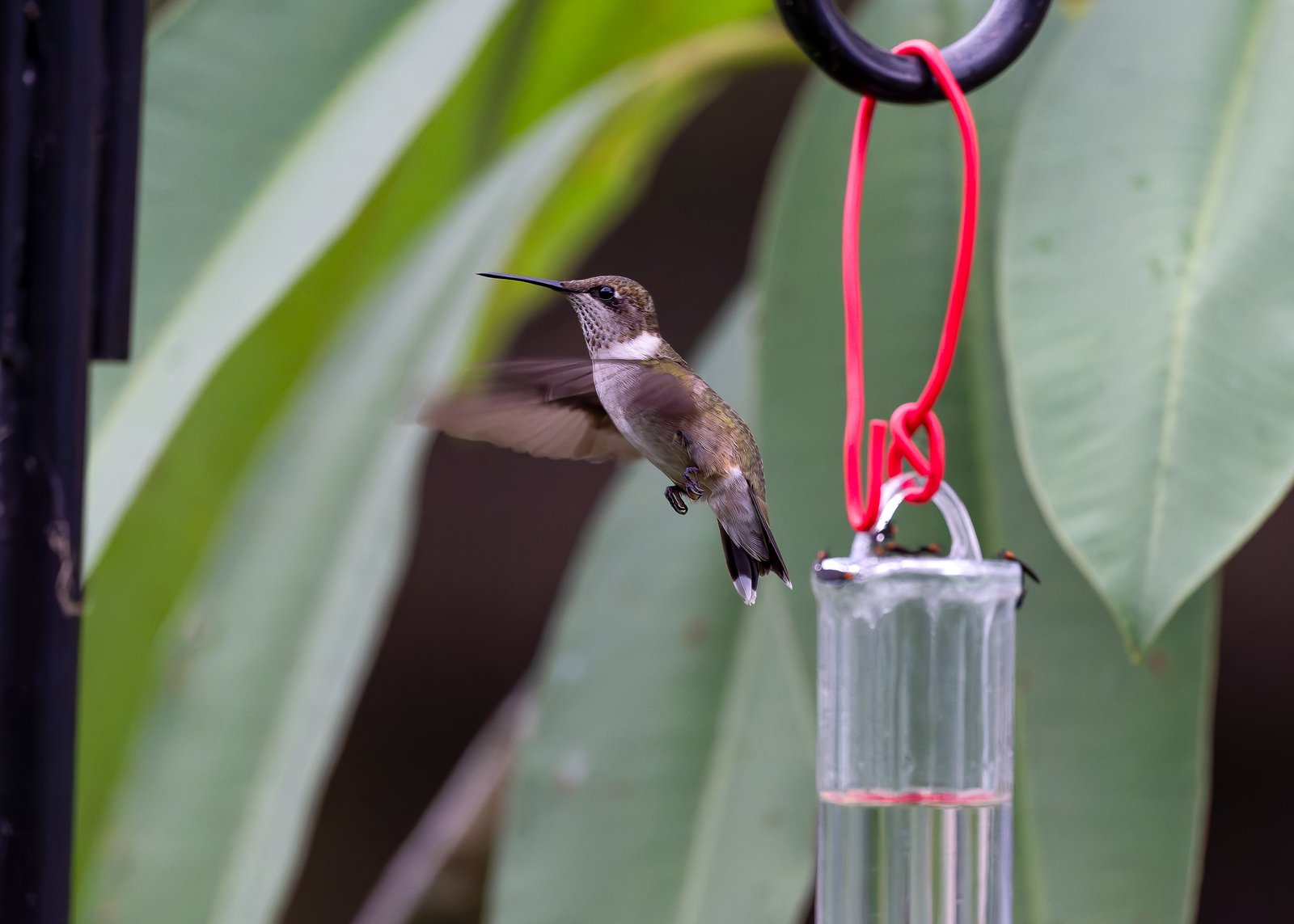
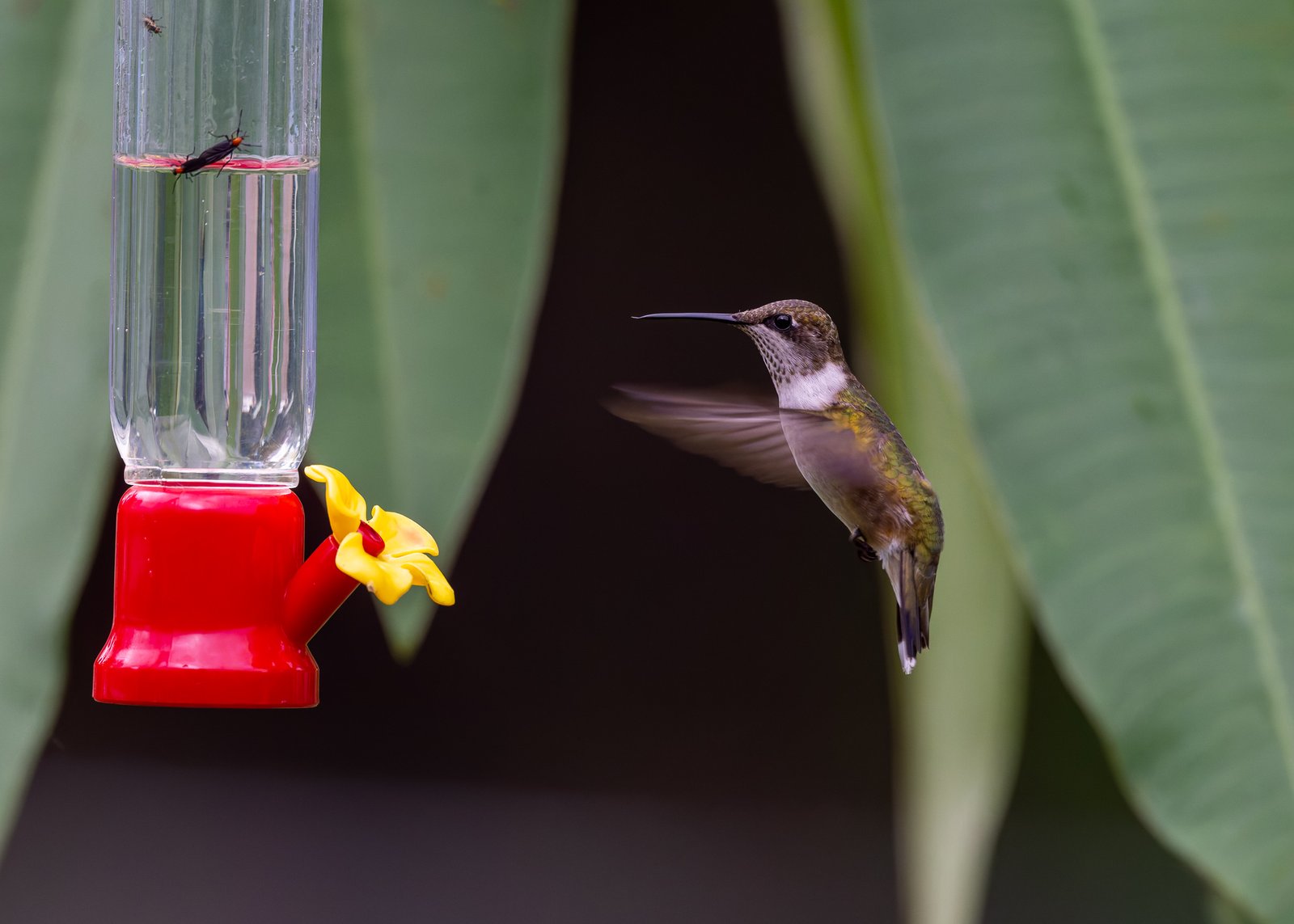
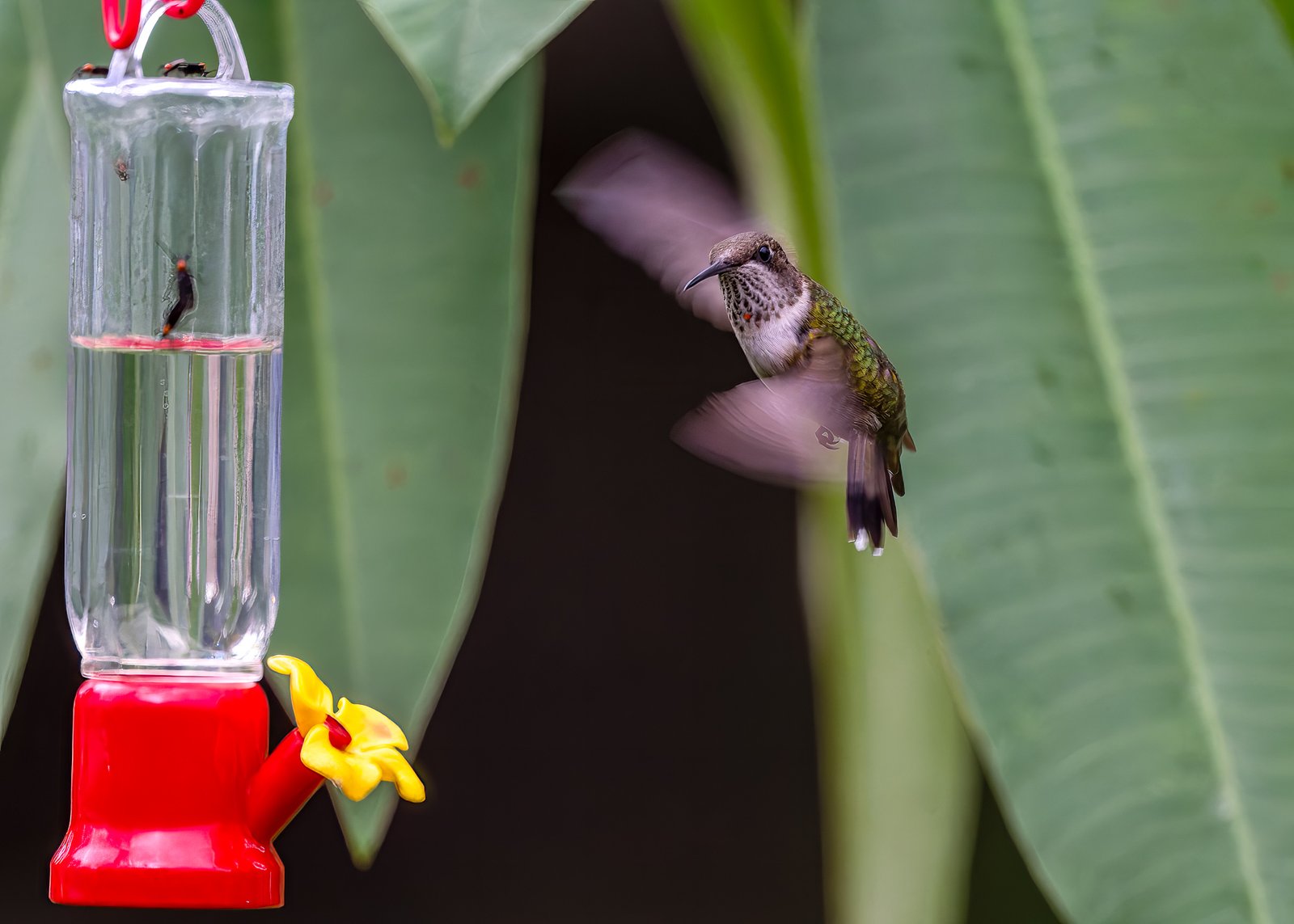
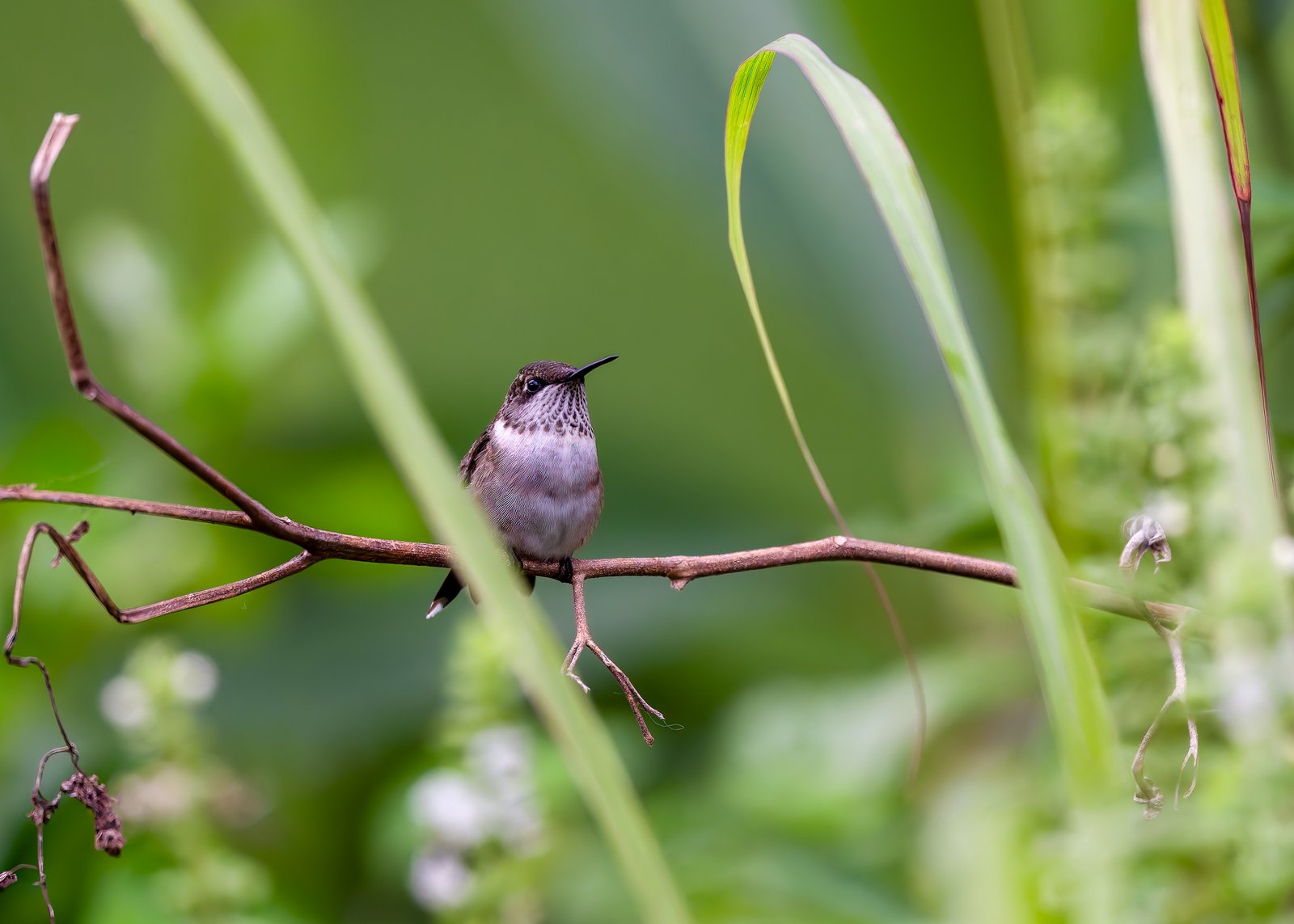
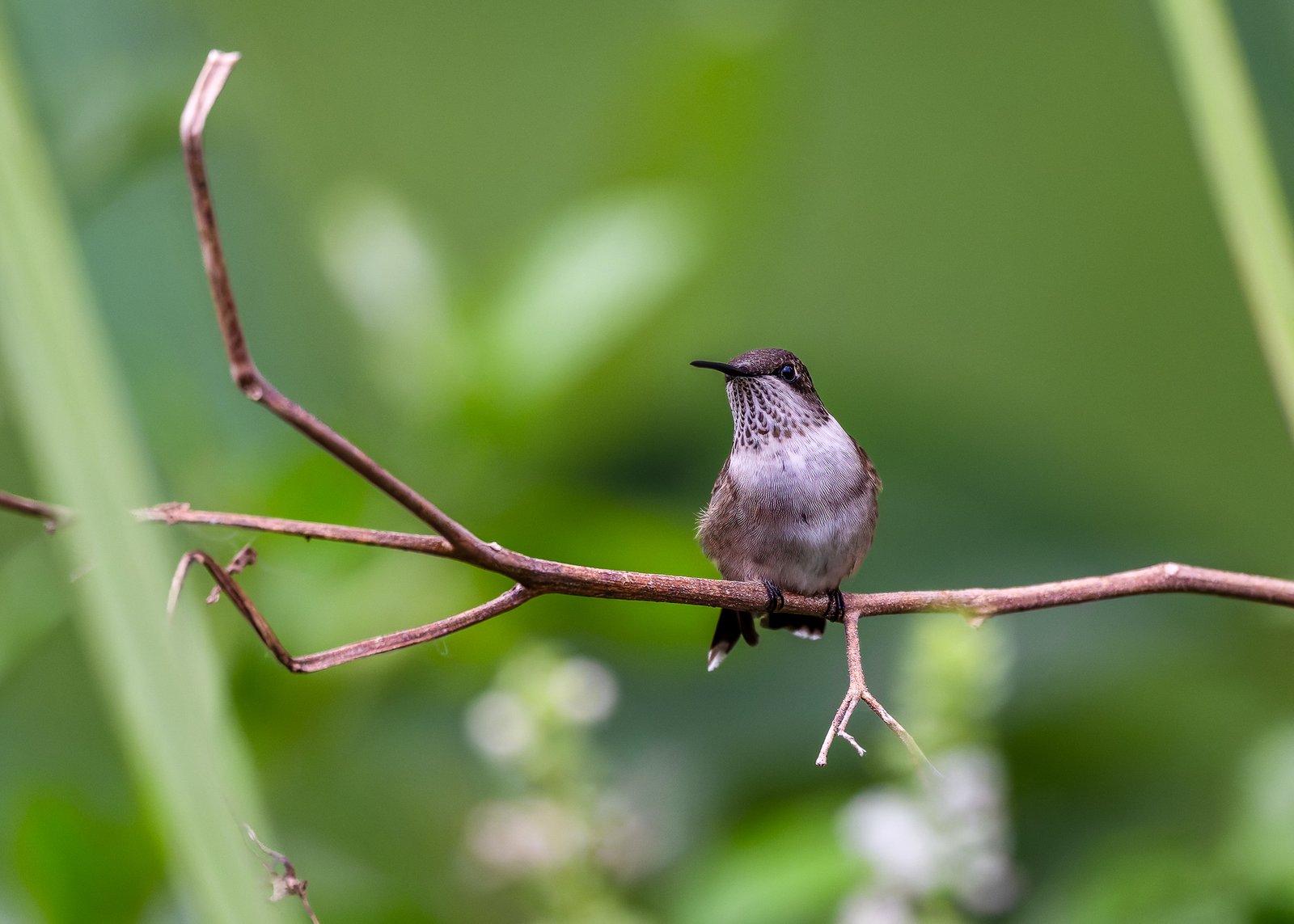
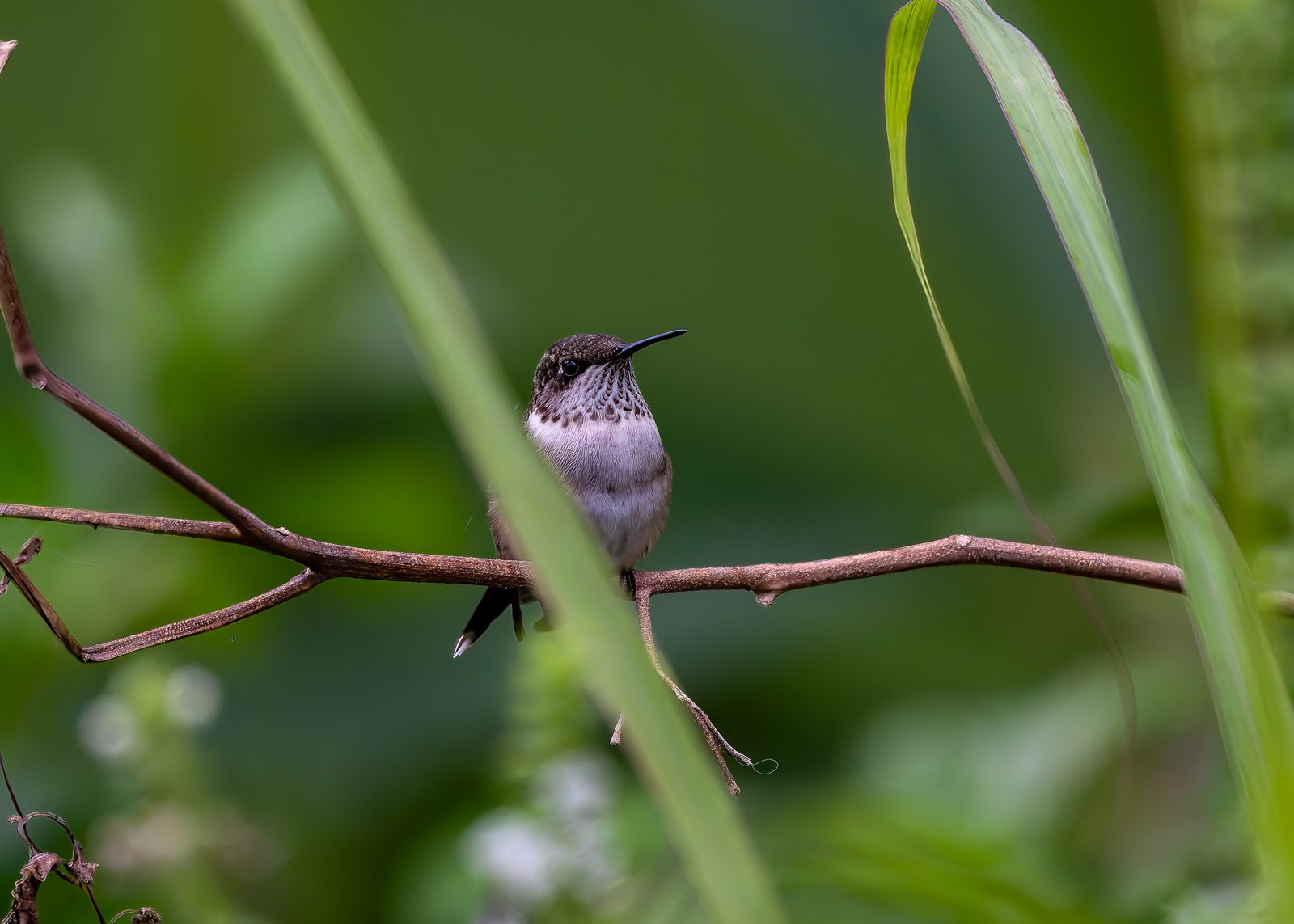
The Ruby-throated Hummingbird
What you’re looking at in these images and animations is the Ruby-throated Hummingbird — the only hummingbird species that breeds east of the Mississippi River, and the one responsible for all that buzzing out on our back porch right now.
They are tiny. Three to four inches long, weighing about as much as a penny. Their hearts beat over 600 times a minute, and their wings beat up to 70 times per second in normal flight — faster during courtship displays. They can hover, fly backwards, and even fly upside down. Their legs are so small and weak that they essentially can’t walk; they perch or they fly, and that’s about it.
What They Eat
Nectar is the main fuel, and they need a lot of it — eating five or six times an hour to keep that engine running. They’re strongly drawn to red and orange tubular flowers, which is why a red feeder gets their attention fast. But nectar alone won’t do it; they also eat insects and spiders for protein, especially when raising young. An adult can consume twice its body weight in food in a single day.
Mating
Ruby-throats are solitary birds — they only really tolerate each other during breeding season, and even then, barely. The male’s job is to court and move on. He stakes out a territory, perches somewhere he can see the whole area, and drives off any intruder — male or female — that dares approach his feeders. Sound familiar? When a female enters his territory, he performs diving displays and shows off that brilliant iridescent red throat. Once mating is done, he’s finished with the relationship entirely.
The female does everything else. She builds a tiny cup-shaped nest — about the size of a large thimble — from plant fibers, thistledown, and spider webs, covered in lichen for camouflage, usually ten to twenty feet off the ground. She lays one to three eggs, incubates them for about two weeks, and feeds the chicks alone for another three weeks or so. She may raise two or three broods in a season.
Migration
This is where the story gets remarkable. Every fall, these birds — some of them just weeks old — make their way south to winter in Mexico and Central America. Many of them fly nonstop across the Gulf of Mexico. Five hundred miles of open water, no rest, no food, on wings the size of your thumbnail. Before departing, they nearly double their body weight in fat reserves to fuel the crossing, which takes roughly eighteen hours under good conditions. They fly just above the wave tops to conserve moisture.
The fall migration runs from August through October, with mid-September being peak time along the Gulf Coast. That’s exactly what we’re seeing right now — birds fueling up at our feeders before making that crossing. Our feeders aren’t just a backyard attraction; they’re a gas station on one of the most remarkable journeys in the animal world.
They’ll be gone by late October. And sometime next March, they’ll be back.
Research and text by Claude, my AI research partner at Anthropic.
Twentyfour individual images make up the flipbook above.
A Brief History of the Flipbook
The two little animations you see here are flipbooks — and the idea behind them is older than you might think.
The flipbook was first patented in 1868 by John Barnes Linnett, a British lithograph printer, who called his invention the Kineograph — Latin for “moving picture.” The concept is beautifully simple: a series of drawings or photographs arranged in sequence, each one slightly different from the last. Flip the pages fast enough and the human eye does the rest, stitching the still images into the illusion of motion.
Shortly after, the English-American photographer Eadweard Muybridge took the idea further, setting up camera rigs to capture rapid sequences of photographs that, when viewed in order, produced a moving image. That work laid the foundation for motion pictures as we know them.
Flipbooks were popularized in the early 1900s by the Cracker Jack Company, who tucked them in as free prizes. Breakfast cereal makers, bubble gum companies, and automobile manufacturers soon followed. Chances are your grandparents had a few.
By the late nineteenth century, early motion picture devices had replaced paper pages with photographic prints, and the flipbook principle went on to lay the groundwork for traditional cel animation — the technique used in everything from Steamboat Willie to Who Framed Roger Rabbit. Disney’s animators famously used flipbooks to plan their sequences and work out the motion between key drawings.
Today, the same principle that entertained Victorian children applies to what you see below — except instead of hand-drawn sketches, I’m working from high-speed photographs of hummingbirds. The technology has changed considerably. The idea hasn’t changed at all.
The above was researched and written by Claude, my AI research partner at Anthropic.
“I never answered your question, if I’d ever thought about being human. Once. I was on a track in the andes, and a hummingbird flew up to me and just hovered there staring at me. Its tiny heart was pattering like a machine gun… And I thought, ‘what a thing, you know, to have to work that hard every day just to stay alive, to be constantly on the verge of death, and how satisfying every day must be that it survived…’ And that was the only time I thought about being human.”
Niklaus “Klaus” Mikaelson
The beautiful dialogue above comes from Season 1, Episode 12 (“Dance Back from the Grave”) of The Originals, where Klaus is speaking to Camille O’Connell.
I do love and appreciate hummingbirds!