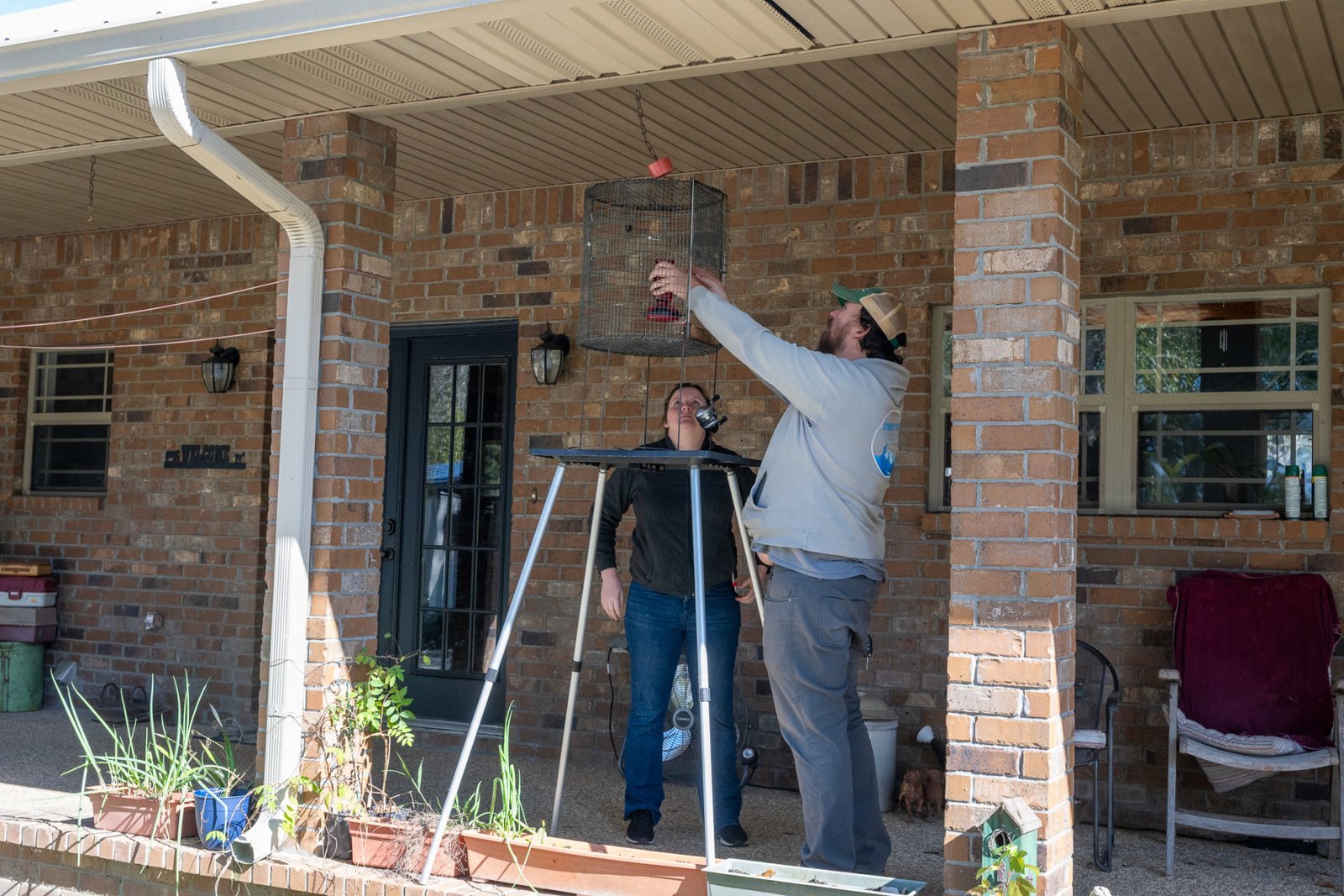
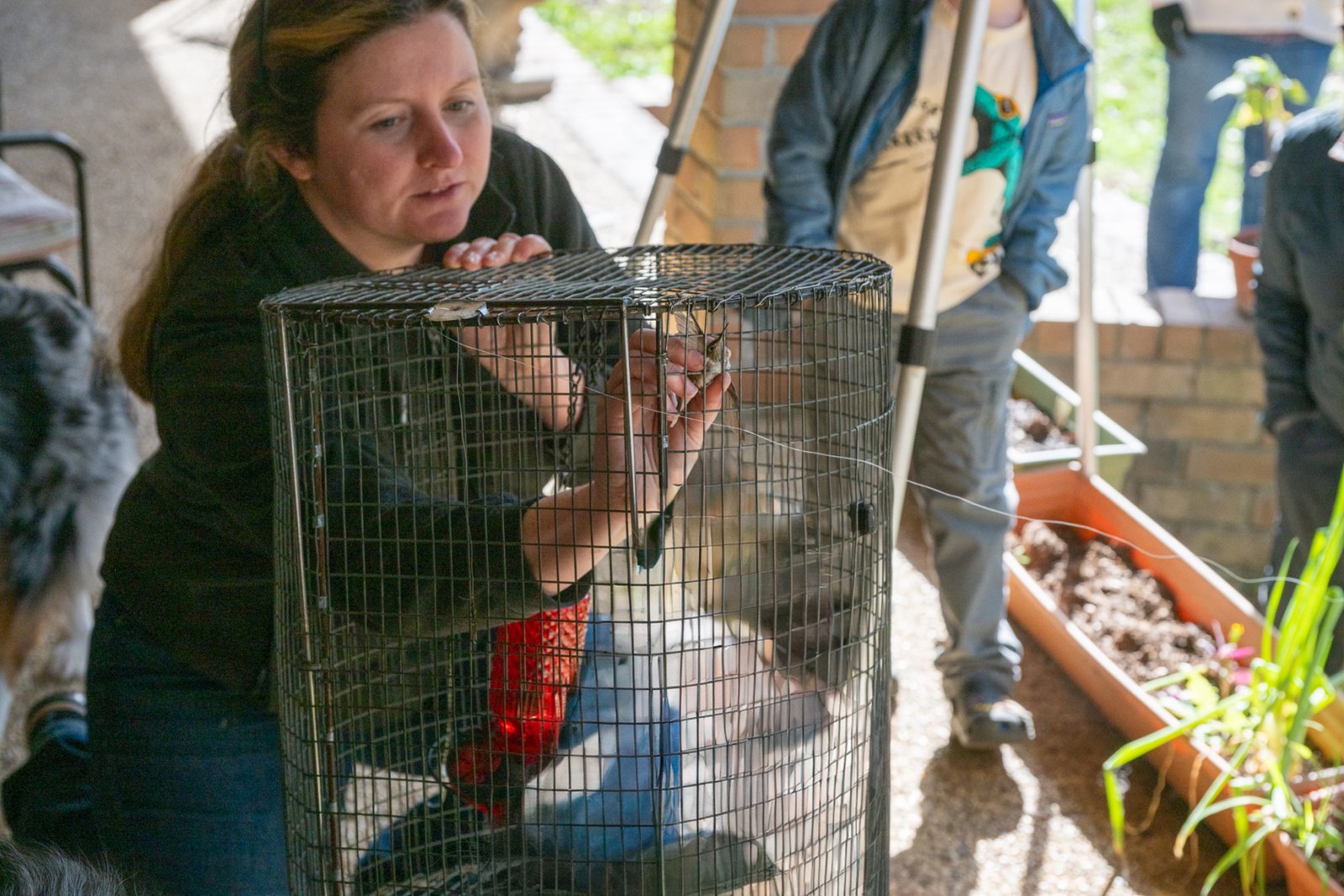
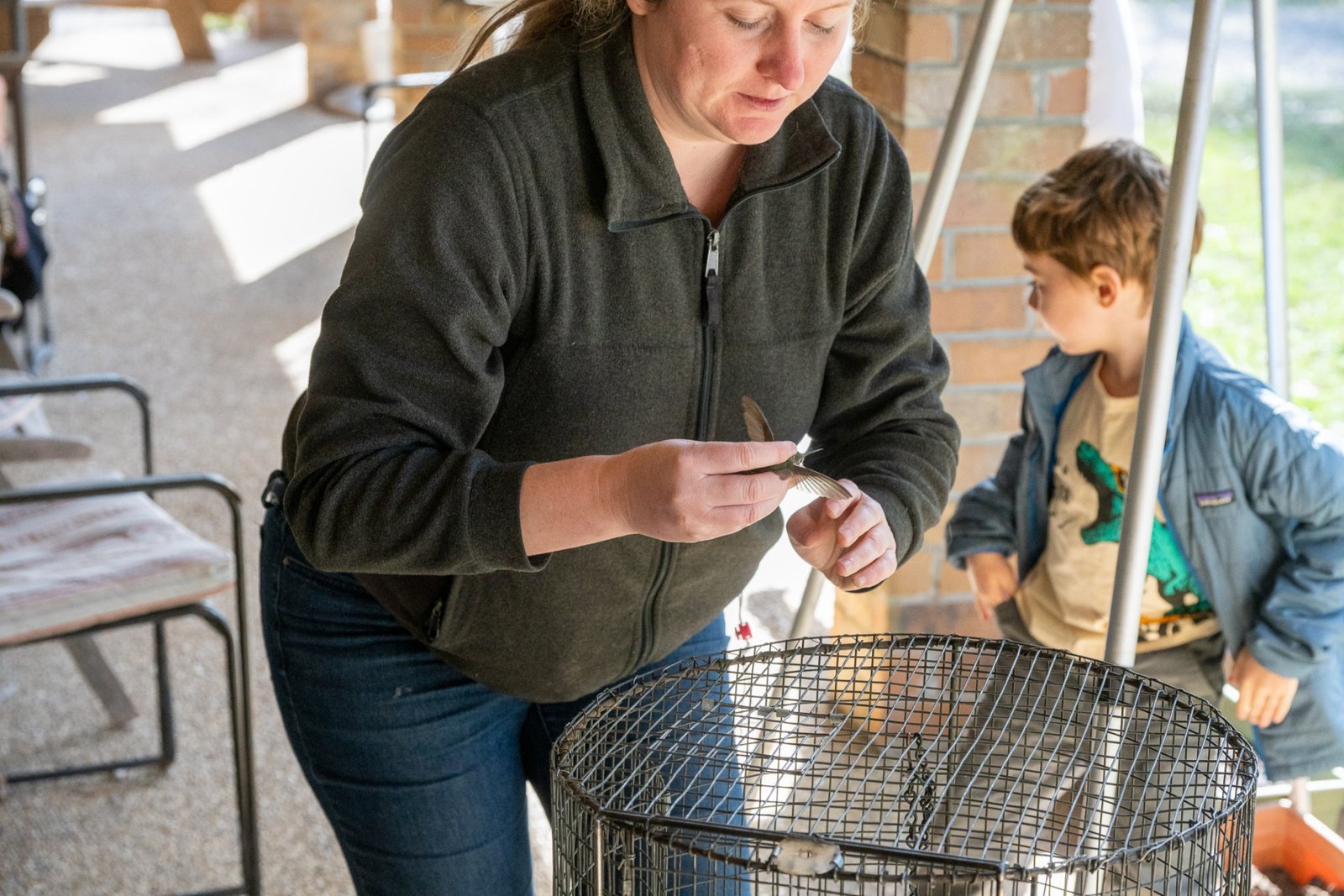
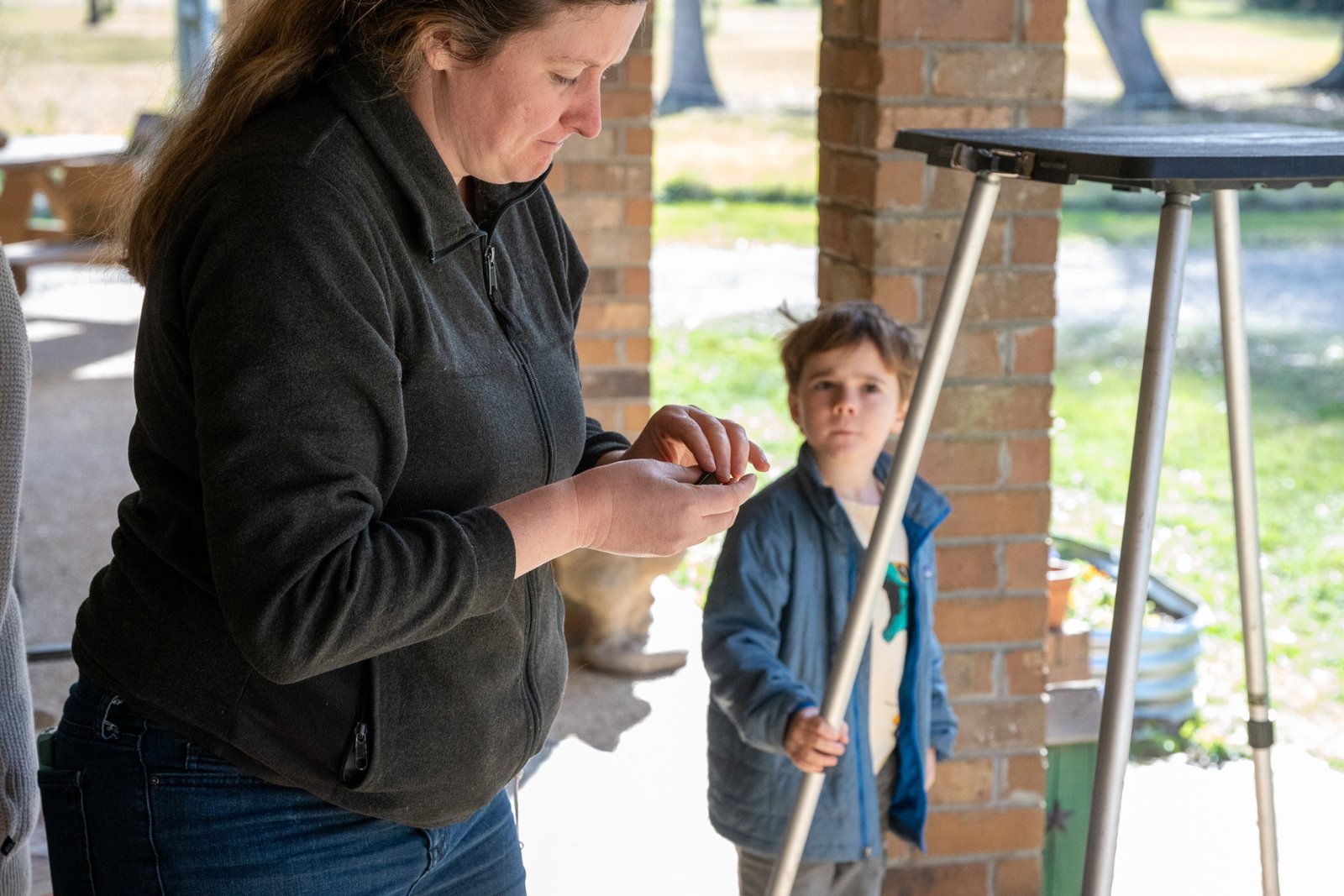
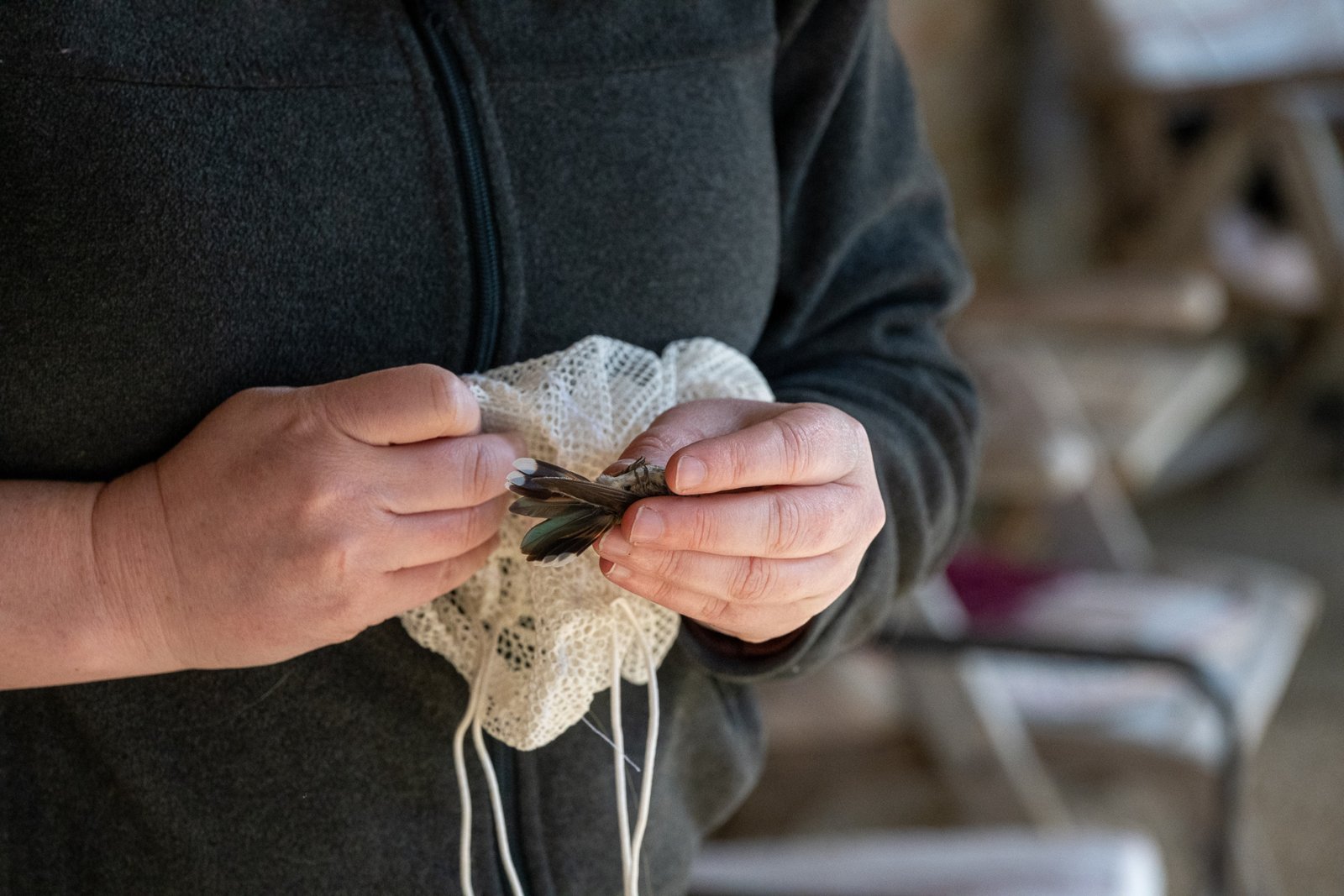
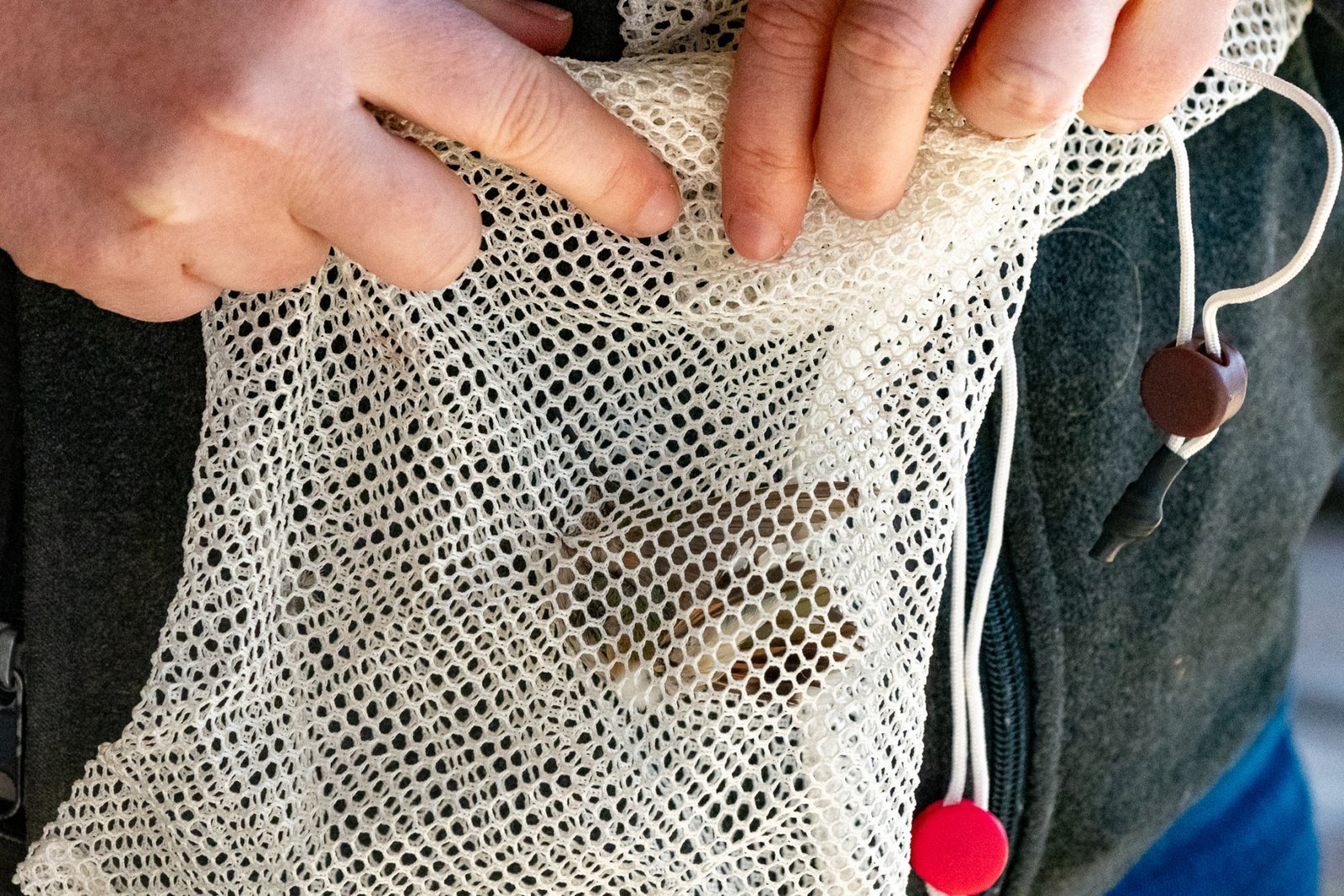
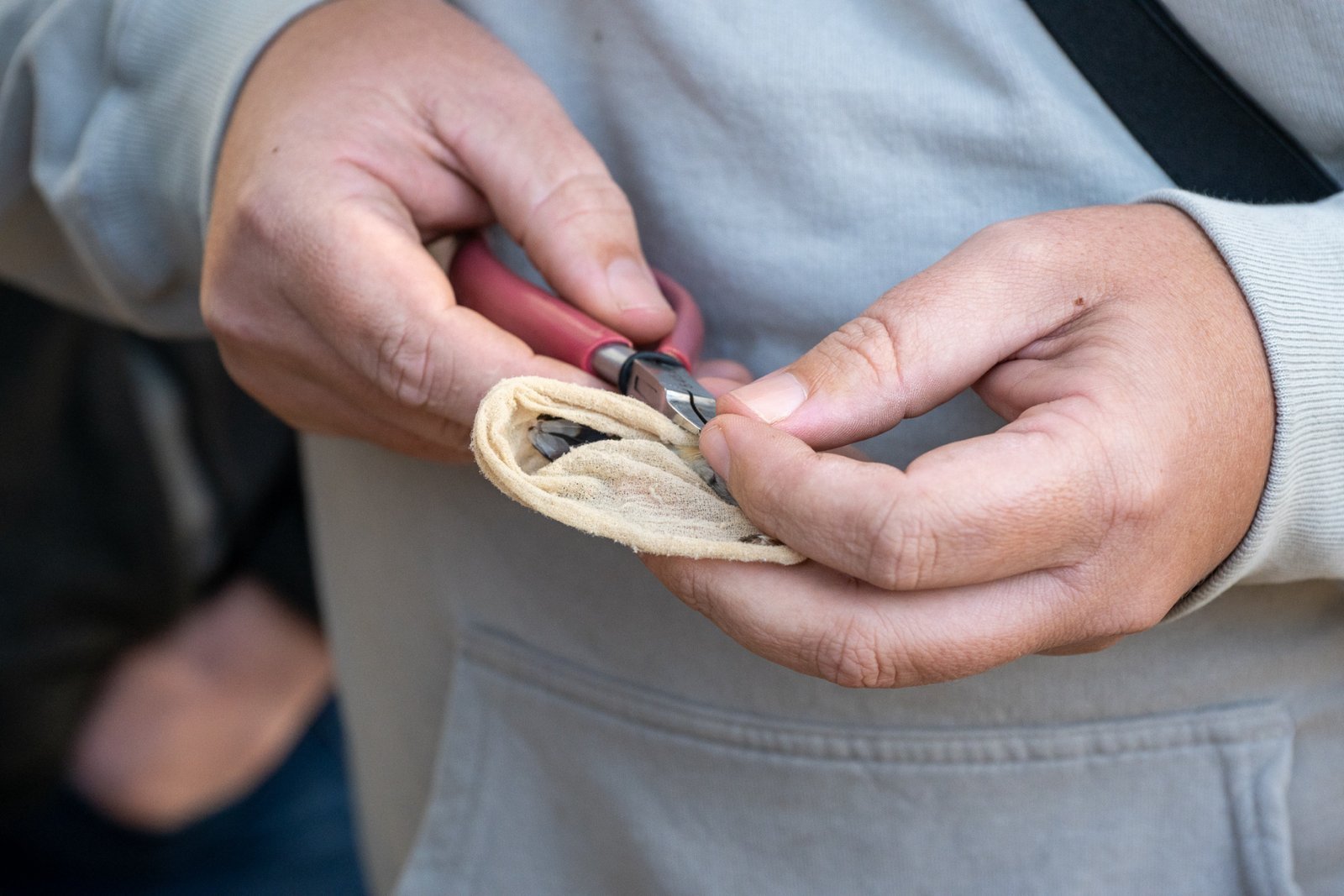
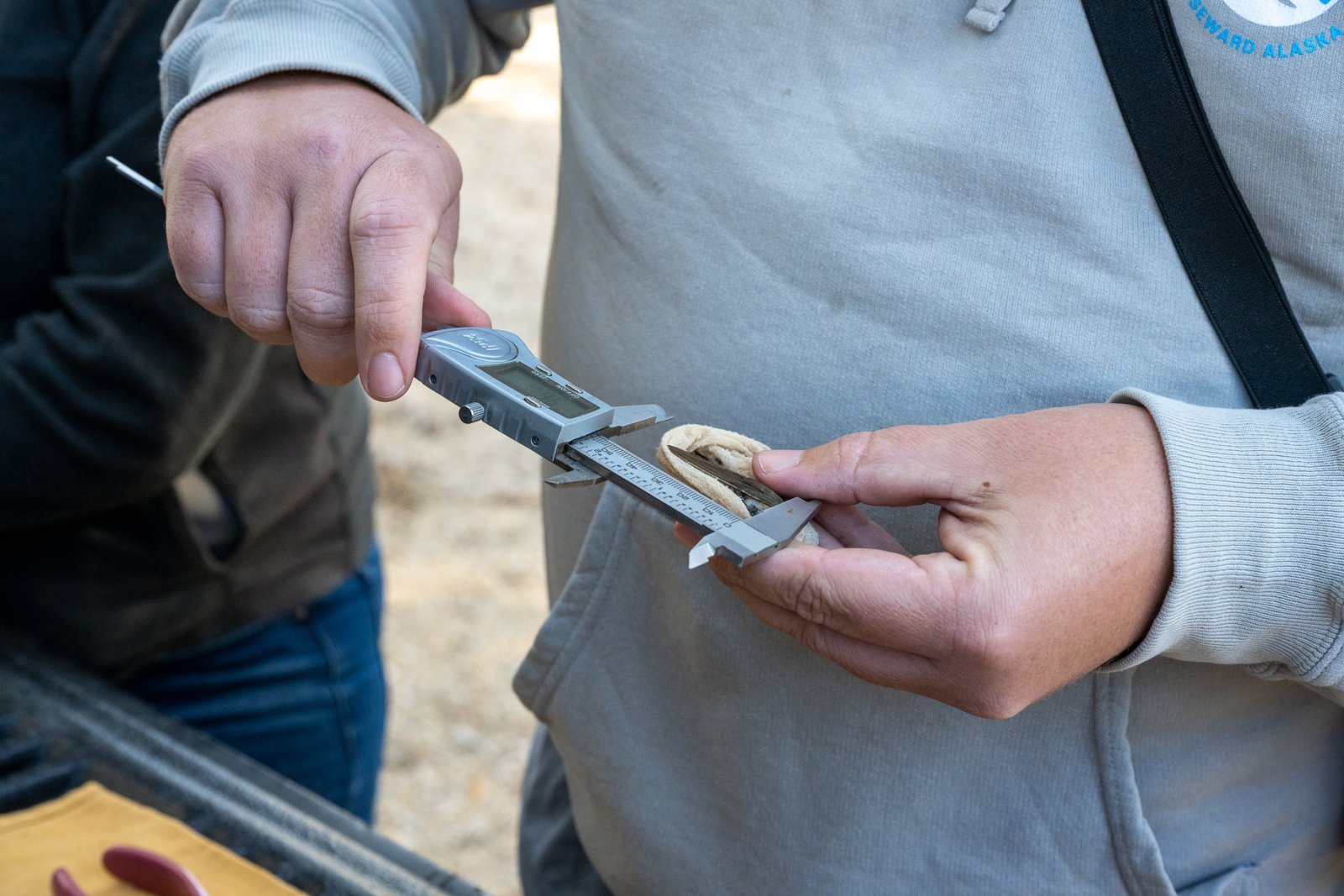
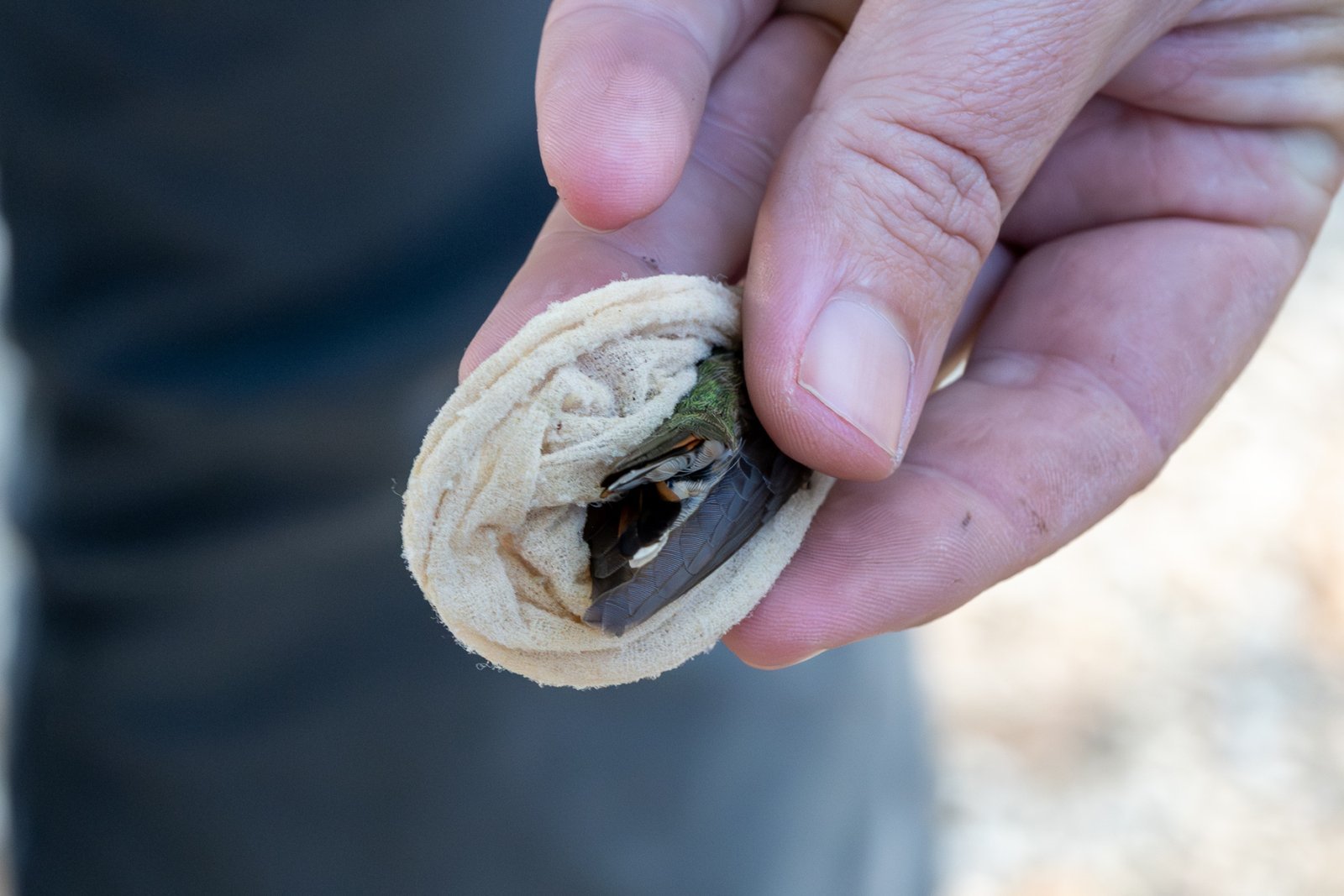
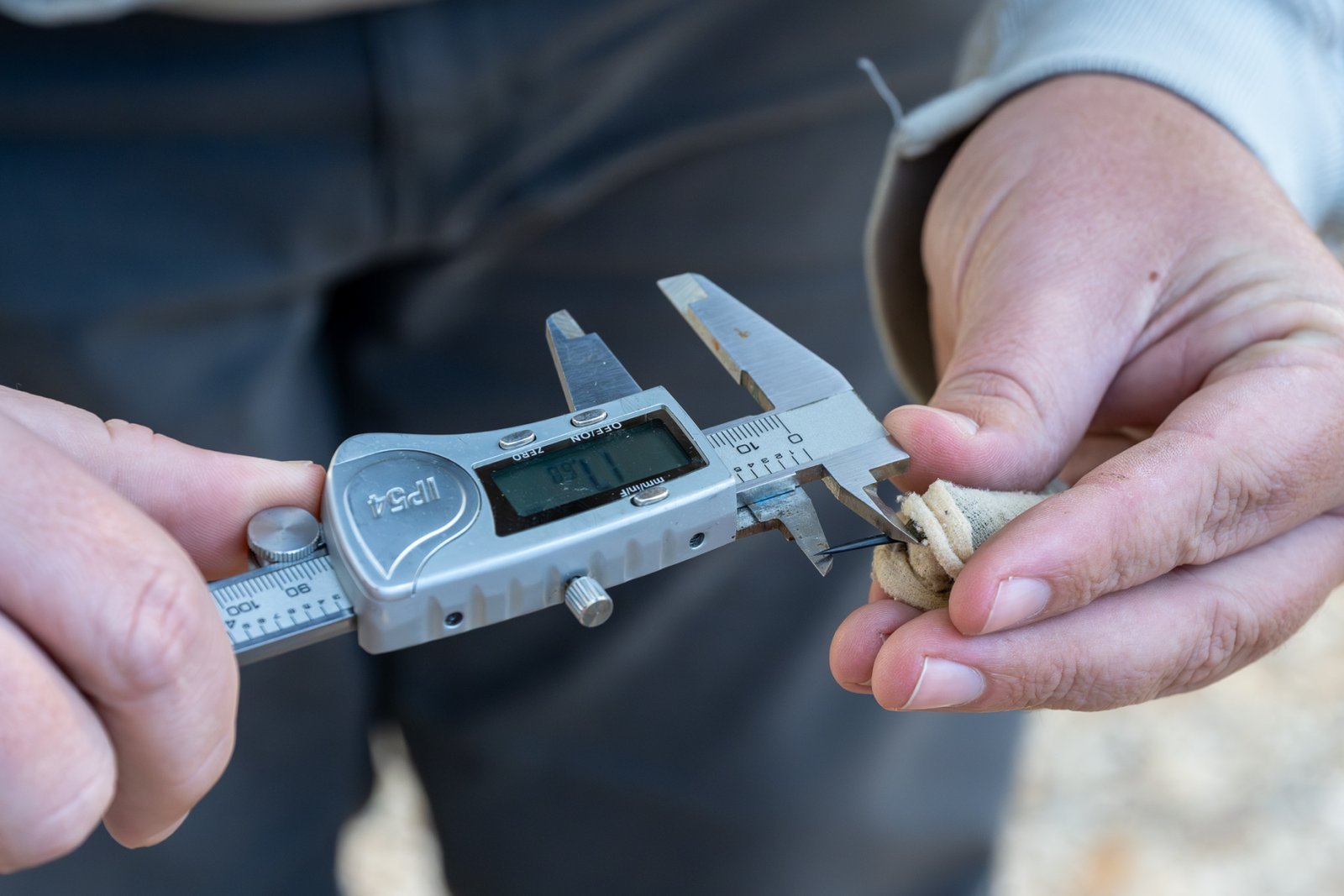
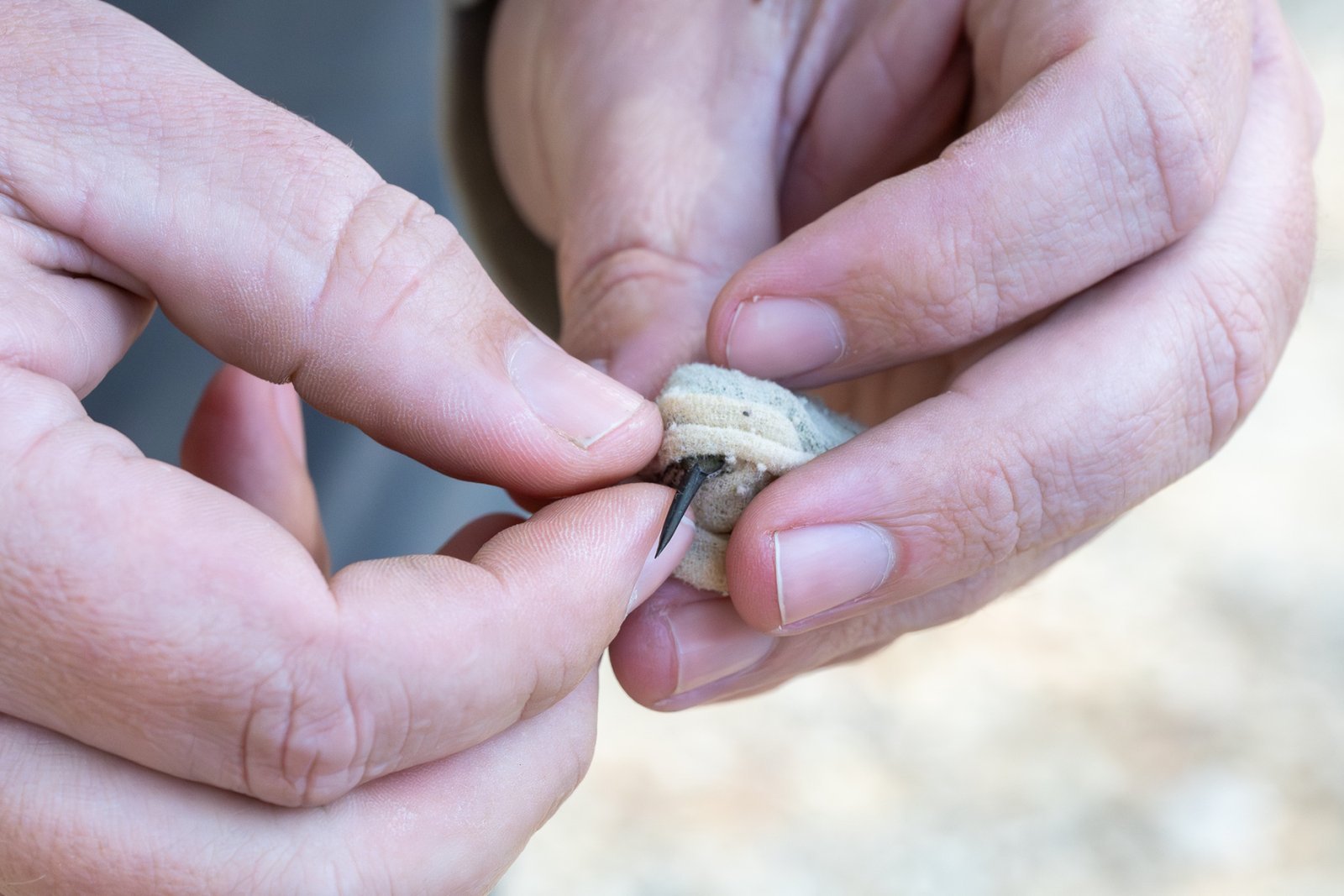
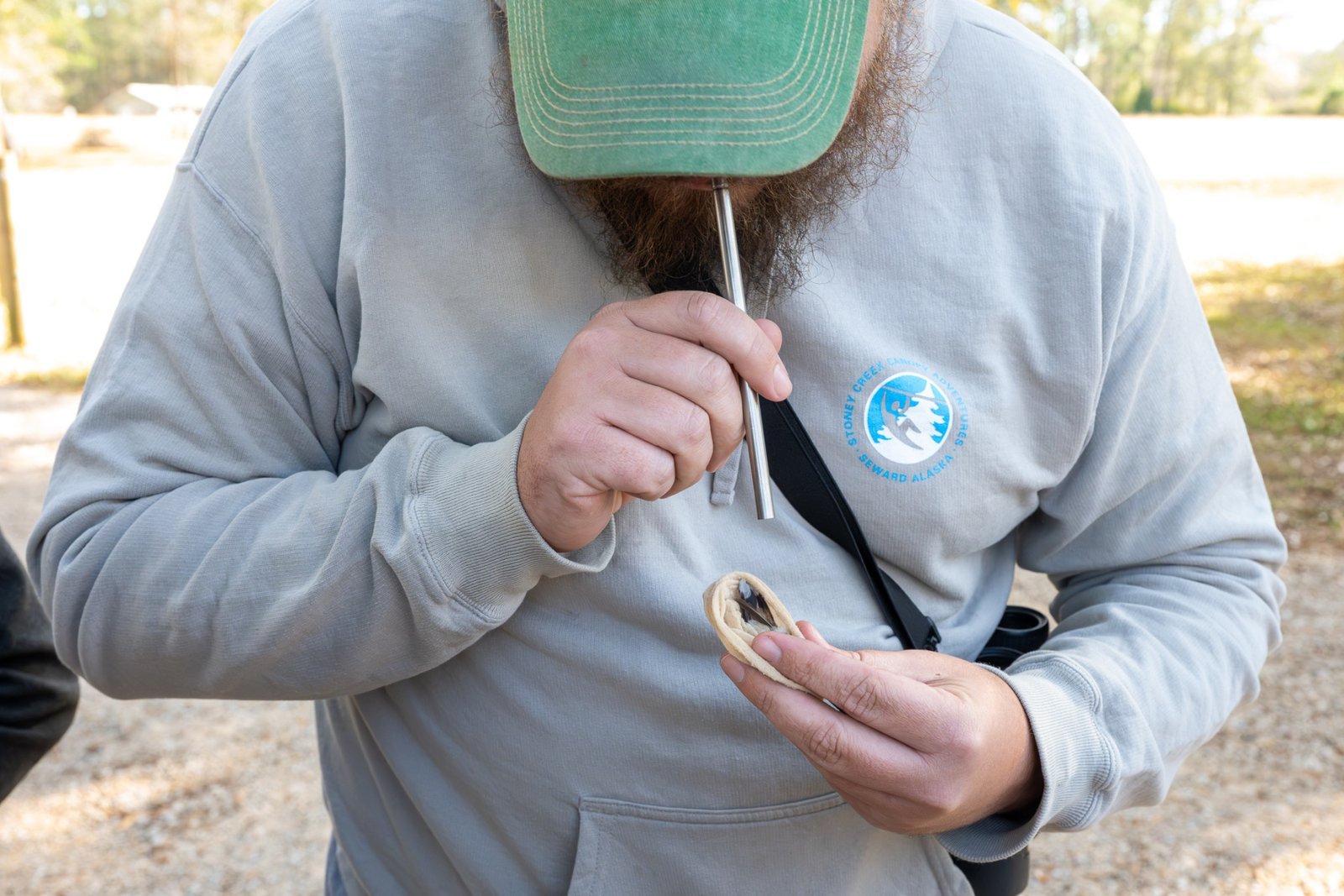
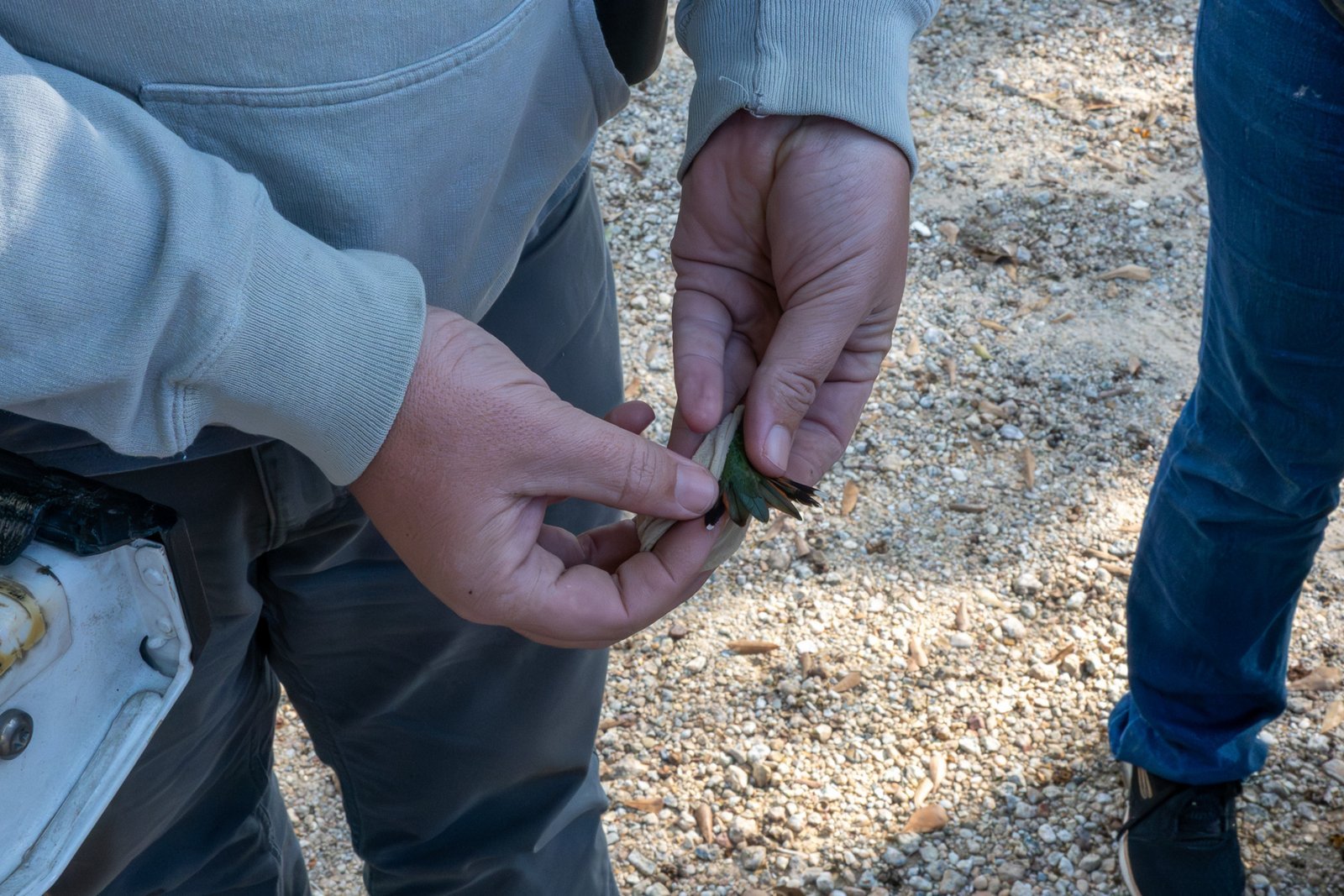
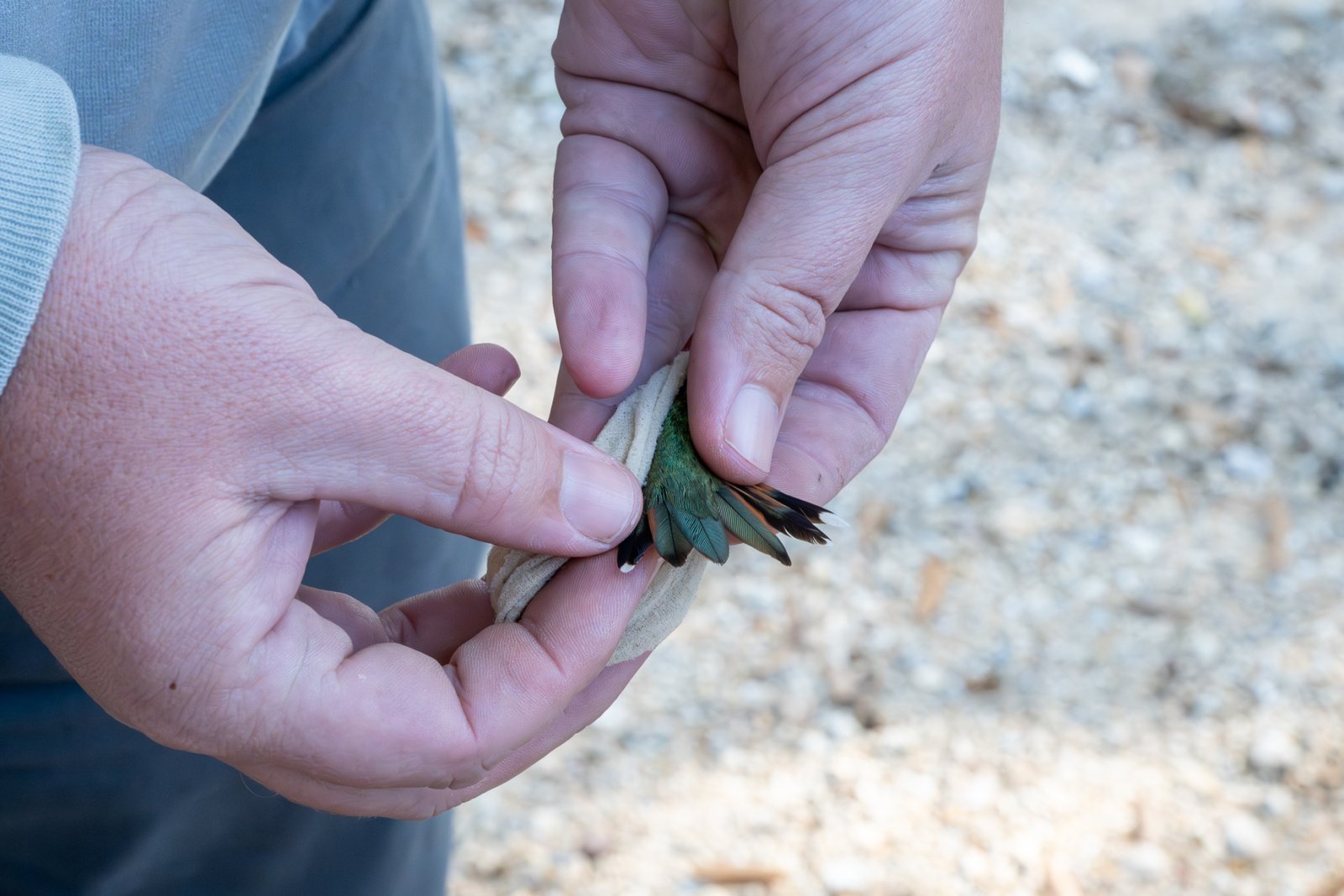
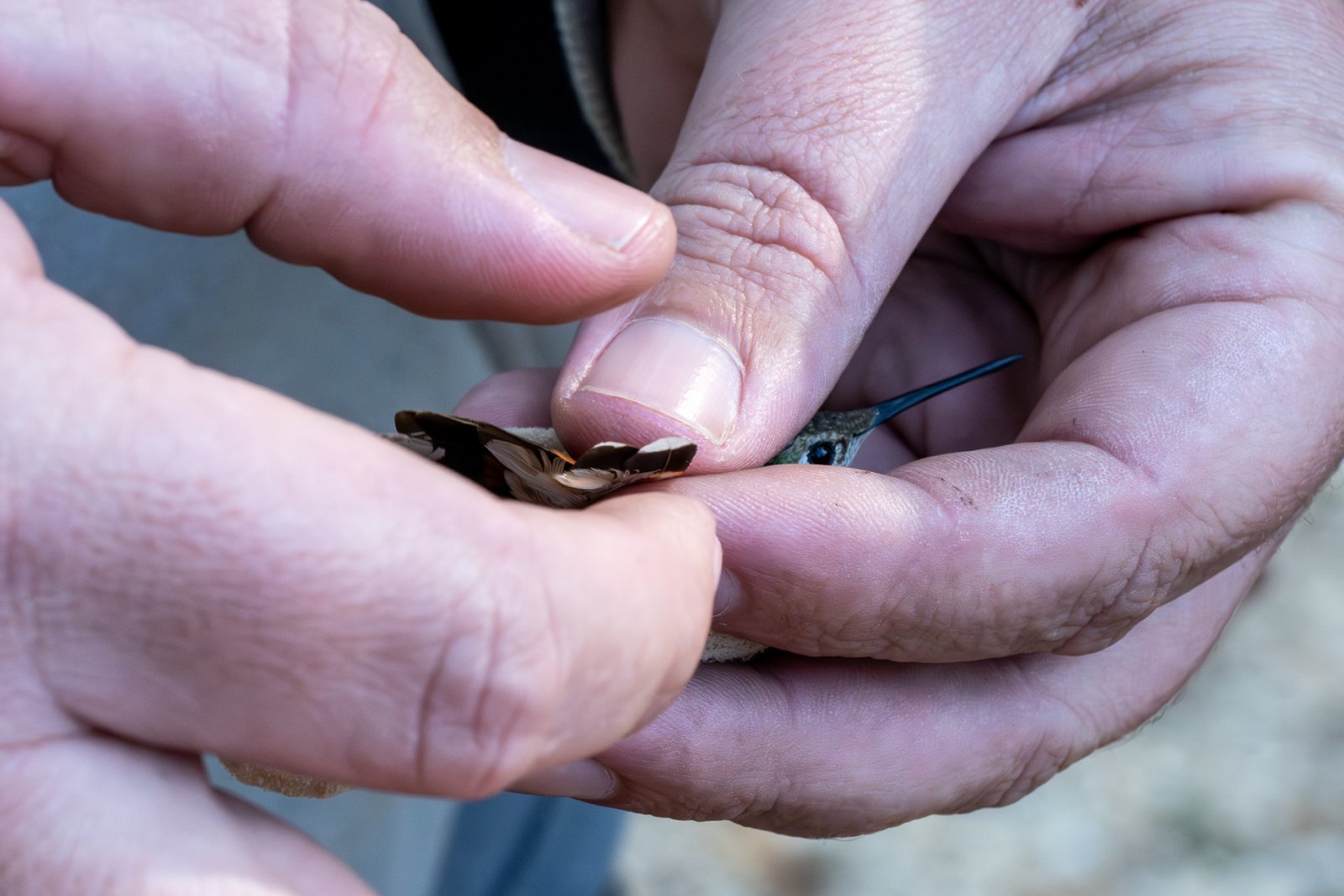
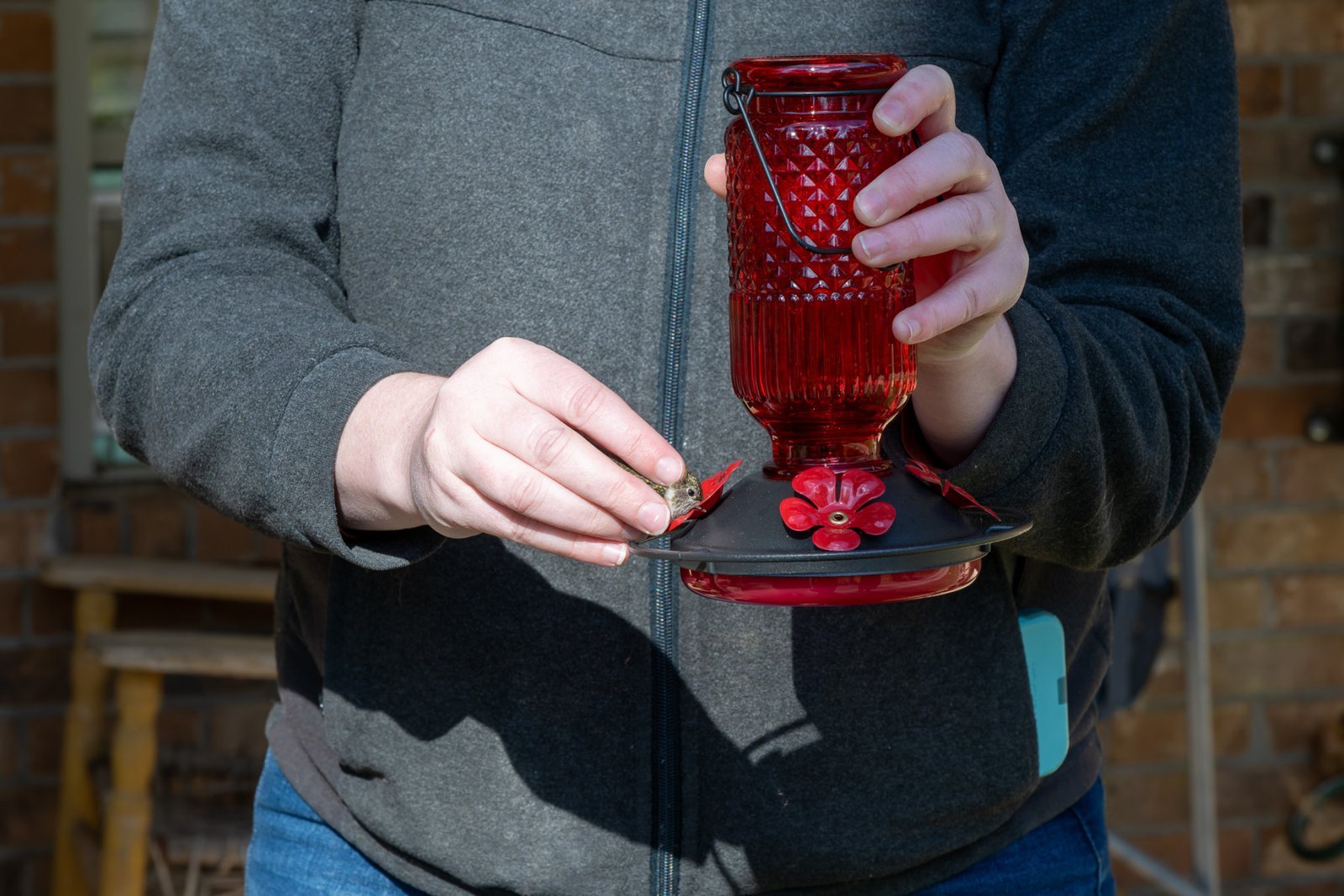
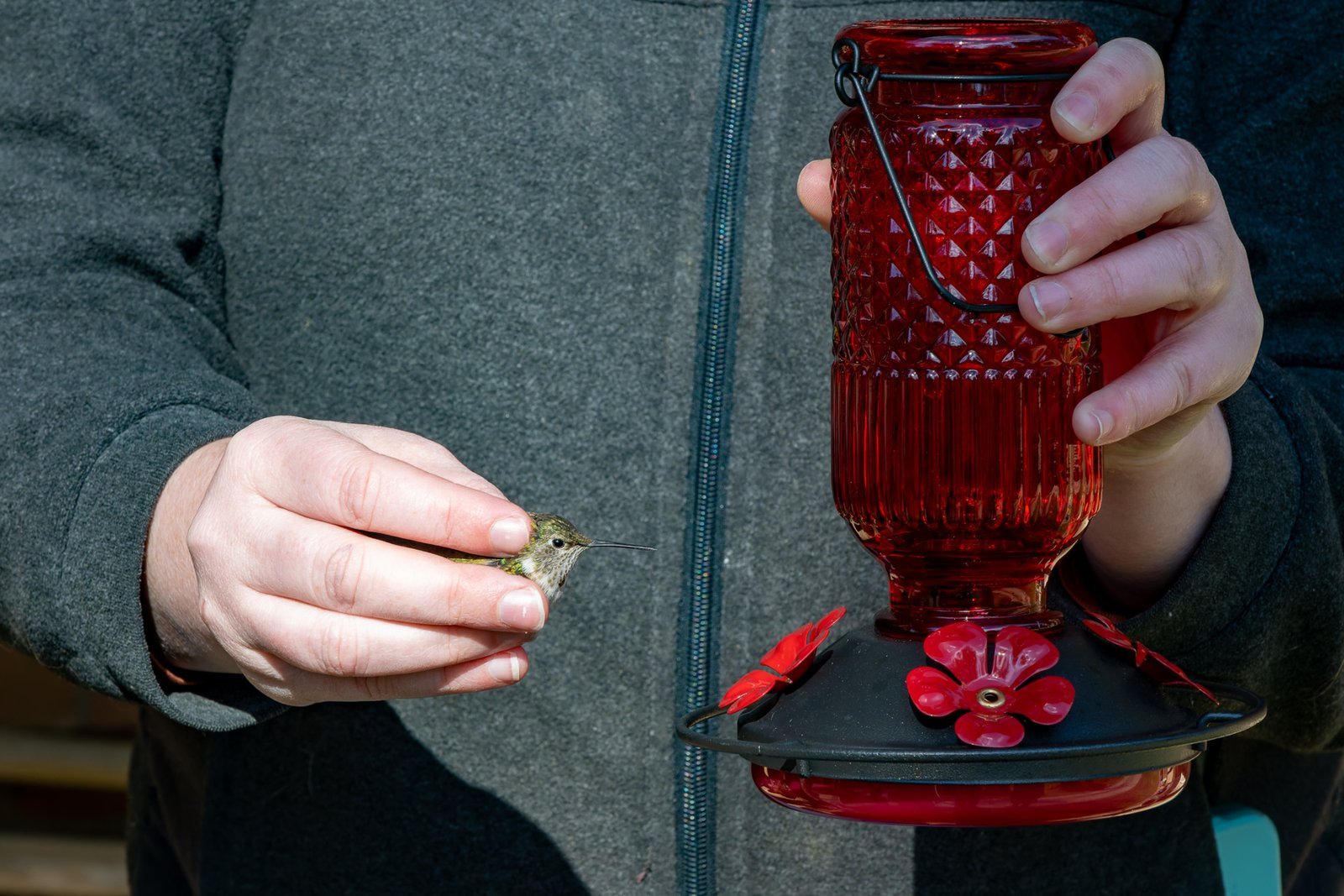
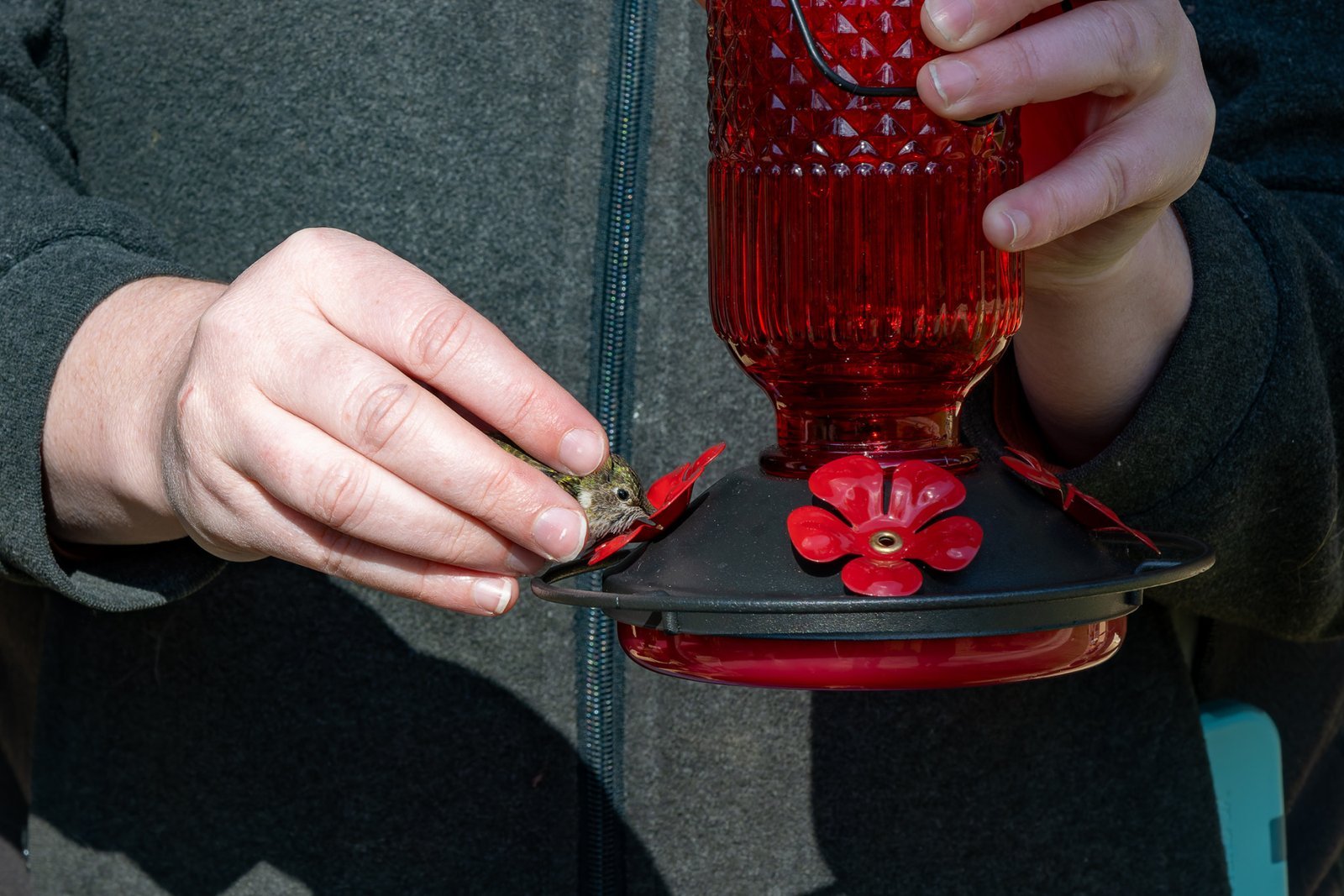
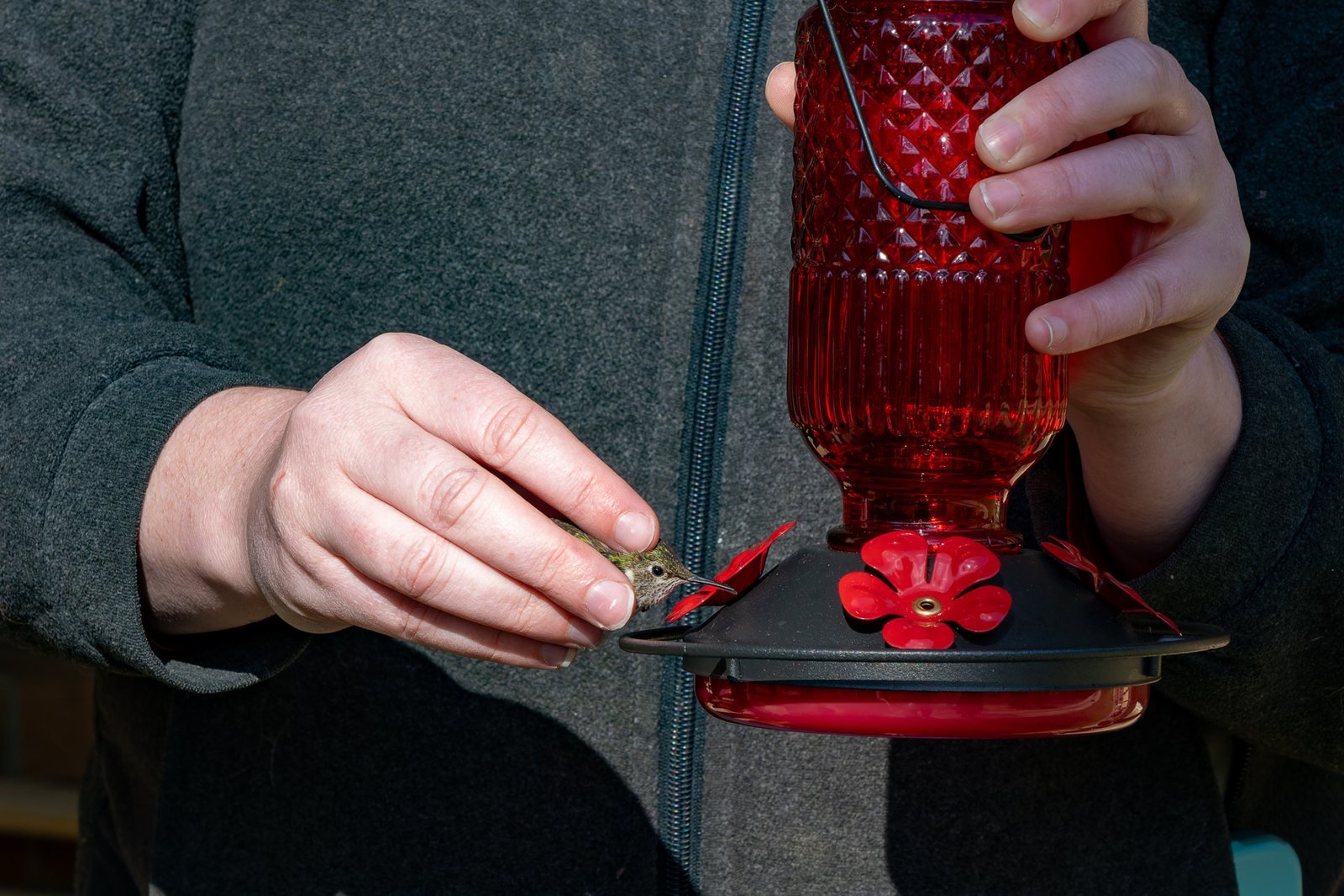
Two members of Banding Coalition of the Americas, Kyle Shepherd and Emma Rhodes, PhD, came to catch, weigh, measure, take DNA, band, and let Patty release our visiting Broad-tailed Hummingbird, named Percy, by Patty.
The Science of Bird Banding
Bird banding is a vital tool used by scientists and conservationists to uncover the secrets of bird life—their movements, survival, and behaviors. For a creature as small and fast as a hummingbird, these tiny bands help answer big questions.
The “Why” of Bird Banding
Banding is giving an individual bird a unique ID tag, much like a microscopic license plate. This allows researchers to track that specific bird if it is encountered again (recaptured or sighted). The data gathered is crucial for:
- Understanding Migration Routes: Scientists can confirm where birds are traveling from and to. For example, banding helped confirm the incredible journey of the Broad-Tailed Hummingbird that visited your yard, which is typically found much further west but unexpectedly arrived in Mississippi.
- Calculating Survival Rates and Lifespans: By tracking banded birds year after year, researchers can determine how long particular species live and how well they survive threats such as habitat loss or climate change.
- Population Monitoring: Recapture data helps scientists estimate population sizes and trends, indicating which species may be thriving and which may need conservation help.
The Bigger Picture: Organizations like the Banding Coalition of the Americas (BCOA), which contacted Patty, work to ensure that banding is conducted using standardized, ethical, and scientific methods across the continent. This collaborative effort helps to gather the most accurate data possible to inform conservation strategies.
The “How” of Hummingbird Banding
Banding a hummingbird requires incredible care, precision, and specialized equipment, given the bird’s small size and rapid movements.
1. The Capture
Hummingbirds are usually captured using a harmless trap that surrounds a feeder, ensuring the bird can be safely caught without injury.
2. The Band
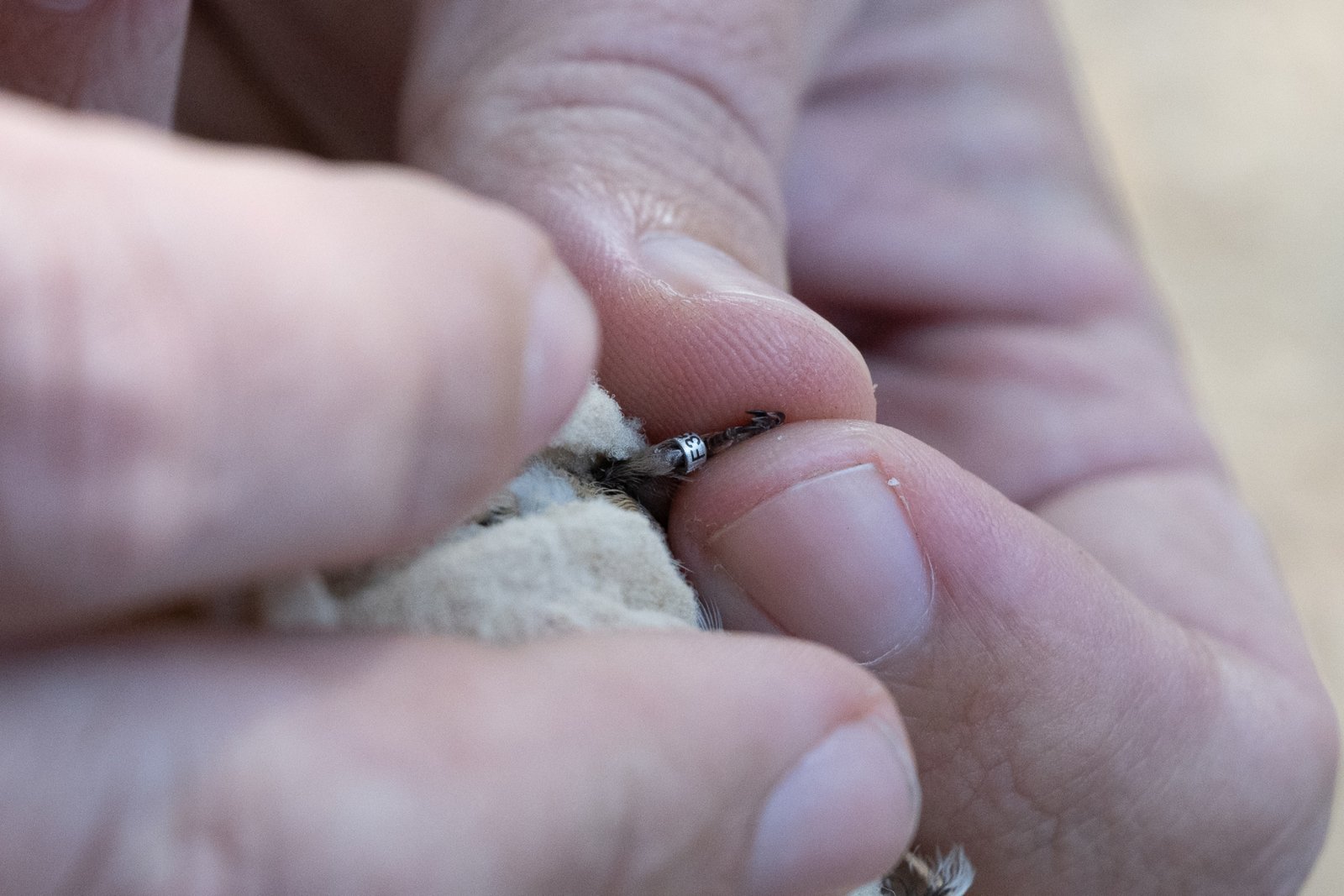
- Size: Hummingbird bands are the smallest in the world, usually made of aluminum, and weigh less than a paperclip (often under $0.03$ grams). The entire process must be fast and gentle to minimize stress.
- The ID: Each band is stamped with a unique nine-digit number and a return address. This is the bird’s permanent ID.
3. Data Collection
Before release, the bander records essential information:
- Measurements: Wings, tail, and bill are measured. This helps confirm the species and determines if the bird is healthy.
- Weight: The bird is weighed.
- Age and Sex: Features such as feather growth and wear help determine whether the bird is a young male (like your visitor) or an adult female. This is crucial for understanding reproductive success.
- Fat Score: By gently examining the bird’s body, the bander determines how much fat reserves it has for its journey, which is especially important for migrants.
Sharing the Data: From Your Yard to the World
Once a bird is banded, the data is sent to a central authority like the USGS Bird Banding Lab. When a birder spots an unusual bird, they often share it on community platforms like Cornell Lab’s eBird. If a bird is reported, this sighting can be cross-referenced with the banding data.
This process transforms a single, unexpected backyard visit into a valuable piece of the scientific puzzle, helping to protect these beautiful creatures across their entire range.
“Legends say that hummingbirds float free of time, carrying our hopes for love, joy, and celebration“
Click any image to view full size and browse the gallery.
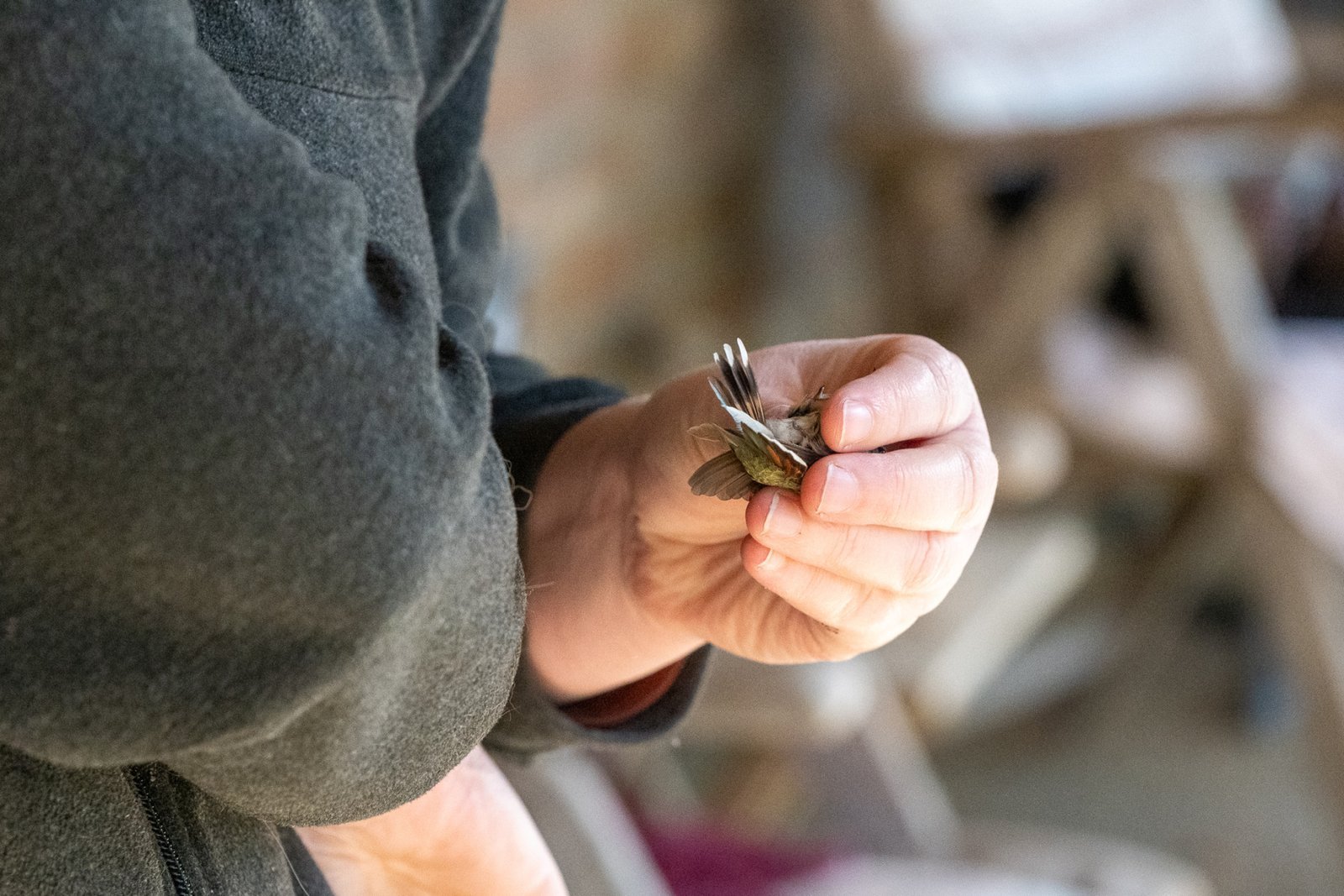
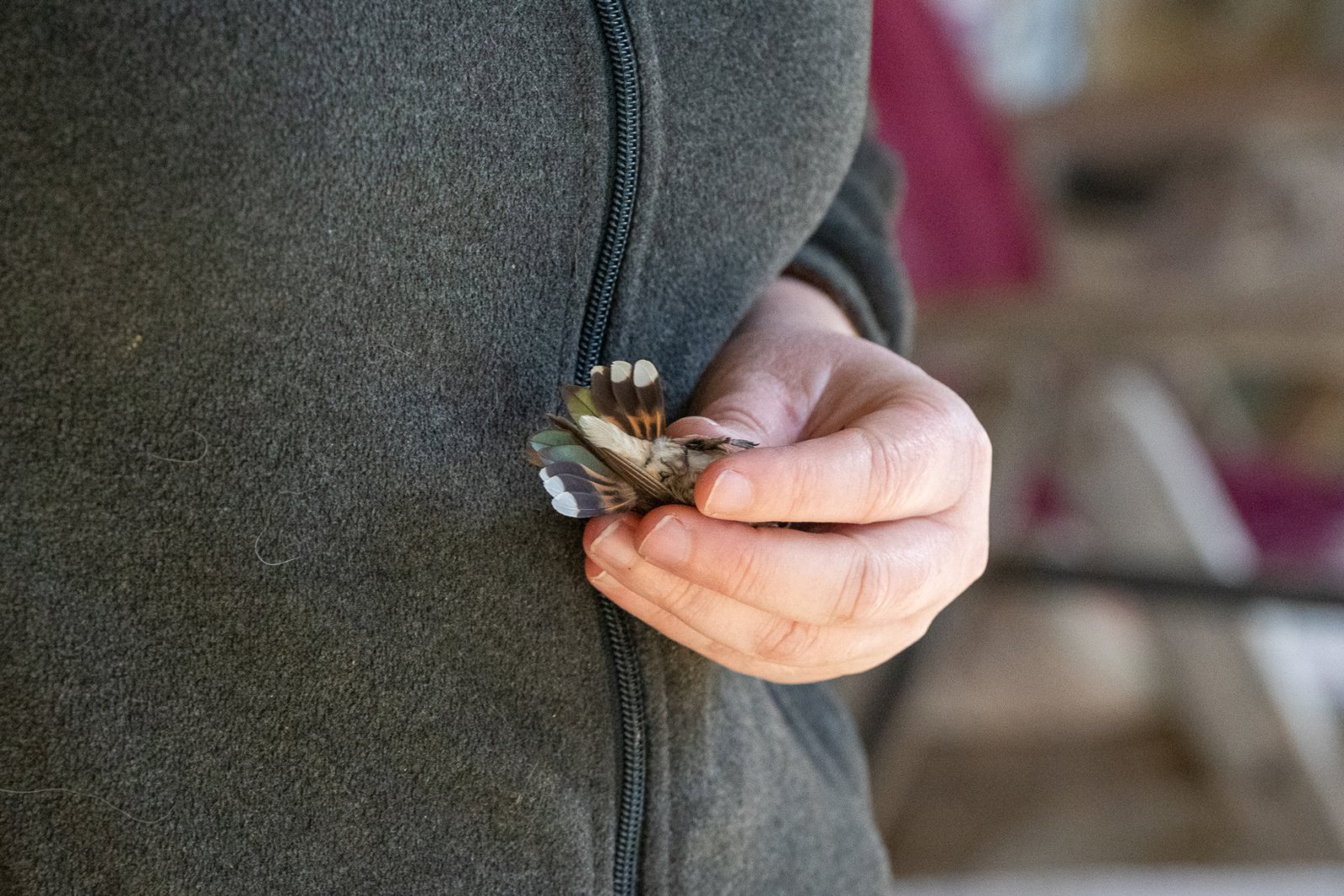
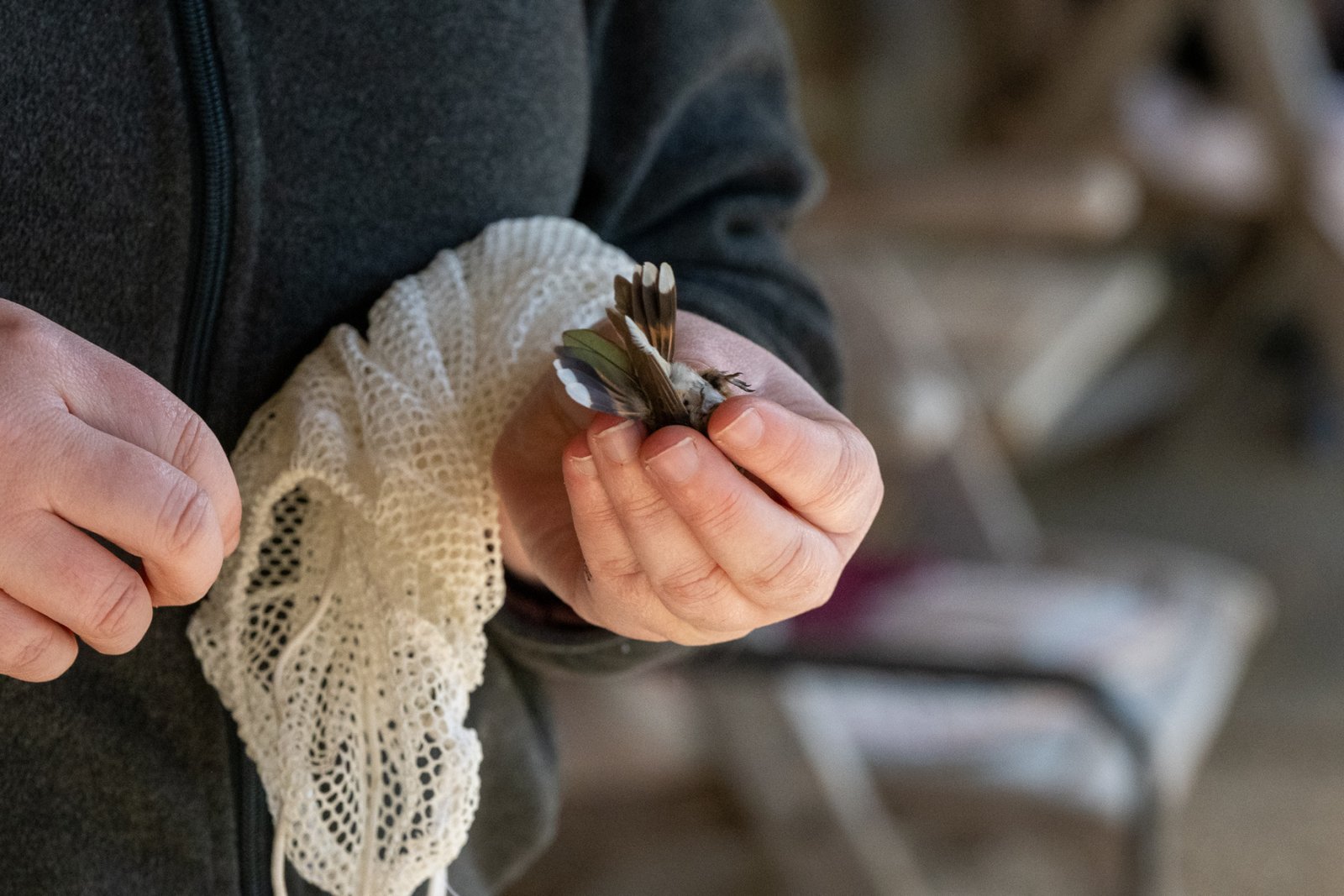
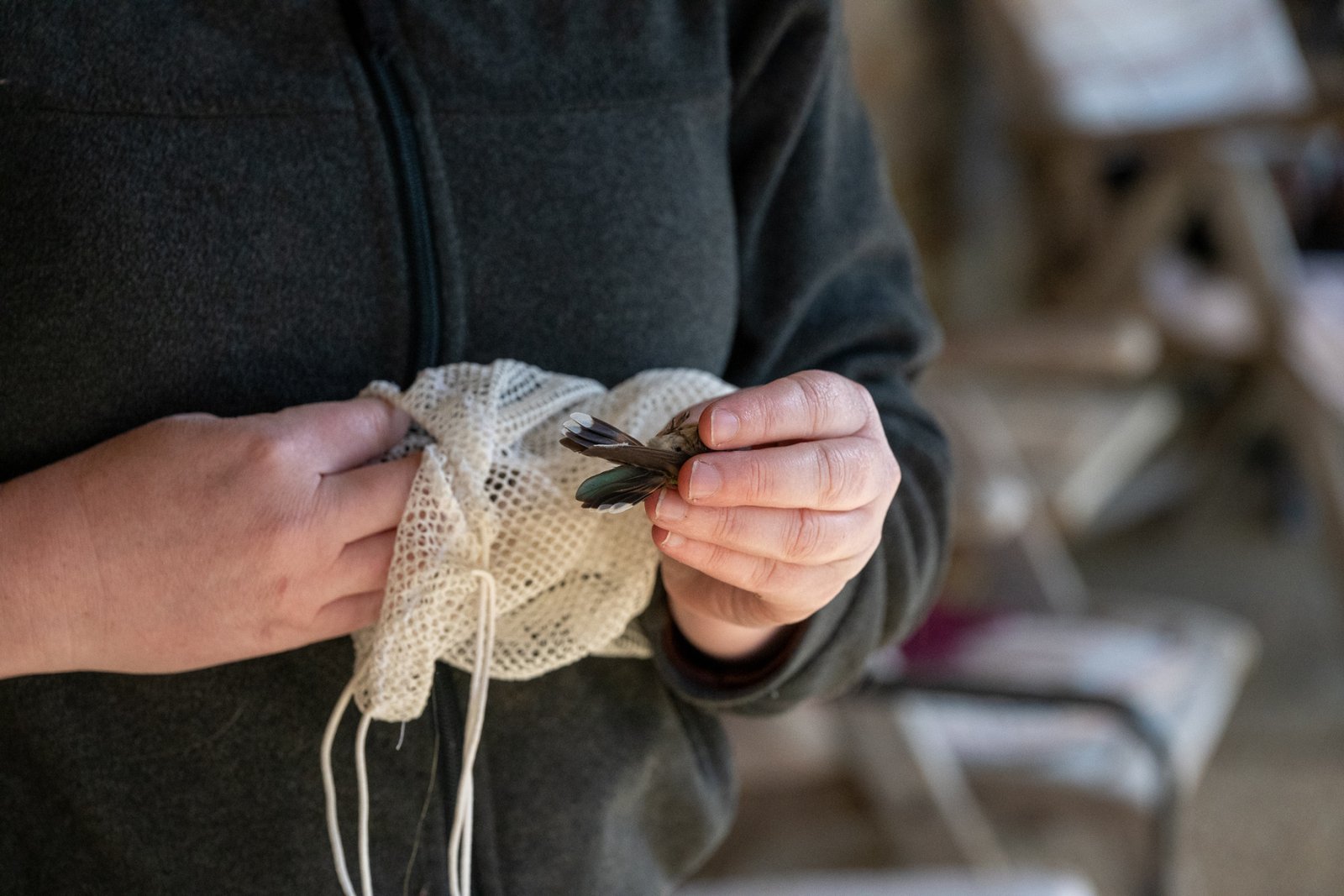
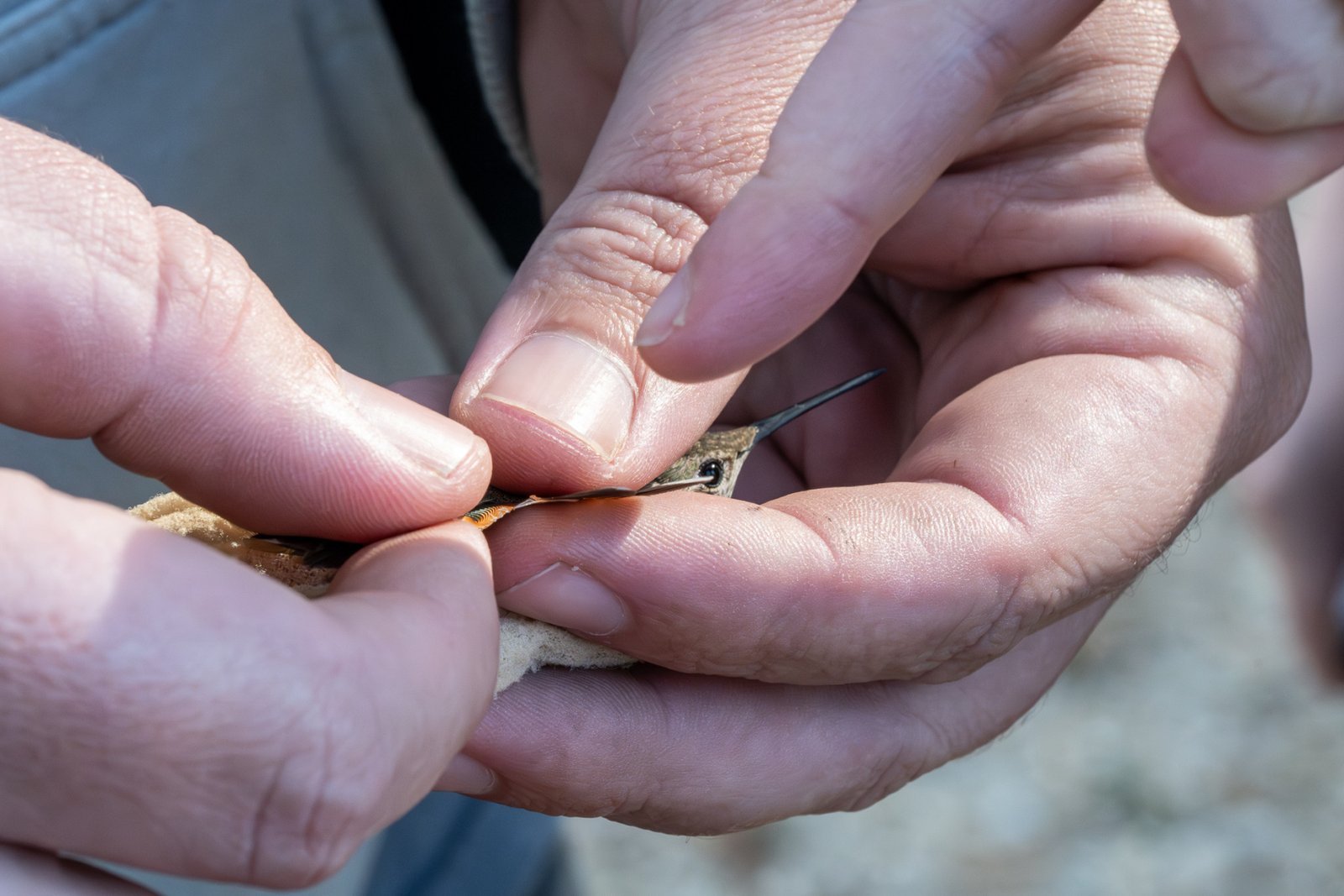
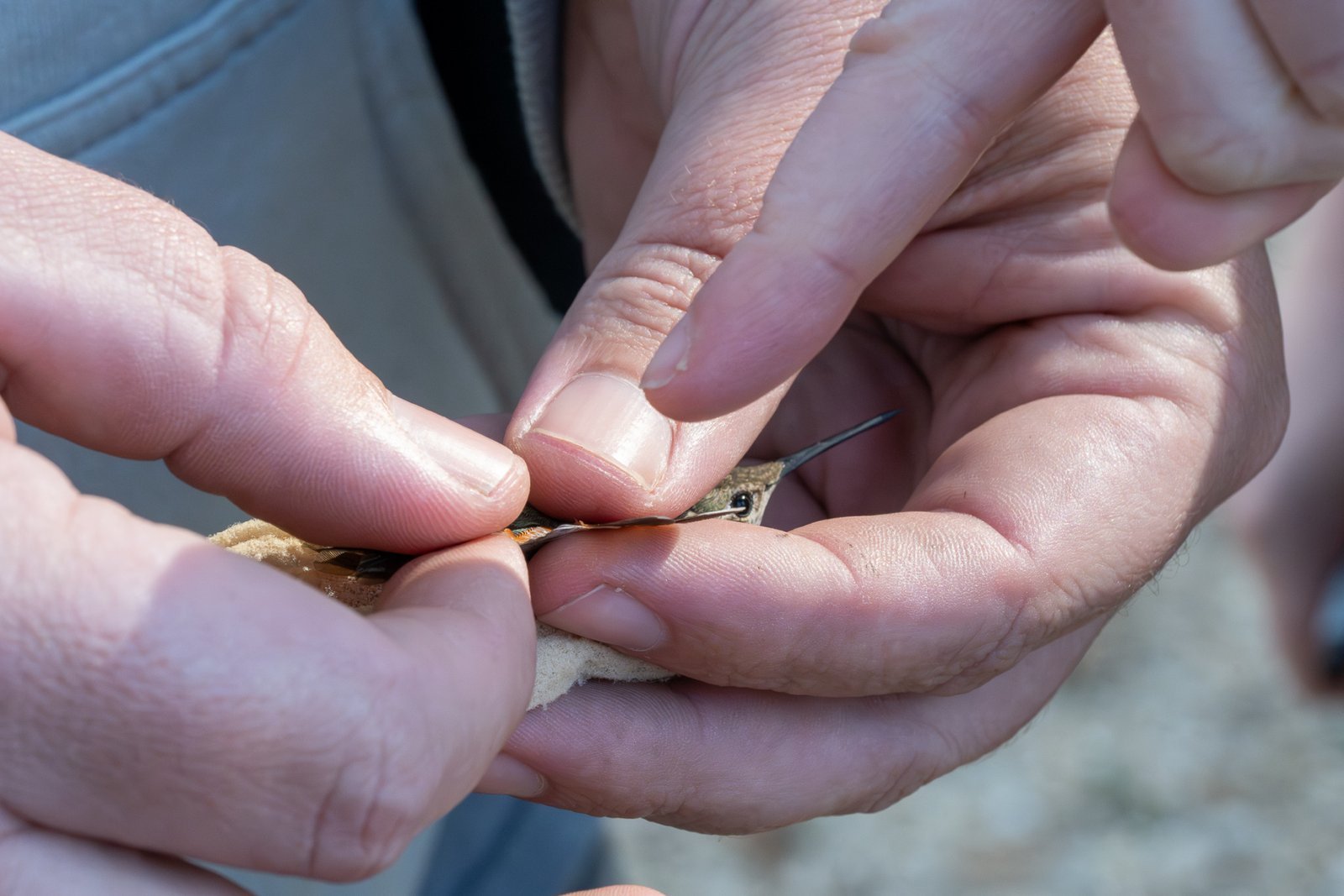
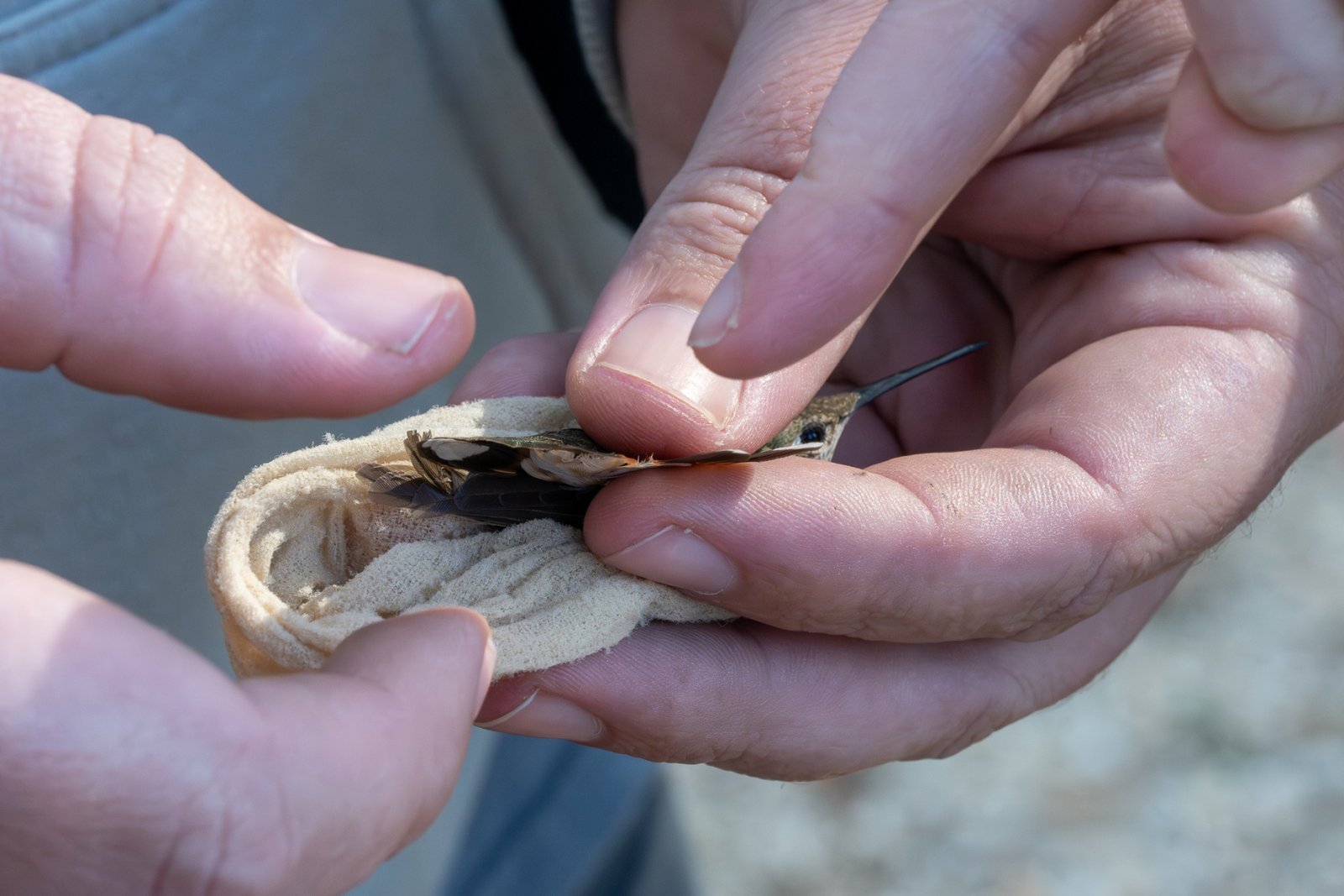
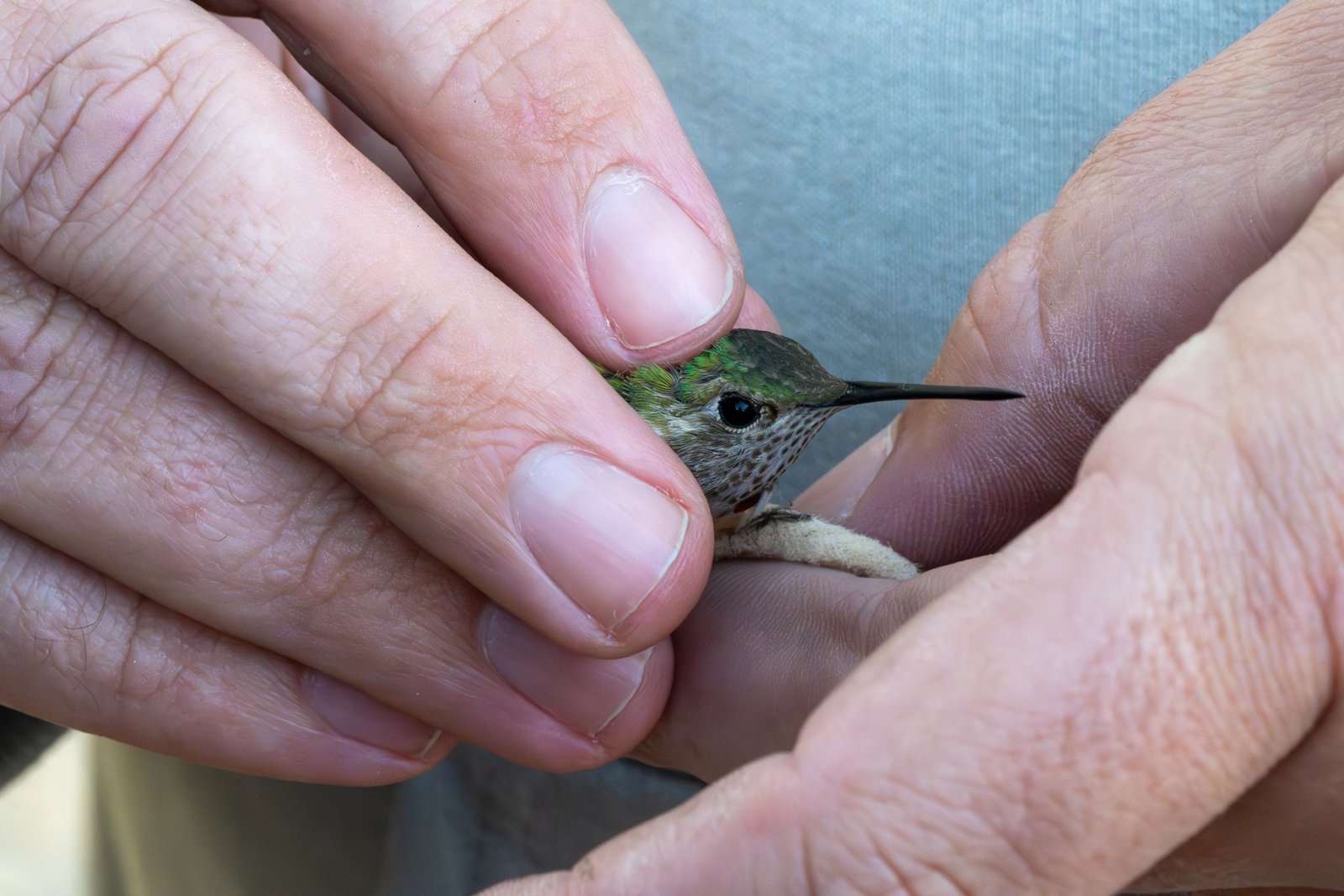
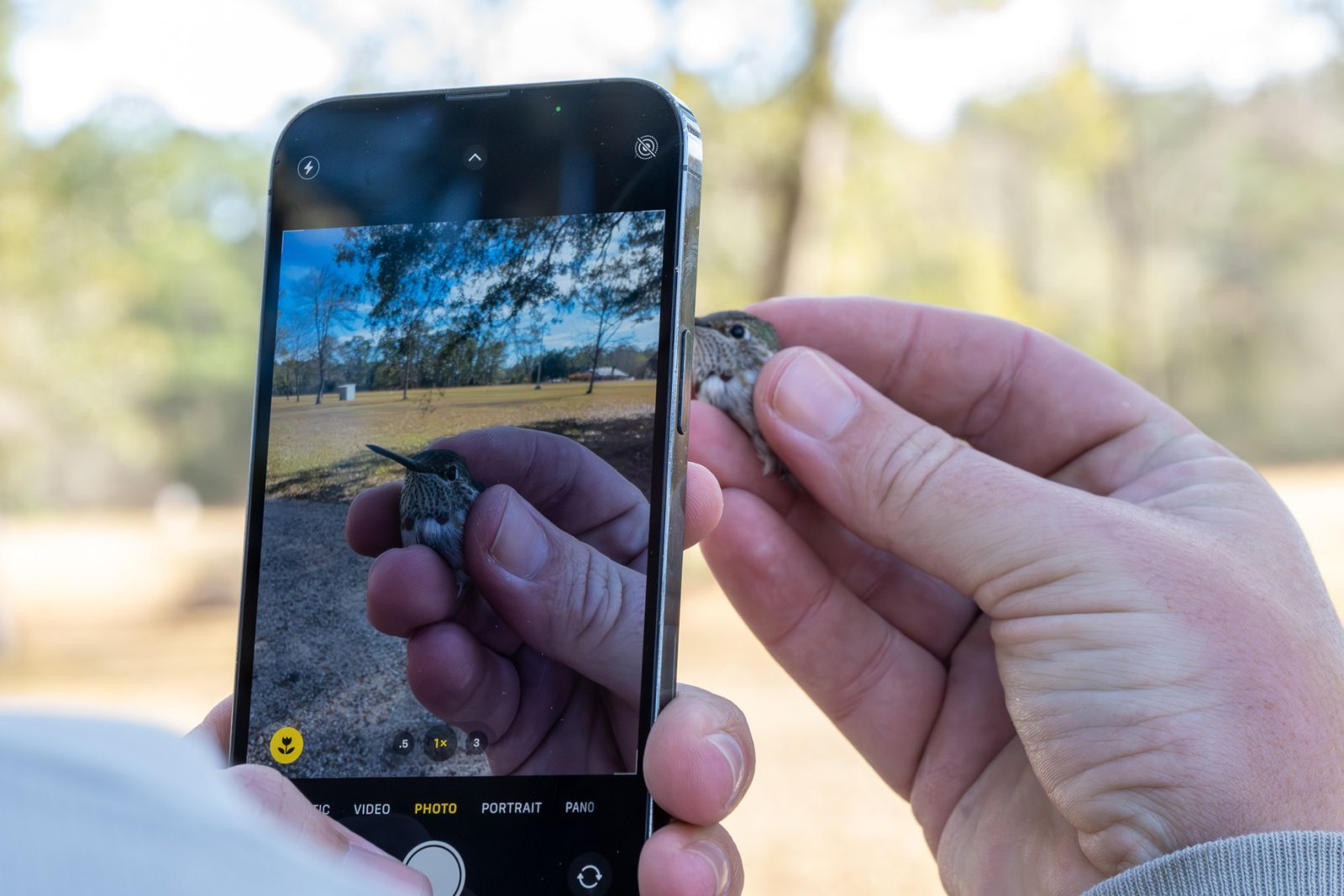
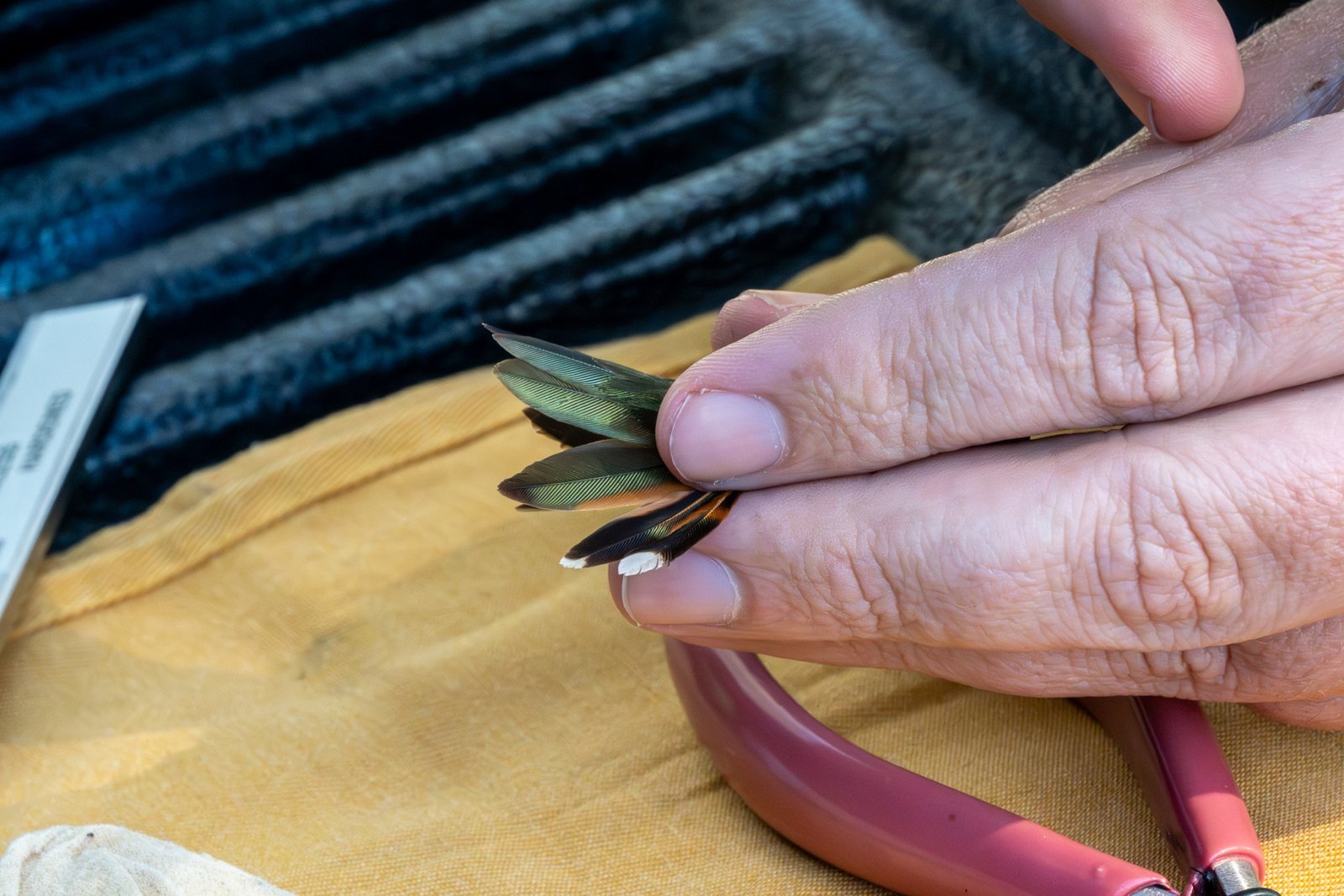
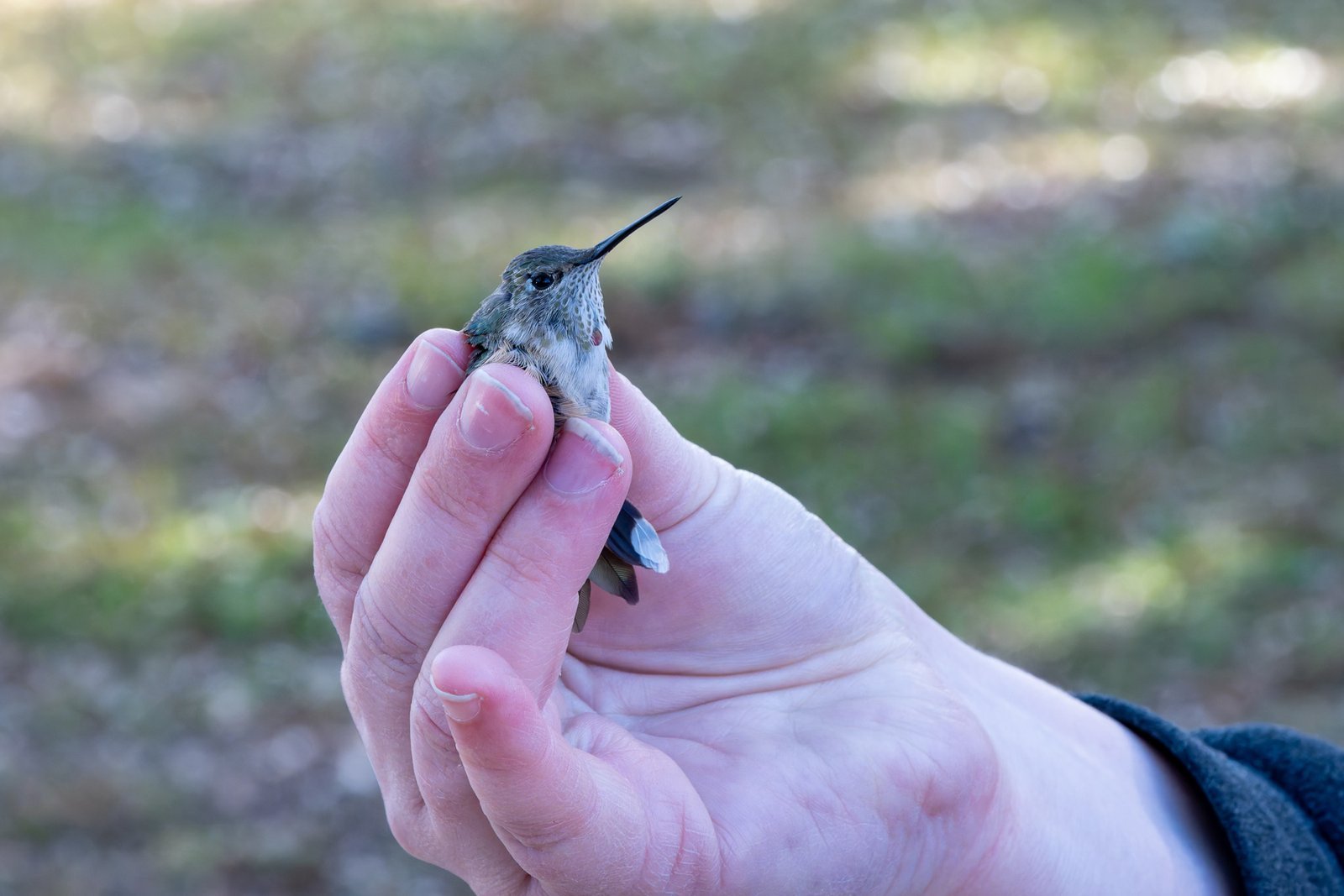
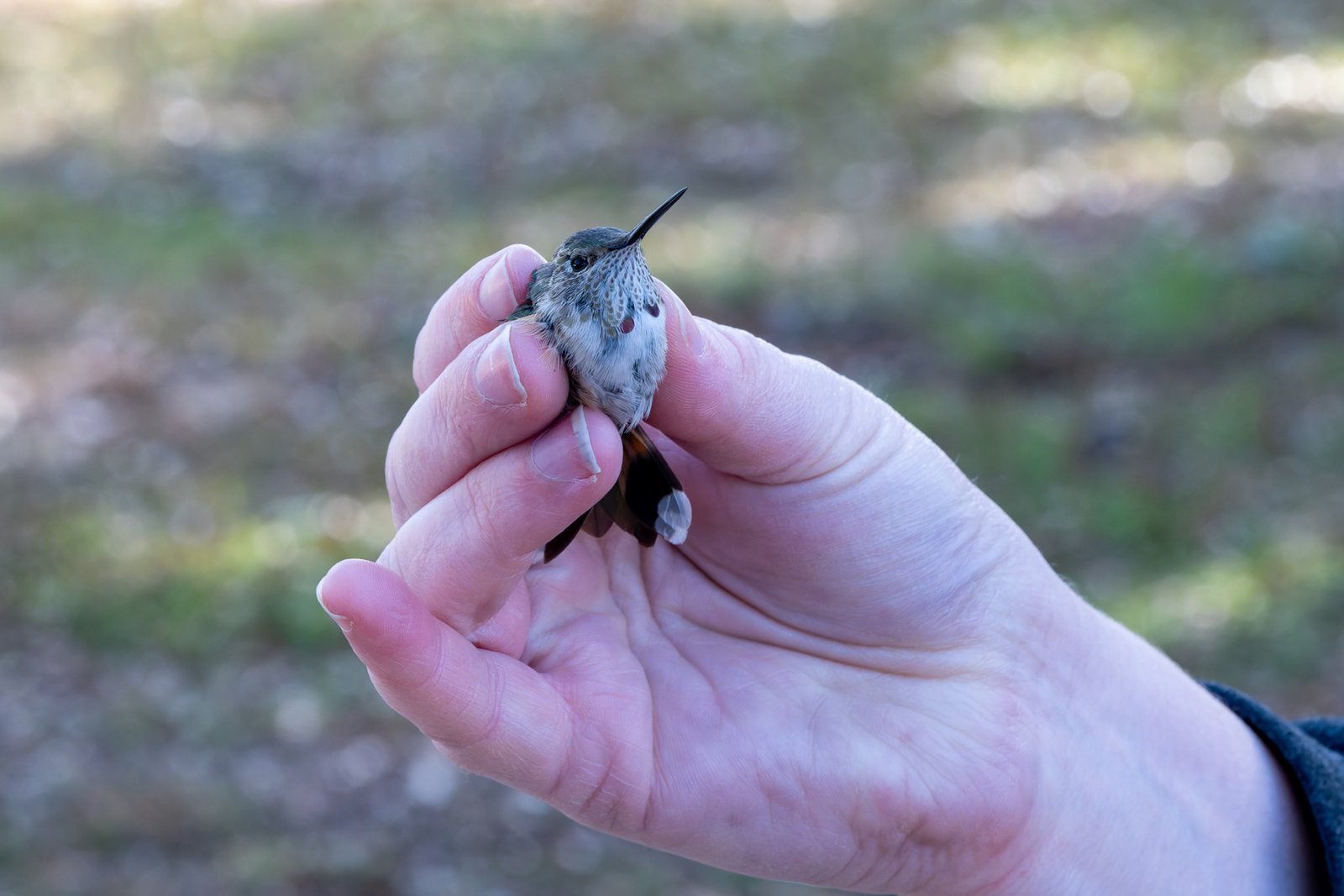
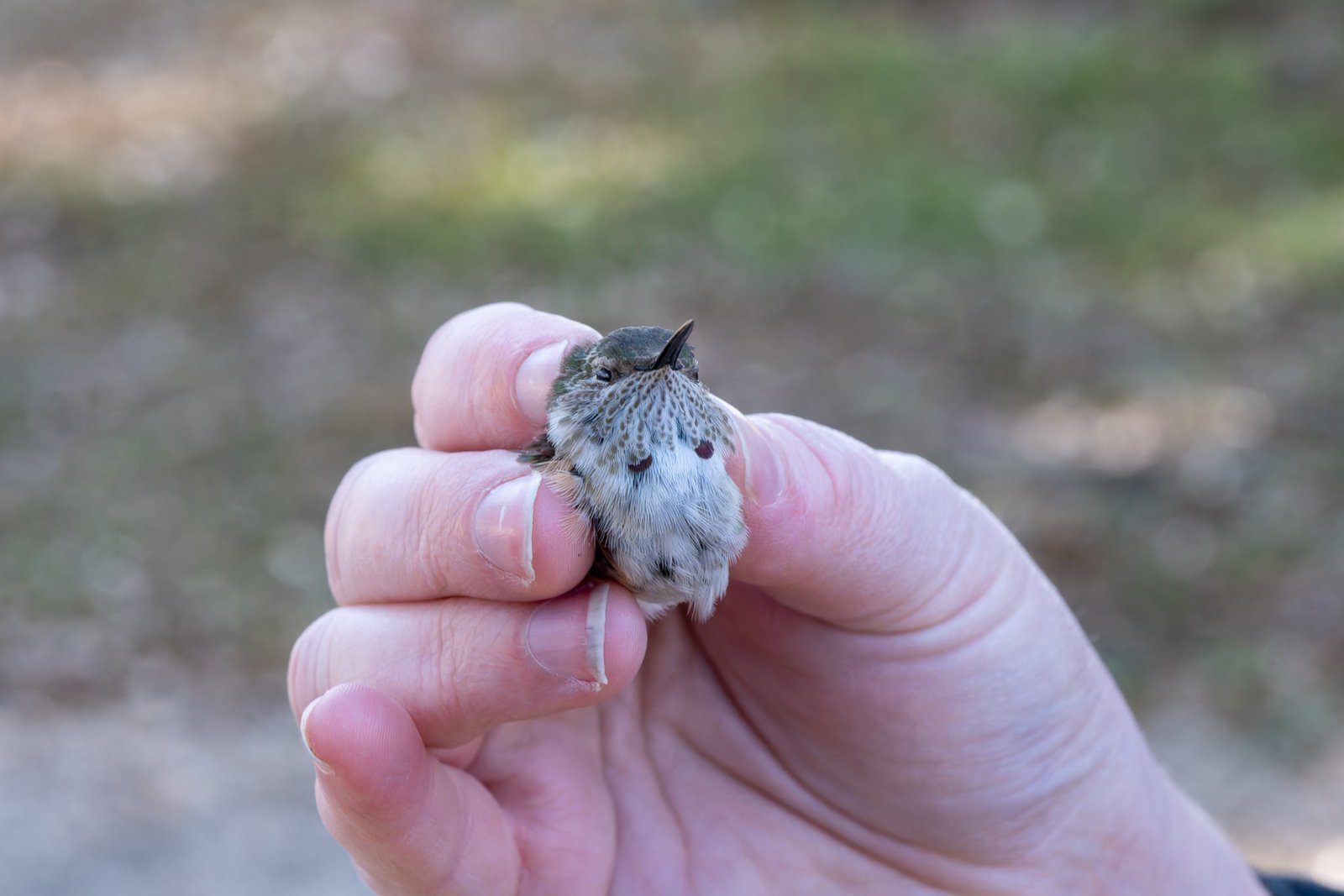
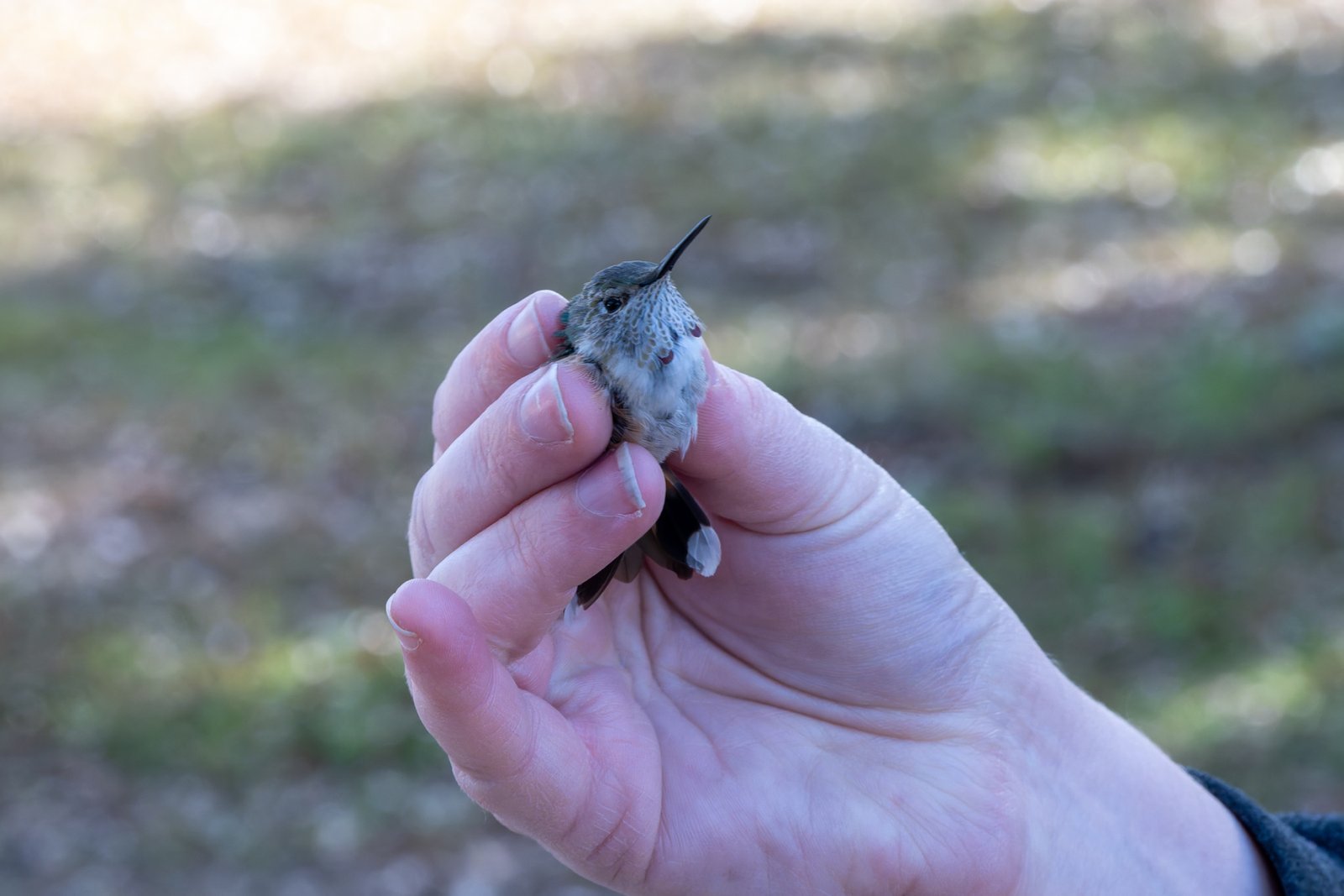
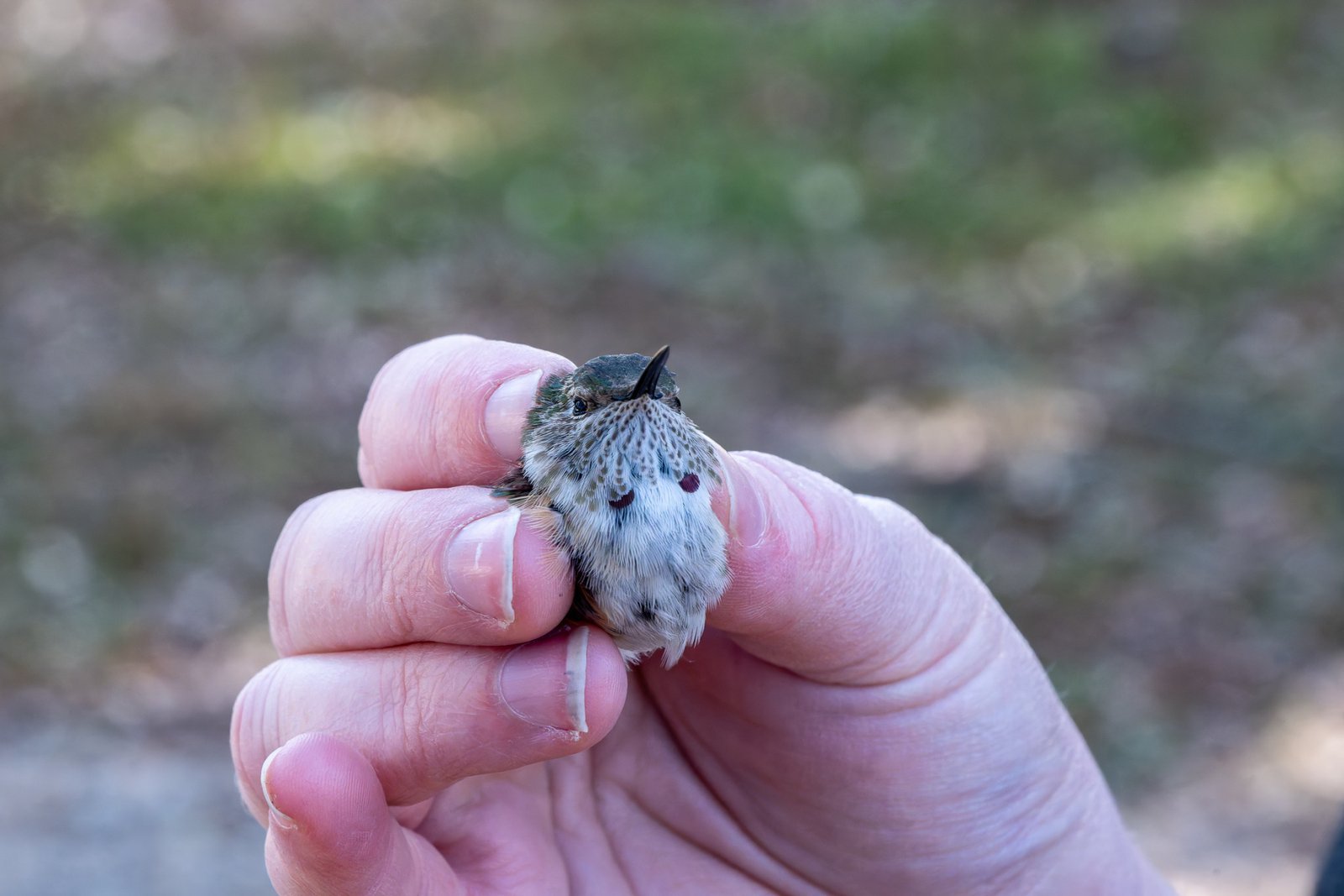
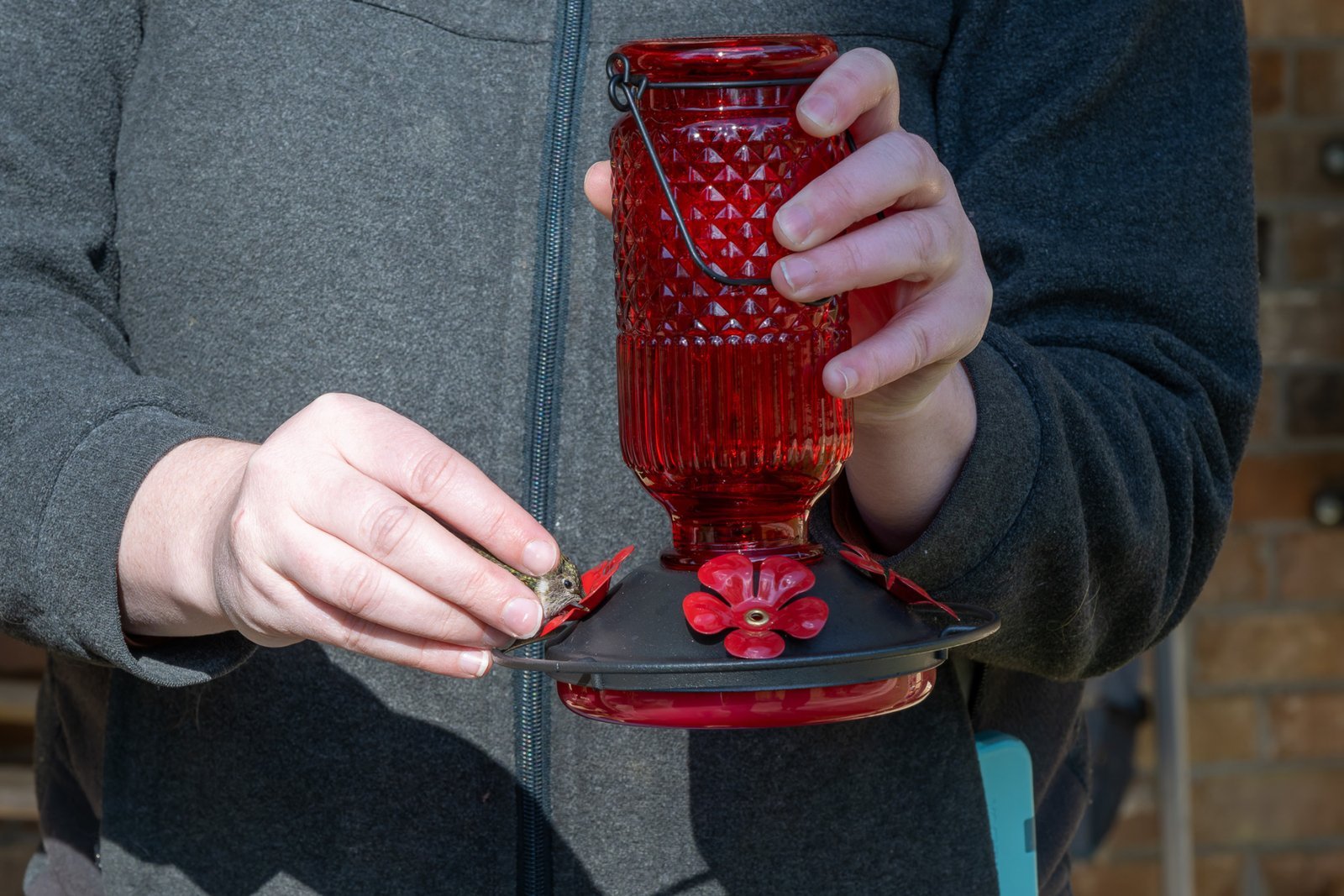
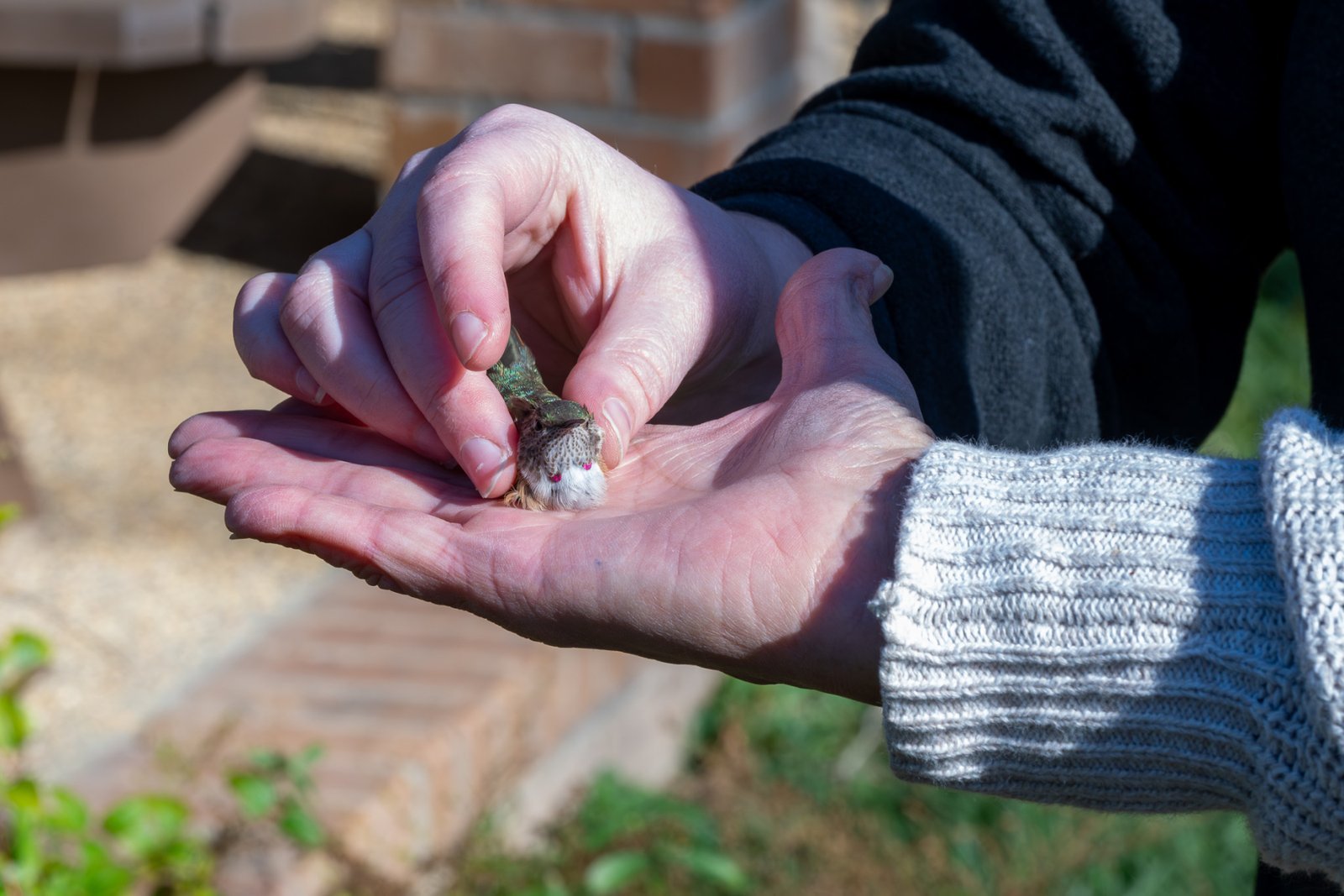
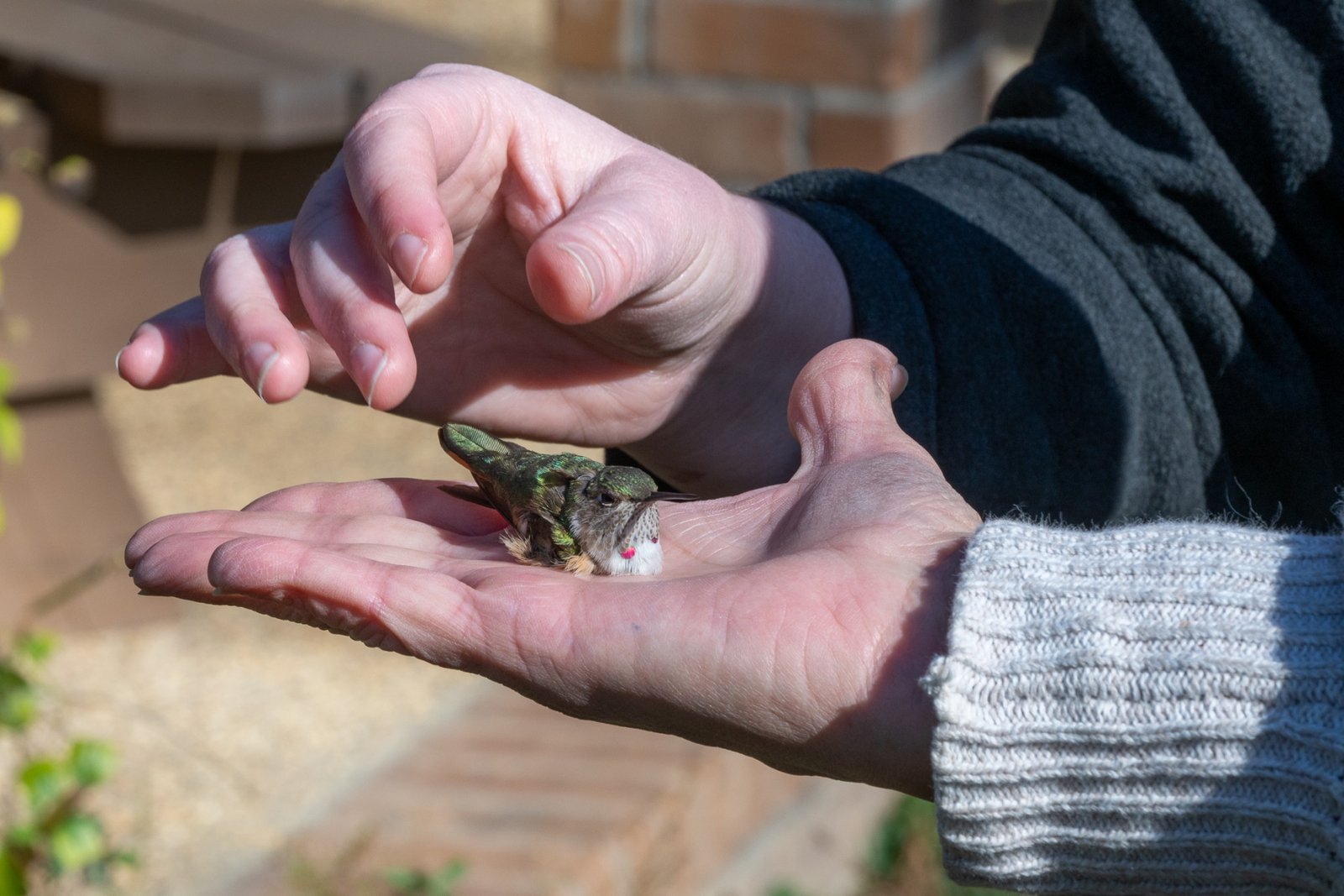
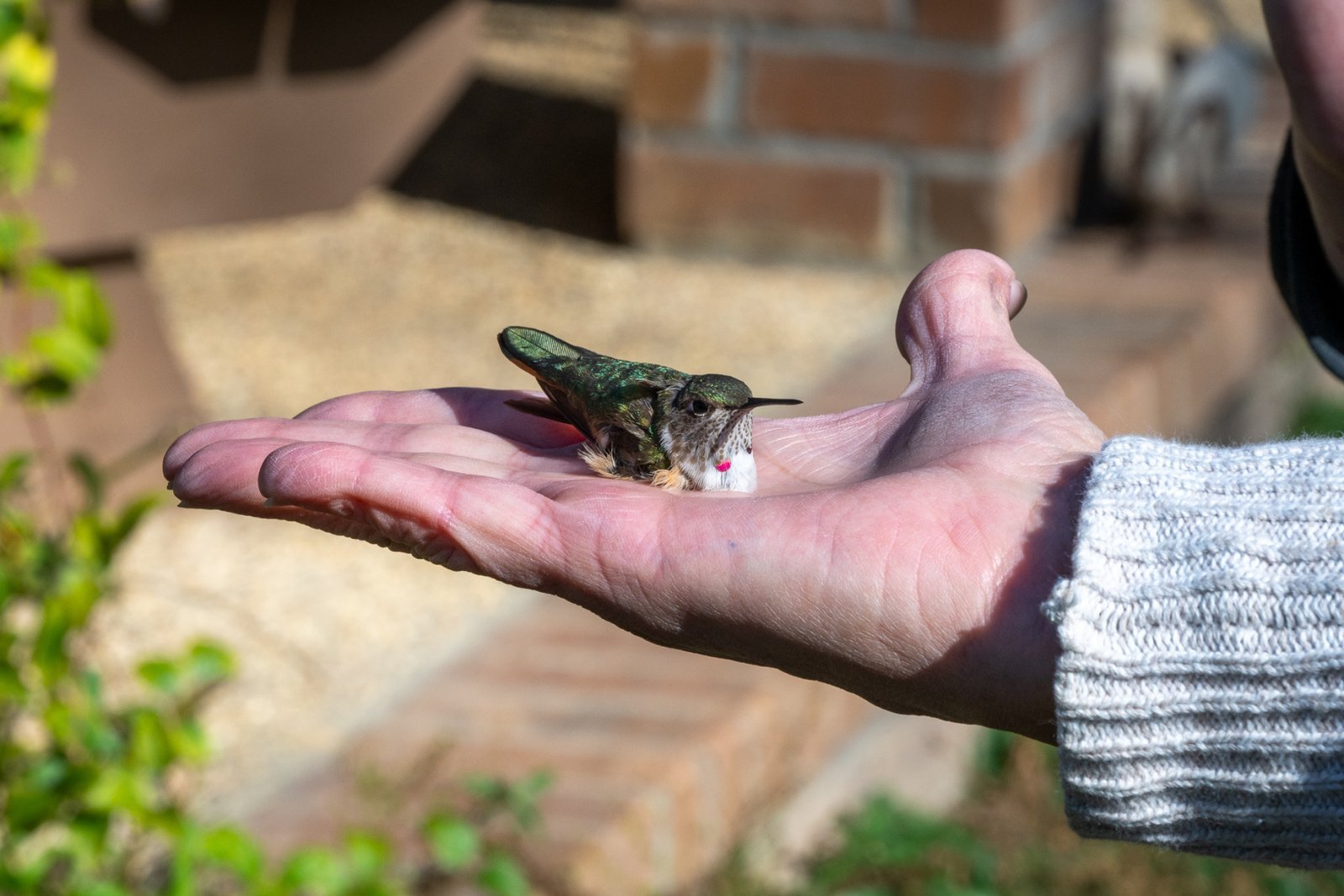
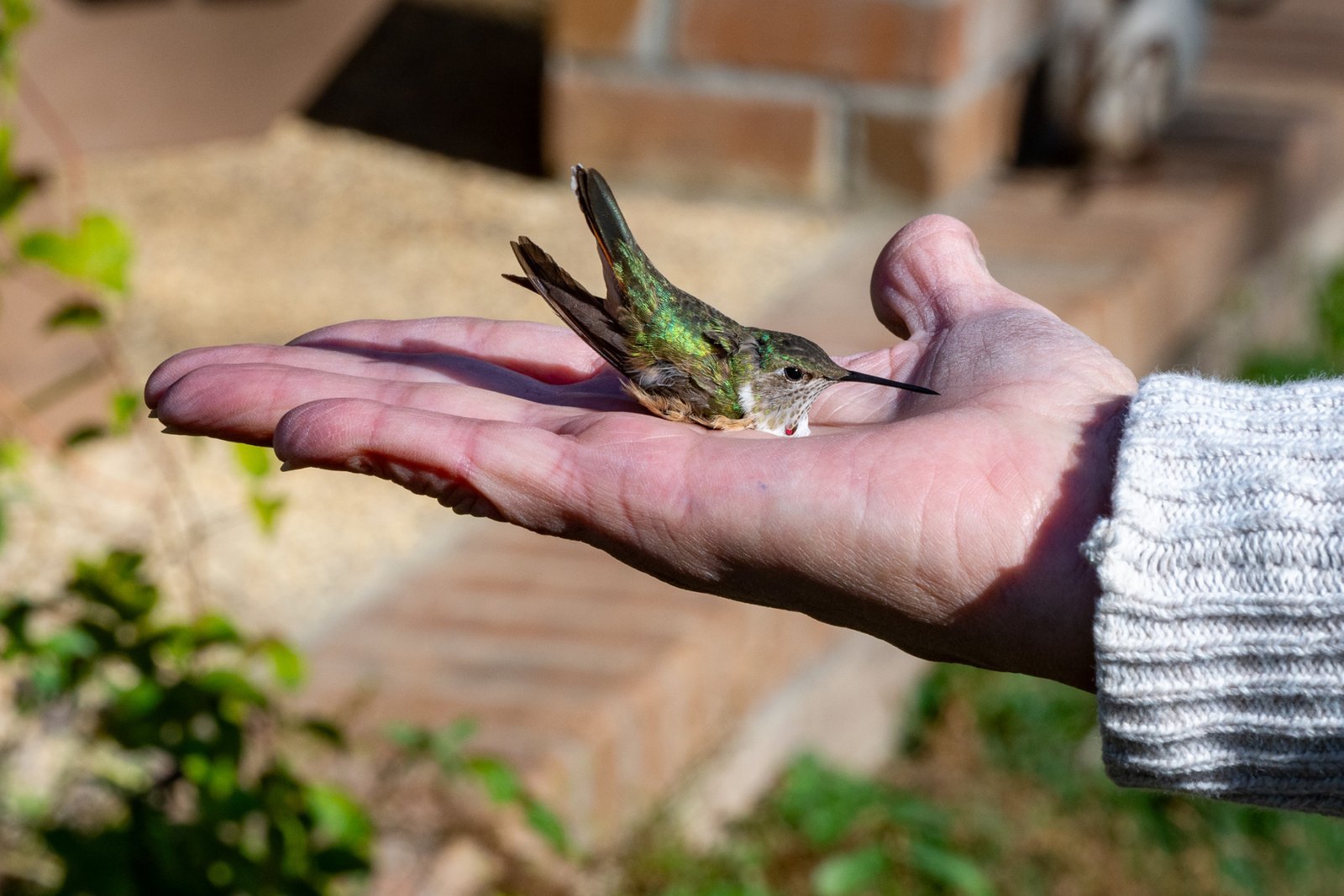
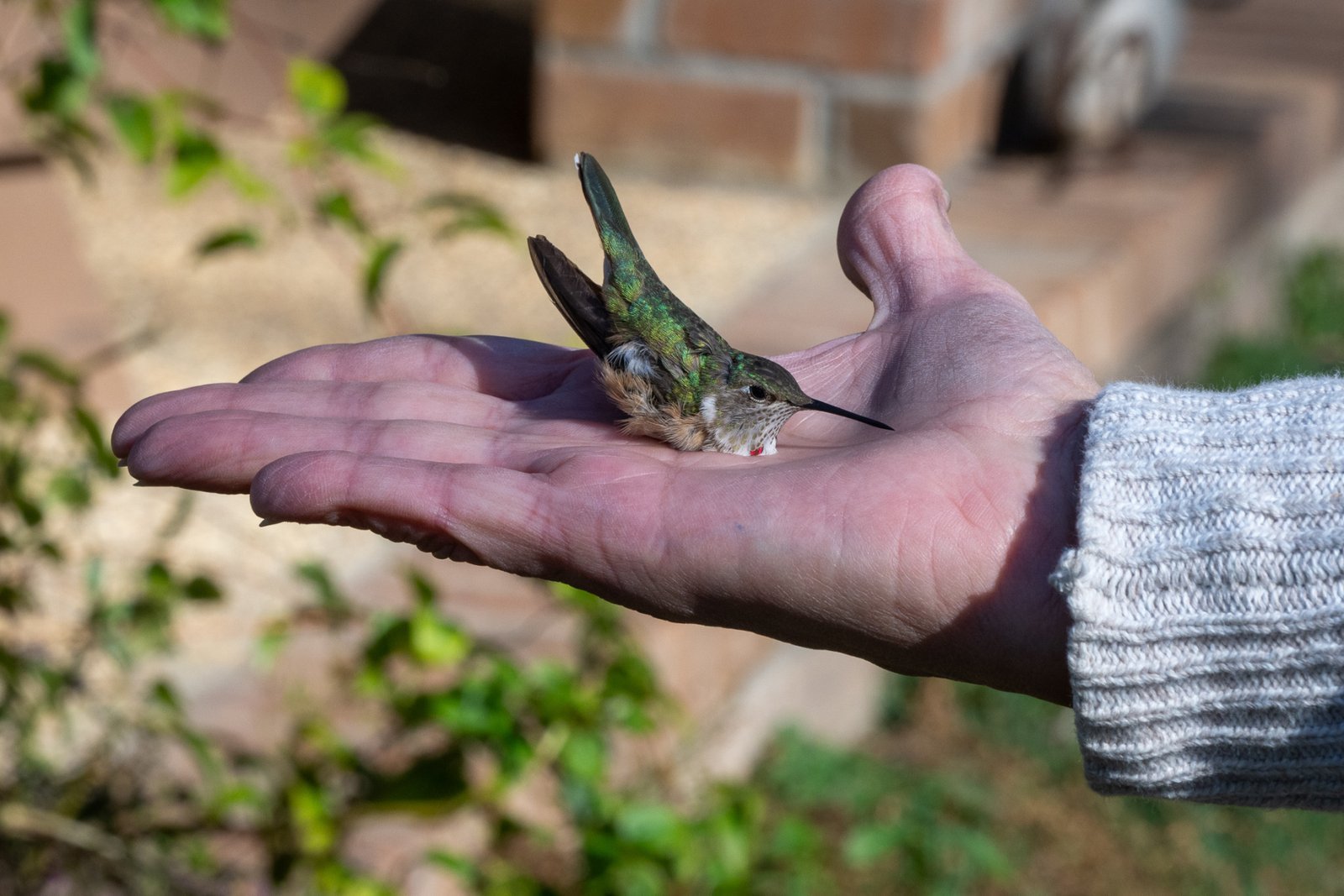
That had to the amazing day for Patty to be apart of that process. Beautiful little guy.