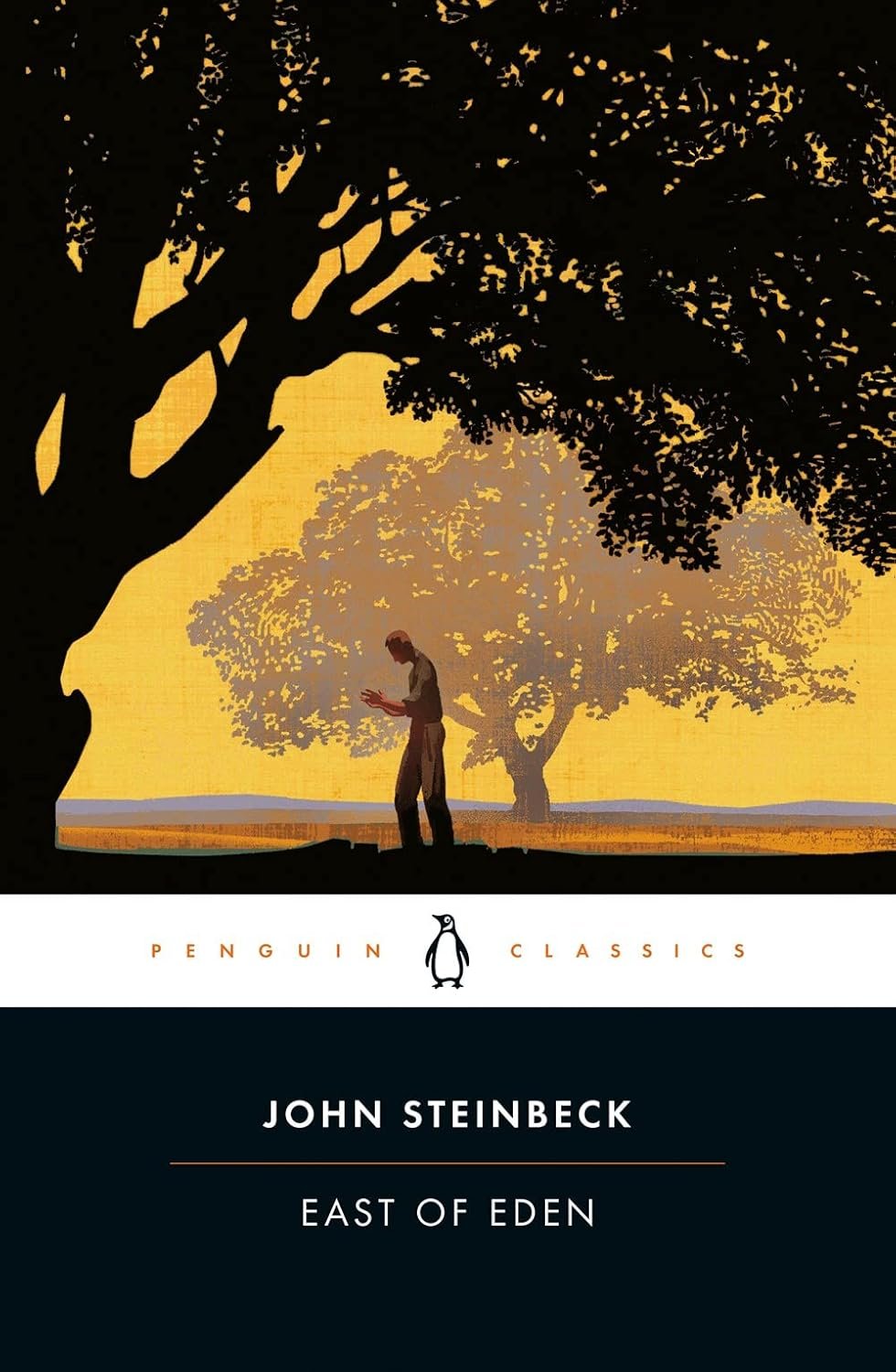
East of Eden is a sprawling family saga that follows the intertwined destinies of two families: the Hamiltons (based on Steinbeck’s own maternal ancestors) and the Trasks. At its core, the novel is a modern retelling of the Book of Genesis, specifically the story of Cain and Abel. It tracks two generations of brothers as they struggle with the weight of their inheritance, the search for parental love, and the terrifying realization that they might be born with a “malformed soul.”
Why to Read
It was suggested that I should read this for its “profound exploration of human agency“. (Hopefully I will figure this out while reading the book.) The book introduces the Hebrew concept of Timshel (“Thou mayest”), which suggests that humans are not predestined to be good or evil by their genetics or their past, but have the freedom to choose their own moral path. For a nature observer, Steinbeck’s descriptions of the Salinas Valley are technically brilliant—he treats the landscape with as much character and detail as the people themselves.
Professional Perspectives
- The New York Times: Praised it as a “vastly ambitious” work that captures the primordial power of myth.
- Modern Critics: Often point to Cathy Ames as one of the most chillingly effective “monstrous” villains in all of literature.
- Steinbeck’s Own View: He believed this was his magnum opus, writing in his journals that “it has everything in it I have been able to learn about my craft.”
My Review
Set primarily in the Salinas Valley of California around the turn of the 20th century, East of Eden follows two families—the Hamiltons and the Trasks—whose lives become inextricably linked. It is a modern, secular retelling of the Book of Genesis, specifically the story of Cain and Abel. The narrative explores the cyclical nature of love, rejection, and the “monsters” that can exist within a family tree. It is an epic struggle between the light of the valley and the darkness of the human heart.
Reason to Read
You should read this book for the concept of “Timshel.” It is the ultimate argument for human agency. Steinbeck posits that we are not doomed by our past or our “blood”; instead, we have the glory of the choice to be good. For an observer of the natural world, Steinbeck’s prose is technically flawless—he describes the soil, the light, and the seasons with the precision of a scientist and the soul of a poet.
Audible Note
The East of Eden audiobook narrated by Richard Poe is the gold standard. His voice is gravelly, patient, and carries the weight of the valley. He handles the “unsettling” chapters with a steady hand, making the philosophical payoff in the final acts feel deeply earned.
My View
Steinbeck is indeed a “heavy” storyteller, but his technical accuracy regarding human psychology is what makes the work endure. He doesn’t give us the “uplifting” story we want; he gives us the honest story of the struggle to be “good.” Now that I finished this, I feel I understand Steinbeck’s worldview.
I returned East of Eden to Ocean Springs Audio library twice because I just did not think I could, OR did not think I wanted to finish such a depressing book, but it is only half depressing, all life, and it kept pulling on me. I think I will reread Cannery Row to leave me with a lighter feeling of Steinbeck.