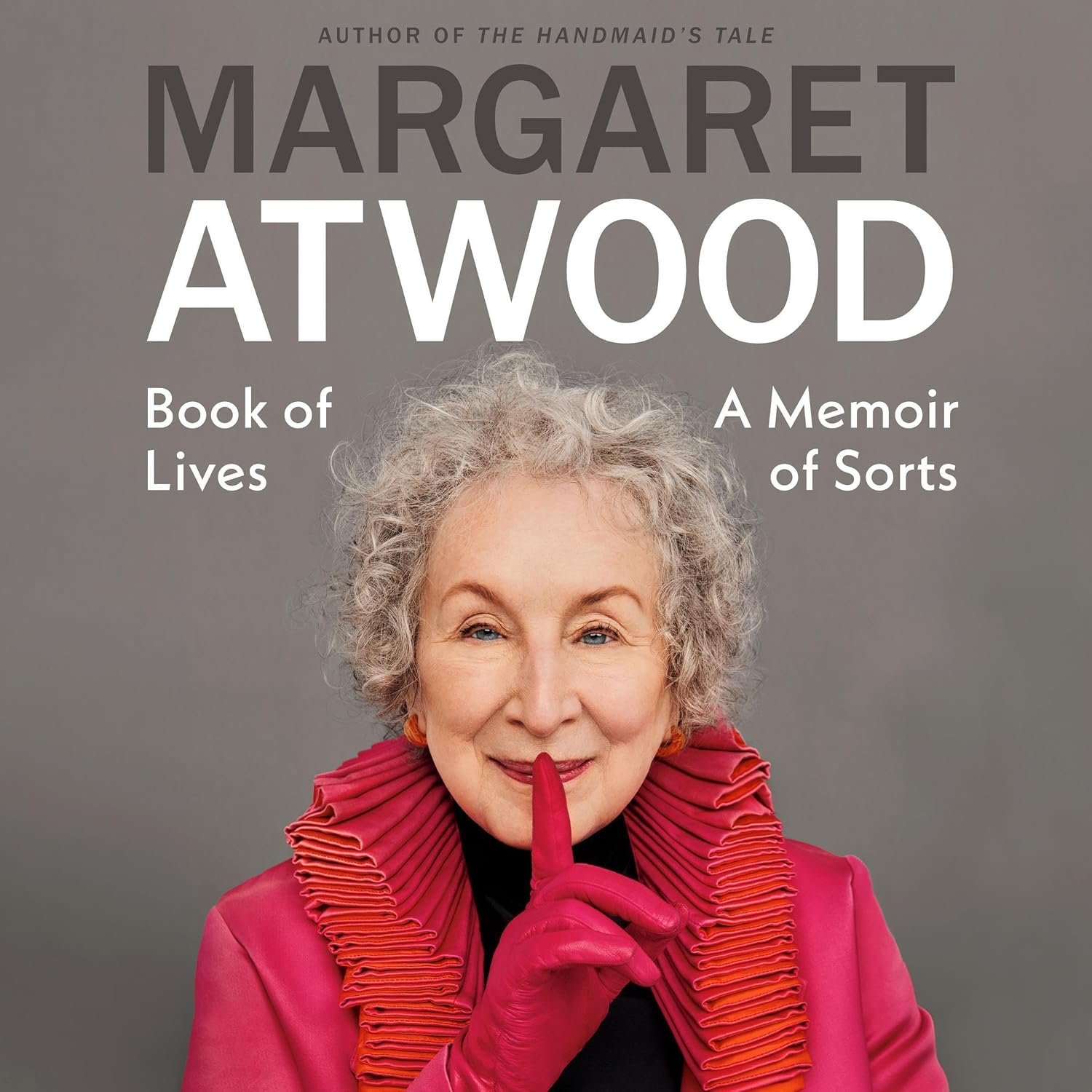
By Margaret Atwood
Genre: Literary Memoir / Essay Collection / Cultural History
Audio Availability: Narrated by Margaret Atwood and ensemble (dry, ironic, observational)
Categories: The Burden of Observation & The Ledger of Human Nature
📖 The Blueprint (No-Spoiler Synopsis)
Spanning eight decades of living through cultural, political, and ecological upheavals, Book of Lives gathers Margaret Atwood’s reflections on the people, places, and turning points that shaped her worldview. Rather than delivering a conventional, chronological autobiography, Atwood structures the book as a series of thematic portraits—examining family origins in the rugged Canadian wilderness, mid-century academic life, the mechanics of the writer’s trade, and the quiet witness of friends and collaborators who have passed on.
Written with her unmistakable deadpan irony, the book avoids nostalgia and self-congratulation. Instead, Atwood operates like an archivist reviewing field notes, auditing the shifts in modern society, the persistent absurdity of human institutions, and the fragile line between civilized order and chaos.
🌟 Reason to Read: The Technical Appeal
- The Naturalist’s Eye: Atwood grew up the daughter of a field entomologist, spending long stretches of her childhood in the bush of northern Quebec. That early scientific training is evident in every chapter: she examines human behavior and social conventions with the cool, detached precision of a field biologist.
- Dry, Unsentimental Humor: She has zero interest in self-pity or theatrical drama. Her prose is spare, rhythmic, and laced with the kind of sharp, understated wit that provides an intellectual lift without emotional manipulation.
- Living Historical Data: As someone who lived through the post-war era, the Cold War, and the modern digital shift, her firsthand observations serve as invaluable cultural primary sources.
⭐ Critical Consensus & Review Highlights
- The Guardian:“Sharp, wry, and impeccably observed. Atwood remains our finest chronicler of human folly, bringing the same unsparing eye to her own past as she does to her fiction.”
- The New York Times Book Review:“A masterclass in personal history stripped of self-indulgence… Atwood’s voice is as crisp, candid, and vital as ever.”